
Last updated October 30, 2026
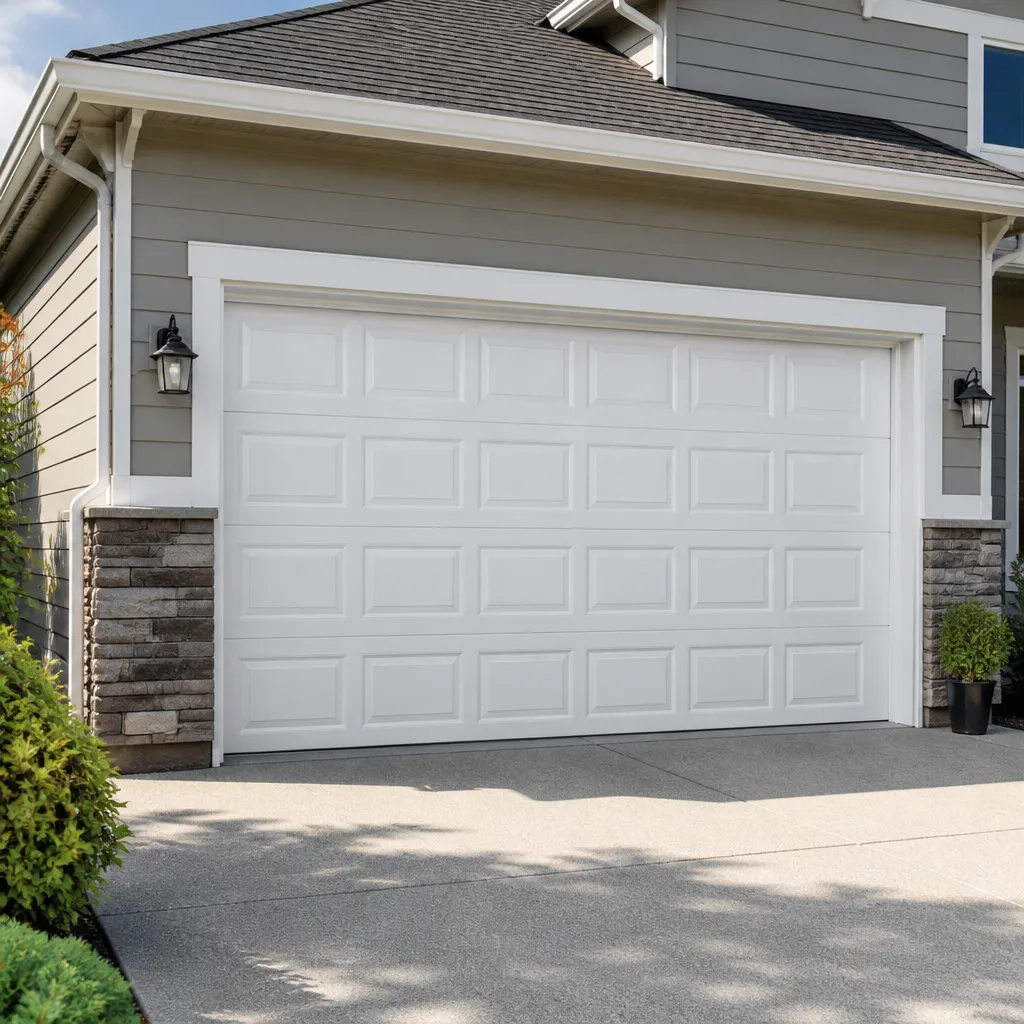 Raised-panel steel
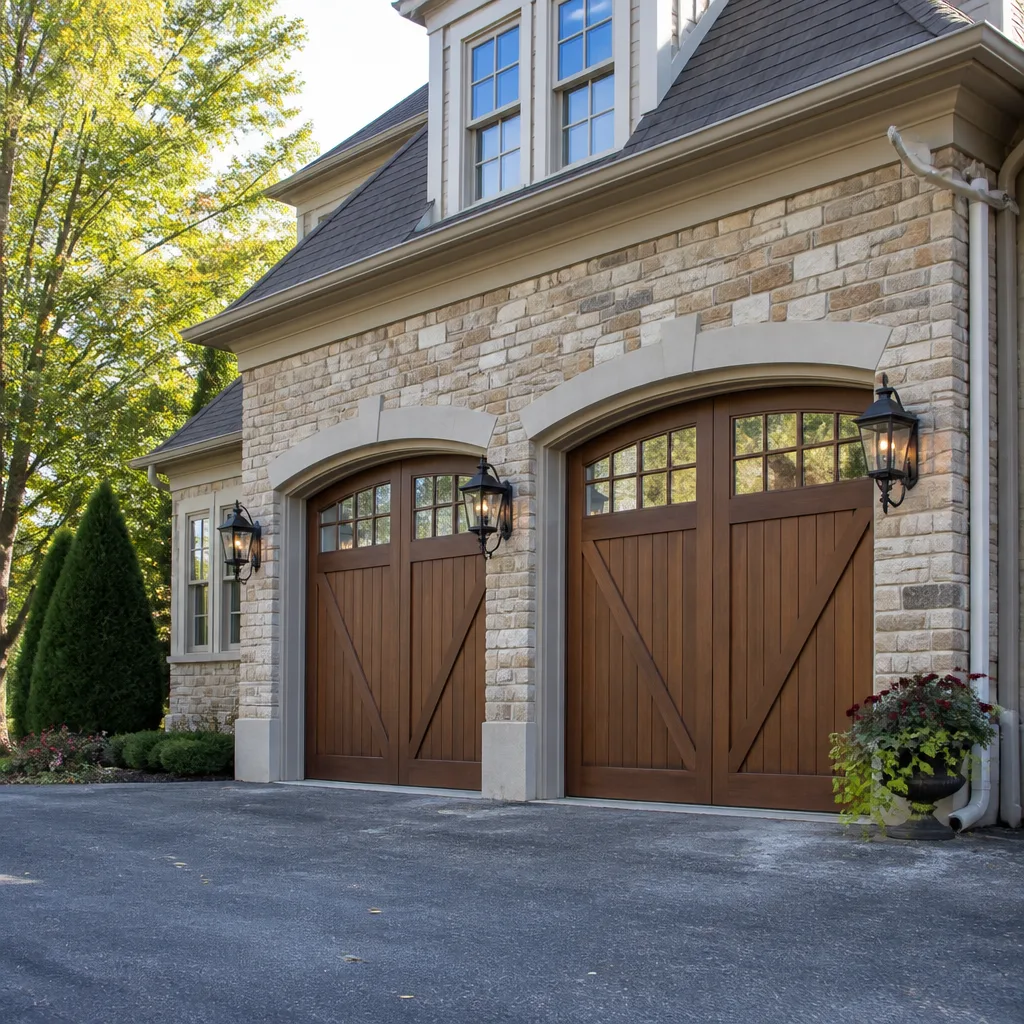 Carriage house
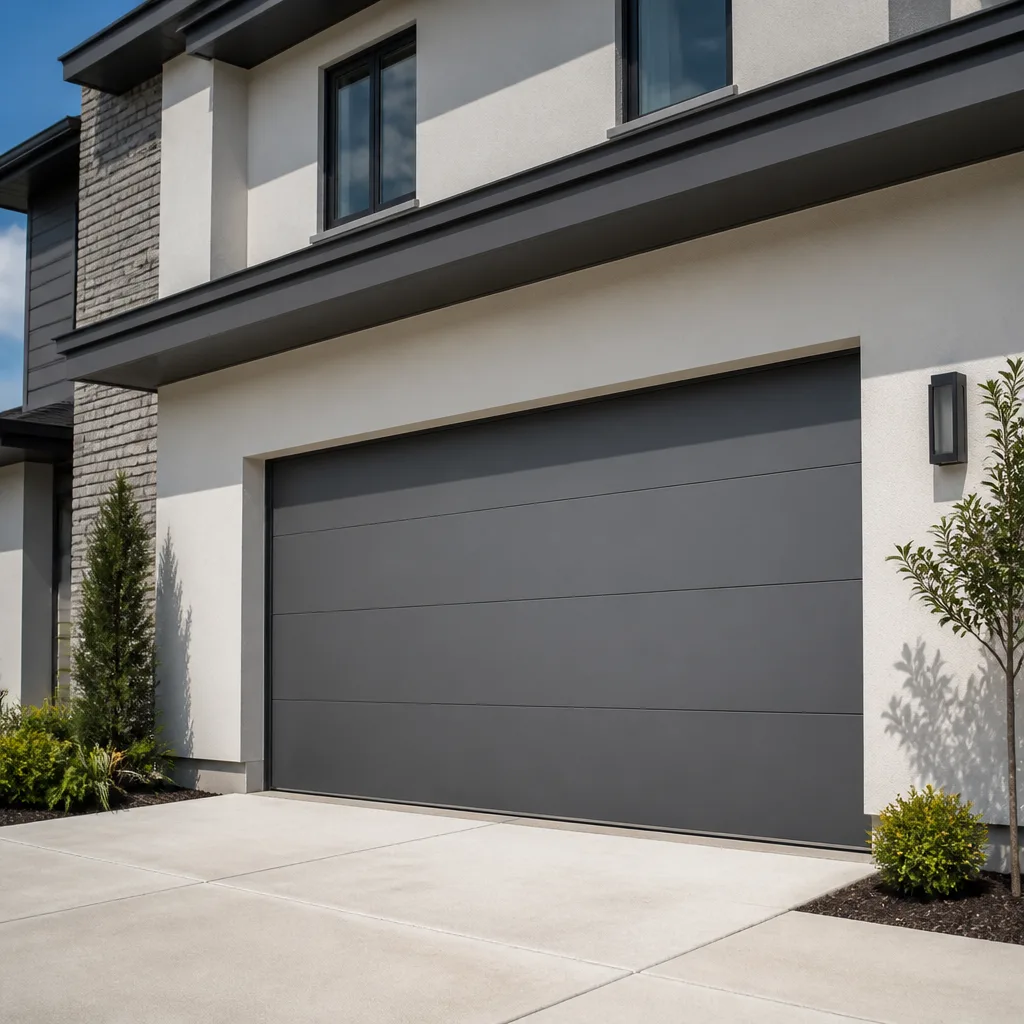 Modern flush
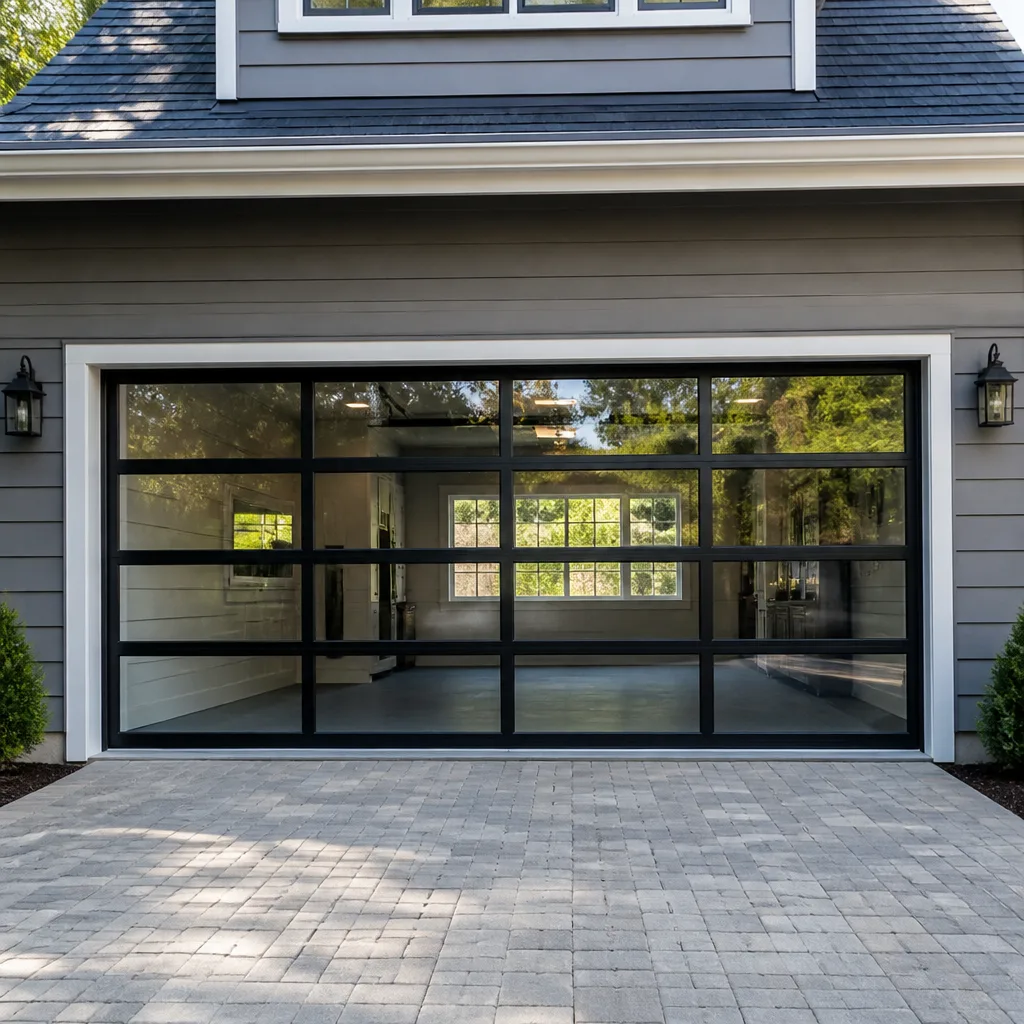 Full-view glass
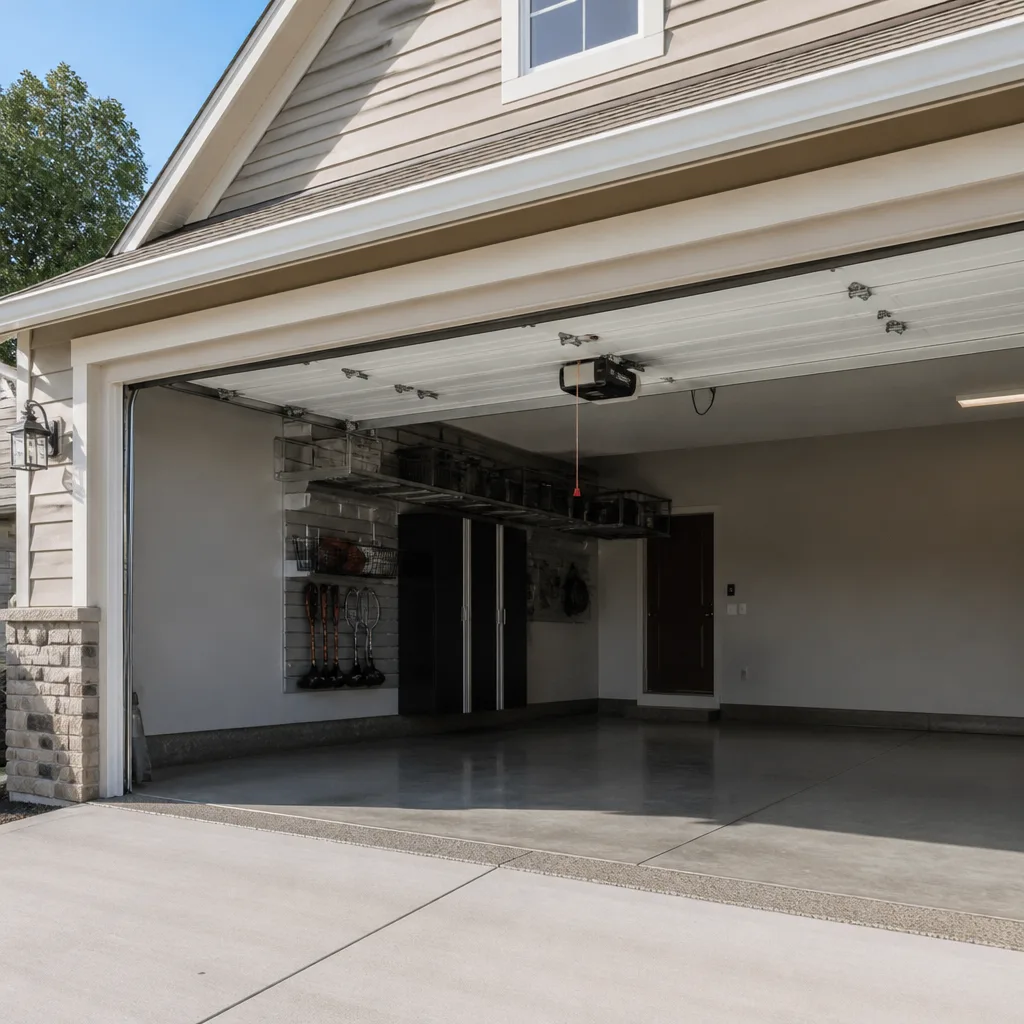 LiftMaster openers
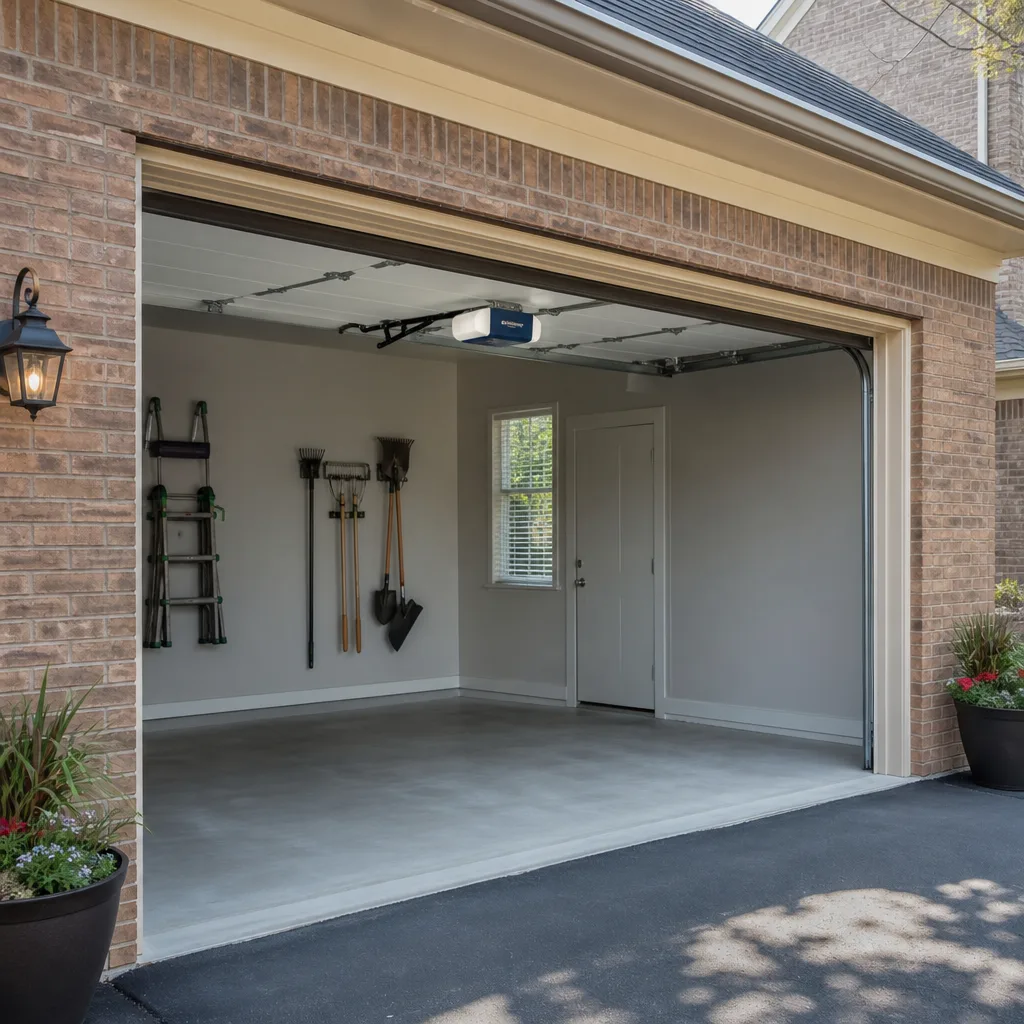 Chamberlain openers
Full 25-point door and opener safety check with every visit - springs, cables, rollers, tracks, and your LiftMaster or Chamberlain opener included
You get a price before we start. It does not change when the truck arrives.
Get your free estimateThe Complete Garage Door Repair Guide for San Bernardino Homeowners
Most garage door guides are written for a mythical average climate. San Bernardino sits in a high-desert basin where summer temperatures routinely crack 105°F, and that single fact changes everything about how your door wears. Heat cycles don’t just make your garage uncomfortable – they warp bottom seals, accelerate spring fatigue, and cook the lubricant out of rollers in a single season. This guide—along with The Complete Guide to Garage Door in San Bernardino—is calibrated specifically for Inland Empire conditions. You’ll learn what actually breaks on San Bernardino garage doors, what it costs to fix, what you can safely handle yourself, and how to avoid getting upsold on parts you don’t need.
Styles & brands we work with
Quick Answer
Our Garage Door Repair services in San Bernardino typically cost $150 to $450 for common fixes like spring replacement, cable repair, or roller replacement, with opener repairs running $125 to $350. Most repairs can be completed the same day by a technician who carries parts on the truck, and you should expect a written quote before any work begins.
Table of Contents
- Why San Bernardino’s Climate Is Harder on Garage Doors
- The Repairs We See Most Often in San Bernardino
- Torsion Spring Repair: What Cycle Ratings Actually Mean Here
- DIY-Safe Repairs vs. Work That Can Injure You
- Brand-Specific Repair Notes: LiftMaster, Clopay, and Raynor
- What Repairs Cost in San Bernardino: Local Benchmarks
- How to Document and Prepare Before Calling a Repair Company
- Common Mistakes to Avoid
- When to Call a Professional
- Frequently Asked Questions
- The Bottom Line
Why San Bernardino’s Climate Is Harder on Garage Doors
San Bernardino gets less rain than most of the country, but that doesn’t make it easy on garage equipment. The real culprit is the temperature swing. A garage door in this city might see a 40-degree difference between the coolest part of the night and the peak of a July afternoon. Metal expands and contracts. Springs lose tension faster. Rubber seals crack and shrink. If you’re following maintenance advice written for, say, Ohio or Oregon, you’re already behind.
Here’s what we observe on doors across San Bernardino, from Verdemont to the neighborhoods off Kendall Drive:
- Spring fatigue cycles accelerate. Torsion springs are rated in cycles – typically 10,000 for standard springs. But every open-and-close in triple-digit heat adds more stress than the same cycle at 70 degrees. That 10,000-cycle spring may effectively behave like a 7,000-cycle spring here.
- Rollers dry out fast. The factory lubricant in steel rollers doesn’t survive an Inland Empire summer. Dry rollers grind against the track, wear unevenly, and eventually break apart, taking the door out of alignment.
- Bottom seals crack and split. The rubber seal along the bottom of your door takes direct sun exposure on south-facing garages. In San Bernardino, a seal can go from pliable to brittle in under two years.
- Circuit boards in openers overheat. Opener-mounted electronics sitting in a hot garage can hit failure temperatures even when the opener itself is fine. If your opener works in the morning but dies by late afternoon, heat is often the explanation.
The practical takeaway: if your door is over 7 years old in this climate, inspect it twice a year – once before summer and once before winter. Springs, rollers, and seals are wear items here, not lifetime components.
The Repairs We See Most Often in San Bernardino
Every city has its own pattern of garage door failures based on housing age, door brands, and climate. In San Bernardino, where much of the housing stock dates from the 1960s through the 1990s, we see a consistent lineup of issues. Here’s what to watch for, ranked roughly by how frequently we see them.
1. Broken torsion springs
The number one call we get in San Bernardino is a snapped spring. You’ll hear it – a loud bang from the garage that sounds like a firecracker. The door won’t open, or it opens a few inches and stops. This is not a DIY job. More on that below.
2. Worn or broken rollers
Rollers have a lifespan of 5 to 10 years, and San Bernardino heat shortens it. You’ll notice a grinding noise, a door that shakes as it moves, or visible wear on the roller wheels when you look at the track. Damaged rollers stress the cables and the opener, so addressing them early prevents a bigger repair.
3. Cable failures
Cables are under constant tension. When a cable frays or snaps, the door can become dangerously unstable. Cables often fail shortly after a spring replacement when they’re reused instead of replaced – something a reputable technician will flag rather than skip.
4. Opener gear and sprocket wear
Chamberlain and LiftMaster openers made in the last 15 years use plastic drive gears that wear down over time. The opener motor runs, but the door doesn’t move. The fix is a gear replacement kit, not a new opener – and the repair first approach means you shouldn’t be quoted for a full replacement unless the opener has other issues.
5. Track misalignment
Tracks shift over time, especially on older San Bernardino homes where garage framing settles in the dry soil. A gap between the track and the door edge, or visible bends in the vertical track, will make the door bind or stall. Alignment corrections are usually quick and inexpensive.
Key takeaway: three of the five most common San Bernardino repairs – springs, rollers, and cables – are interconnected. When one component fails, it accelerates wear on the others. A repair that addresses only the broken part and ignores the damaged parts around it is a repair you’ll pay for twice.
Torsion Spring Repair: What Cycle Ratings Actually Mean Here
A torsion spring’s cycle rating tells you how many full open-and-close cycles it’s engineered to survive before metal fatigue causes it to snap. A standard 10,000-cycle spring lasts about 7 to 10 years under normal use in a moderate climate. A 20,000-cycle spring roughly doubles that. But in San Bernardino, heat accelerates the fatigue curve. The spring doesn’t care what the rating says – it responds to thermal stress, frequency of use, and maintenance.
Here’s how that plays out locally:
- A standard spring on a daily-use door in San Bernardino typically fails in 5 to 7 years, not the 10 the rating suggests.
- Doors used 4 or more times per day – common in multi-car families – put roughly 1,500 cycles per year on a spring. At that rate, a 10,000-cycle spring is near the end of its life in 6 years even without the heat factor.
- Weekend-only doors can stretch a spring to 10 years or more, but the seal and rollers will still break down from heat exposure even if the spring has cycles left.
- Upgraded high-cycle springs are worth considering in San Bernardino. For an extra $40 to $80 per spring, you can get a 25,000 to 30,000-cycle spring that effectively outlives the door’s first decade in this climate.
When we replace a spring in San Bernardino, we recommend replacing both springs on a double-spring door even if only one snapped. Both springs have seen the same number of cycles and the same heat exposure. Replacing one and leaving the other is a guarantee of a second service call.
DIY-Safe Repairs vs. Work That Can Injure You
We’re going to be direct about this because a lot of YouTube content blurs the line. Some garage door repairs are approachable for a capable homeowner with basic tools. Others can put you in the hospital. Here’s the honest breakdown.
These repairs are reasonably DIY-safe:
- Replacing the bottom rubber seal: Slide the old seal out, clean the channel, slide a new one in. No tension involved. This is the single best low-cost thing you can do for door insulation and pest prevention in San Bernardino.
- Tightening loose hardware: Bolts and hinges work loose over time. A socket set and 20 minutes will handle it. Don’t overtighten – snug is enough.
- Lubricating rollers and hinges: Use a silicone-based or lithium spray lubricant, not WD-40. Apply to the roller bearings and hinge pins, not the track itself. Do this every 4 months in San Bernardino’s dry climate.
- Cleaning and aligning the safety sensors: If your door reverses when closing, the photo eyes near the floor are likely dirty or out of alignment. Wipe the lenses and adjust until the indicator lights are steady.
Do not attempt these. They carry real injury risk:
- Torsion spring replacement: These springs hold hundreds of pounds of torque. A slip during adjustment can cause broken bones, lacerations, or worse. This requires specialized winding bars and training. Even with the right tools, the procedure is unforgiving.
- Cable replacement: Cables work in tandem with the springs. When you disconnect a cable, you release the same stored energy as a spring replacement. Cable work on a door with a tensioned spring is never safe for a homeowner without trade experience.
- Track repair or replacement with the door connected: The track guides a door that weighs 150 to 250 pounds. If it falls or the cables release, the door becomes an uncontrolled mass. Track work should be done with the door locked in place by a pro.
- Opener circuit board or motor repair: Modern openers have integrated control boards with capacitors that hold a charge. Opening the motor housing is a shock-risk project, and troubleshooting without a multimeter usually ends with a ruined opener.
The line between safe and dangerous is set by stored energy. Anything involving springs, cables, or a door disconnected from its opener should go to a trained technician. If you’re ever unsure, call and ask. We’ll tell you over the phone whether it’s worth a service call.
Brand-Specific Repair Notes: LiftMaster, Clopay, and Raynor
Not all garage door systems are created equal, and San Bernardino housing stock carries a mix of brands depending on when the home was built and who installed the original door. We work on the brand you already have, which means we’ve learned the failure patterns specific to each manufacturer.
LiftMaster
LiftMaster openers are among the most common units in San Bernardino homes built since the early 2000s. They’re workhorses, but they have a known weak point: the plastic drive gear inside the motor housing. When the gear strips, the motor runs but the door doesn’t budge. The fix is a $75 to $150 gear kit, not a new opener. LiftMaster openers also use wall controls with a diagnostic light that flashes error codes – knowing what the code means before calling can save you a troubleshooting fee. Count the flashes and check the manual or call us with the number.
Clopay
Clopay doors are common in San Bernardino’s newer subdivisions and replacement-door projects. They’re well-built, but the hinge and roller systems on Clopay doors are sensitive to lubrication gaps. When a Clopay door gets noisy, it’s almost always dry rollers and hinges, not a structural problem. The fix is routine lubrication and, on older units, roller replacement with nylon-bearing rollers that run quieter and last longer in heat than steel. Clopay doors also respond well to annual track alignment checks, especially in neighborhoods with expansive soil movement.
Raynor
Raynor doors show up frequently in San Bernardino’s mid-century and 1980s-era homes. These doors are heavy and durable, which is good for longevity, but bad for workload on the springs and opener. A Raynor door from the 1980s can weigh 30 percent more than a modern equivalent, and that added weight shortens spring life and stresses older opener gears. When a Raynor door in San Bernardino needs spring replacement, we strongly recommend high-cycle springs rated for 25,000 or more cycles – the standard spring simply won’t last under that weight in this heat.
Other brands we service regularly include Chamberlain, Genie, Amarr, Wayne Dalton, and Craftsman. The repair approach is the same: diagnose the specific system in front of us, fix what’s actually broken, and only recommend replacement when it’s genuinely the better option.
What Repairs Cost in San Bernardino: Local Benchmarks
National cost guides are close to useless for San Bernardino. Labor rates here sit below Los Angeles and Orange County but above the national small-market average, and parts pricing varies by brand availability. Here are the ranges we see on a weekly basis in San Bernardino in 2025:
| Repair Type | Typical Cost Range in San Bernardino | Notes |
|---|---|---|
| Single torsion spring replacement | $180 – $280 | Includes labor; pair replacement typically $280 – $450 |
| Cable replacement (per side) | $120 – $200 | Often done with spring work; add $40 – $80 when paired |
| Roller replacement (full set) | $110 – $190 | Nylon rollers add $30 – $60 but last longer in heat |
| Bottom seal replacement | $60 – $110 | Higher end includes heavy-duty rubber for extreme sun exposure |
| Opener gear kit replacement | $140 – $260 | LiftMaster and Chamberlain models |
| Track alignment or repair | $90 – $220 | Depends on severity; straightening vs. replacement |
| Full opener replacement (opener only) | $350 – $700 | Includes labor; unit cost drives most of the range |
| Full door replacement (standard single) | $1,100 – $2,800 | Varies widely by door brand, material, and insulation |
A few things worth knowing before you compare quotes:
- Prices quoted before work starts are not estimates. If a company gives you a verbal range, it should still be fixed in writing before a single tool comes out. Any reputable San Bernardino garage door company quotes the job up front.
- Parts aren’t the same across the board. A $15 roller and a $40 roller are not interchangeable. The cheap one fails in two San Bernardino summers. The expensive one runs quiet for a decade.
- Springs should be replaced in pairs. If a quote only includes one spring on a two-spring door, ask why. The honest answer is there isn’t a good reason.
- Emergency and after-hours work costs more. Expect a $50 to $100 premium for a Sunday or late-night call in San Bernardino. It’s standard across the trade.
The most important thing to know: any reputable company will tell you the price before the work starts, and that’s the price you pay unless the technician finds something that legitimately changes the scope and clears it with you first. No surprises at the end of the job.
How to Document and Prepare Before Calling a Repair Company
Ten minutes of preparation before you call a repair company in San Bernardino can save you real money. Here’s what to do when you notice a problem:
- Take photos and video. Capture the door from the inside and outside, the opener unit, the springs above the closed door, and the tracks on both sides. Photograph the brand name and model if visible – it’s often on a sticker on the opener or on the inside of the door panel.
- Note the symptoms in detail. When did it start? Does the door make a specific noise? Does it open partway and stop? Does the opener hum but not move the door? The more specific you are, the better the technician can prepare parts before rolling out.
- Look for visible damage. Check the springs for a gap in the coil, the cables for fraying, the rollers for cracks or missing pieces, and the track for bends or gaps. Note anything you see.
- Check the wall button and remote. Replace the remote battery before calling – it resolves a surprising number of “opener won’t work” calls. If the wall button flashes, note the pattern of the flashes.
- Write down the door’s age if you know it. Was the door already here when you bought the house? Check purchase records or the previous owner’s paperwork. Knowing the age changes the repair-versus-replace conversation.
- Ask for a written quote before the technician arrives. Companies that won’t provide a range over the phone after seeing photos are companies to be careful with. A range is not a fixed quote, but a complete absence of one is a red flag.
This preparation does two things. First, it lets the technician bring the right parts on the truck, which means a faster repair. Second, it protects you from being sold a spring replacement when the real problem is a stripped gear, or a full opener replacement when all you need is a circuit board reset.
Common Mistakes to Avoid
- Lubricating the track. The track is not a lubrication point. Grease on the track collects desert dust and creates a grinding paste. Lubricate the roller bearings and hinge pins only.
- Replacing only one spring on a two-spring door. It saves $100 today and guarantees a second service call within a year. Both springs have seen identical cycles and identical San Bernardino heat exposure.
- Ignoring a noisy door for months. A grinding or squealing door is telling you a roller or hinge is failing. Every week it runs damaged, it adds strain to the cables and opener. A $150 roller replacement becomes a $500 spring-and-cable job if you wait.
- Buying the cheapest opener you can find. Big-box opener prices are tempting, but a $150 special installed wrong will fail in two years. You don’t need a premium unit, but you do need one properly sized for your door weight and properly installed.
- Using generic parts on brand-specific doors. A Clopay door with a mismatched Amarr roller will wear unevenly and grind the track. Parts are not universal. We work on the brand you already have with the parts that belong to it.
- Waiting for a total failure before calling. So many San Bernardino homeowners wait until the spring snaps and the door is stuck closed with the car inside. By then, the opener and cables have taken additional abuse. If you notice slow operation, visible wear, or unusual noise, call before the door traps you.
- Hiring a generalist handyman for spring work. A handyman who does a garage door spring this week and a water heater next week doesn’t know the torque settings for your specific spring wire diameter. Garage doors, exclusively. It matters on this trade.
When to Call a Professional
If the door is stuck closed with a car inside, if a spring has snapped, if a cable has frayed or broken, or if the door is off its track, stop troubleshooting and call. These situations involve stored energy and a door that can fall. The door is not stable until a trained technician secures it.
Also call if you hear grinding from the opener but the door won’t move, if the door reverses before fully closing, or if you’ve noticed the door getting progressively slower and noisier over weeks. These are progression indicators – the failure is already underway. Tradesman Garage Door Repair offers free estimates in San Bernardino. Call (855) 916-6950 and describe what you’re seeing. We’ll tell you whether it’s urgent and give you an honest price range before we send anyone out.
Frequently Asked Questions
Most garage door repairs in San Bernardino fall between $150 and $450, with spring replacement being the most common job at $180 to $280 for a single spring. Opener repairs typically run $125 to $350, and full door replacement starts around $1,100 for a standard single door. Call (855) 916-6950 for an exact quote – estimates are free, and the price is fixed before work starts.
In most cases, yes. Common repairs like spring replacement, cable repair, roller replacement, and opener gear kits are jobs we carry parts for on the truck. If you call before noon, same-day service in San Bernardino is usually available.
No. With a snapped spring, the door’s full weight – often 150 pounds or more – is no longer counterbalanced. Pulling the emergency release on a door with a broken spring can cause the door to slam down. Leave the door as it is and call a technician. This is the one situation where waiting for a professional is the only safe option.
The heat. San Bernardino’s summer temperatures accelerate metal fatigue in torsion springs, effectively reducing the spring’s rated lifespan by 20 to 30 percent. A spring rated for 10,000 cycles may fail after 7,000 cycles in this climate, especially on daily-use doors or heavy older doors from brands like Raynor.
Not without your approval. A reputable company will ask for photos and give you a written price before work begins. If the technician finds something unexpected that changes the scope, you’ll be told what it is and what it costs before anything additional is done. The price is quoted and agreed before any work starts.
We carry parts compatible with the eight major garage door and opener brands most common in San Bernardino: LiftMaster, Chamberlain, Genie, Clopay, Amarr, Wayne Dalton, Craftsman, and Raynor. Most common repairs are completed in a single visit. Garage door repair in Grand Terrace and other nearby areas follows the same approach.
The Bottom Line
San Bernardino garage doors fail faster than national averages because of heat, dry air, and temperature swings. Spring fatigue, roller wear, and seal cracking are the big three to watch, and none of them improve with time. The right approach is repair first: diagnose the actual problem, fix it with parts that match your brand, and replace only when the door has genuinely reached the end of its service life. If you need a door repaired, an opener serviced, or a full installation quoted, garage door opener repair and complete door installation are all services we handle directly. Call (855) 916-6950 for a free estimate in San Bernardino.
Written by the team at Tradesman Garage Door Repair, serving San Bernardino since 2016. Check out more guides & resources on our blog.
See the difference
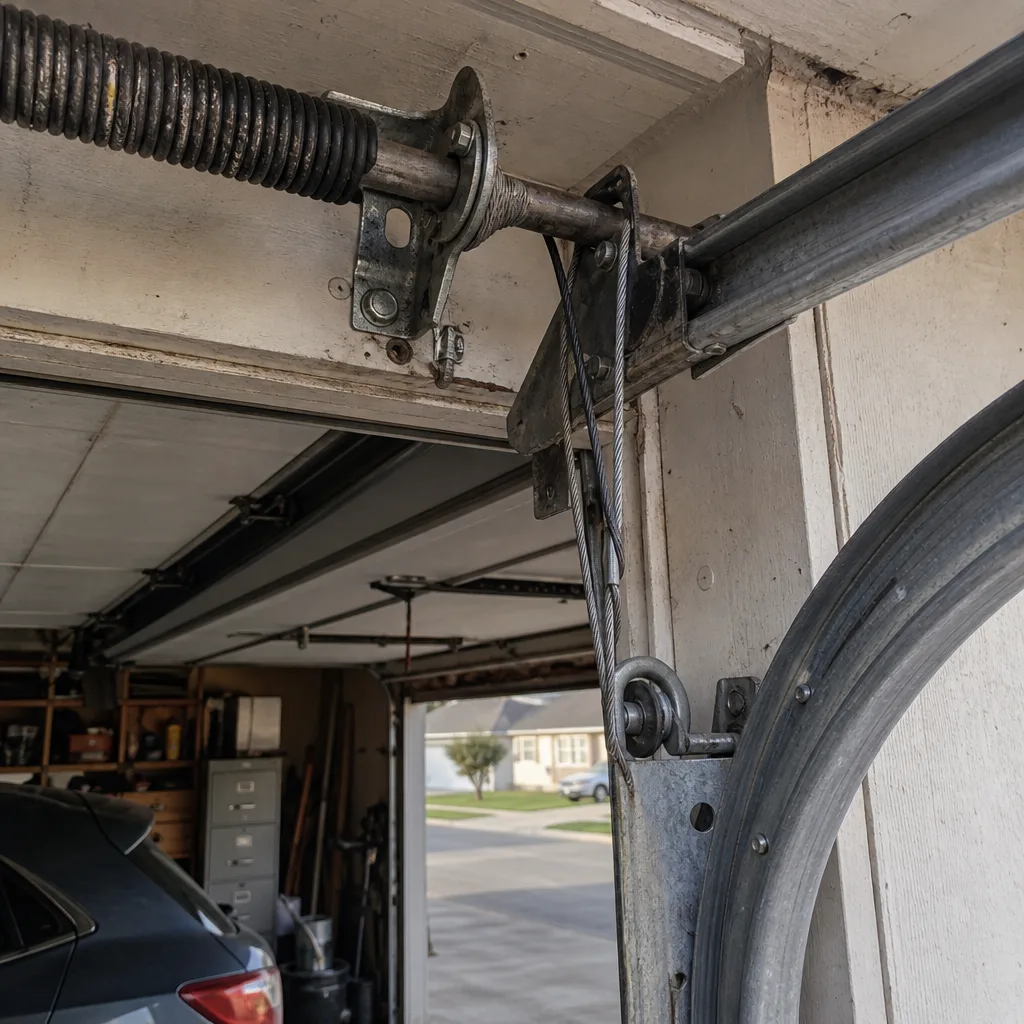 Before
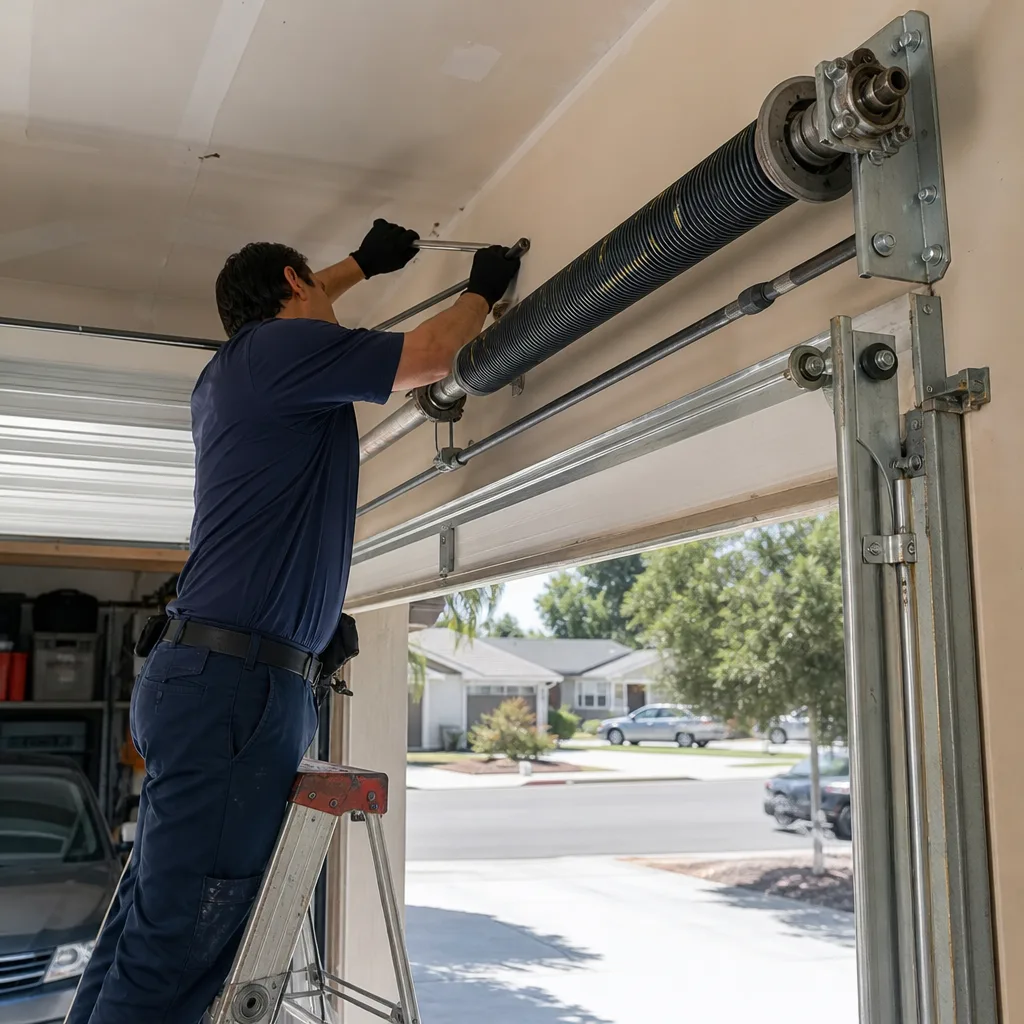 After
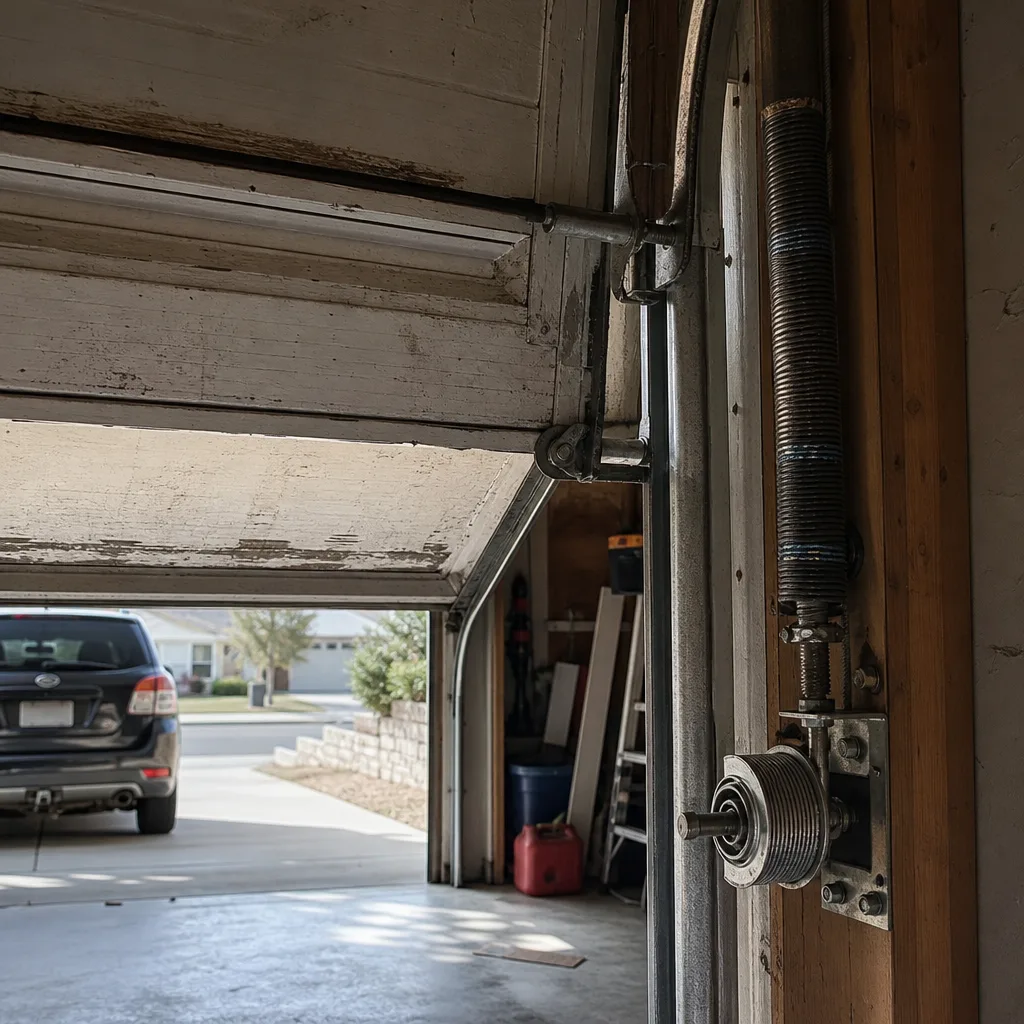 Before
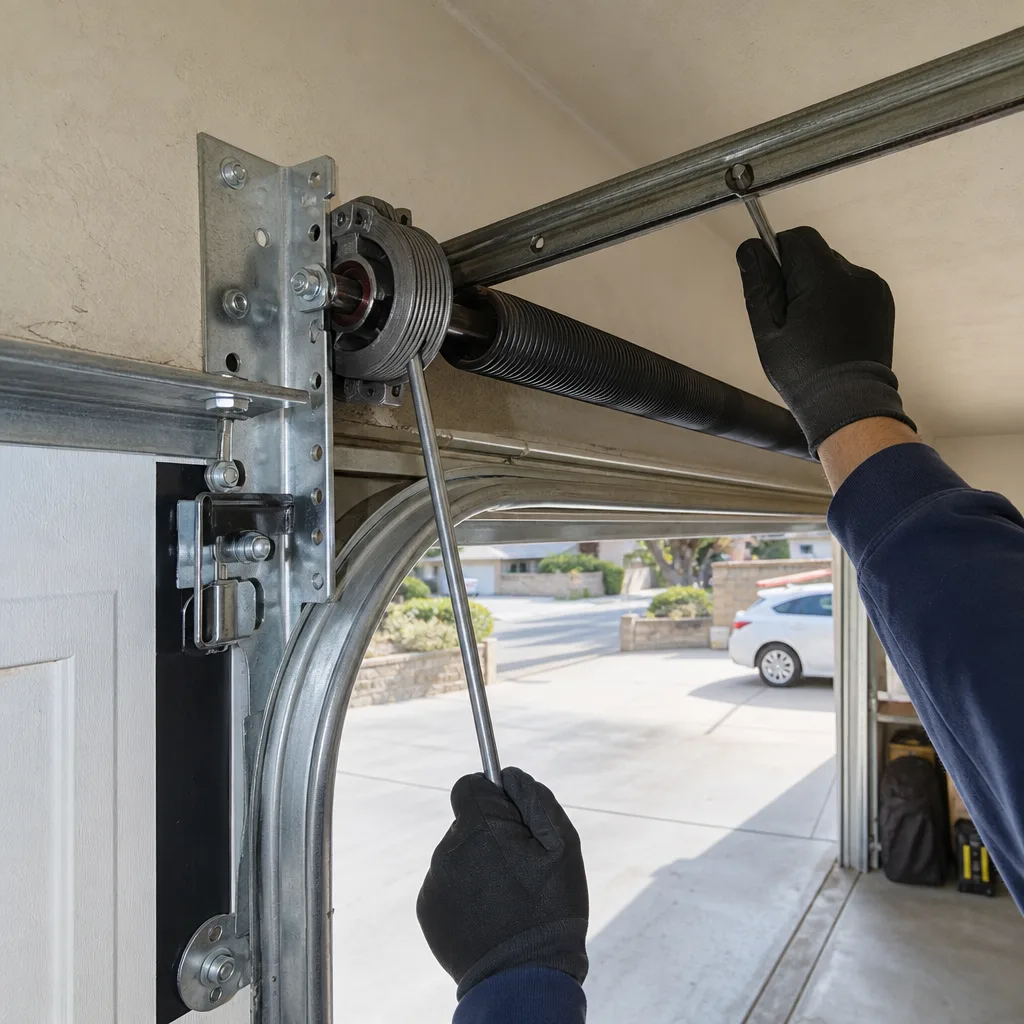 After
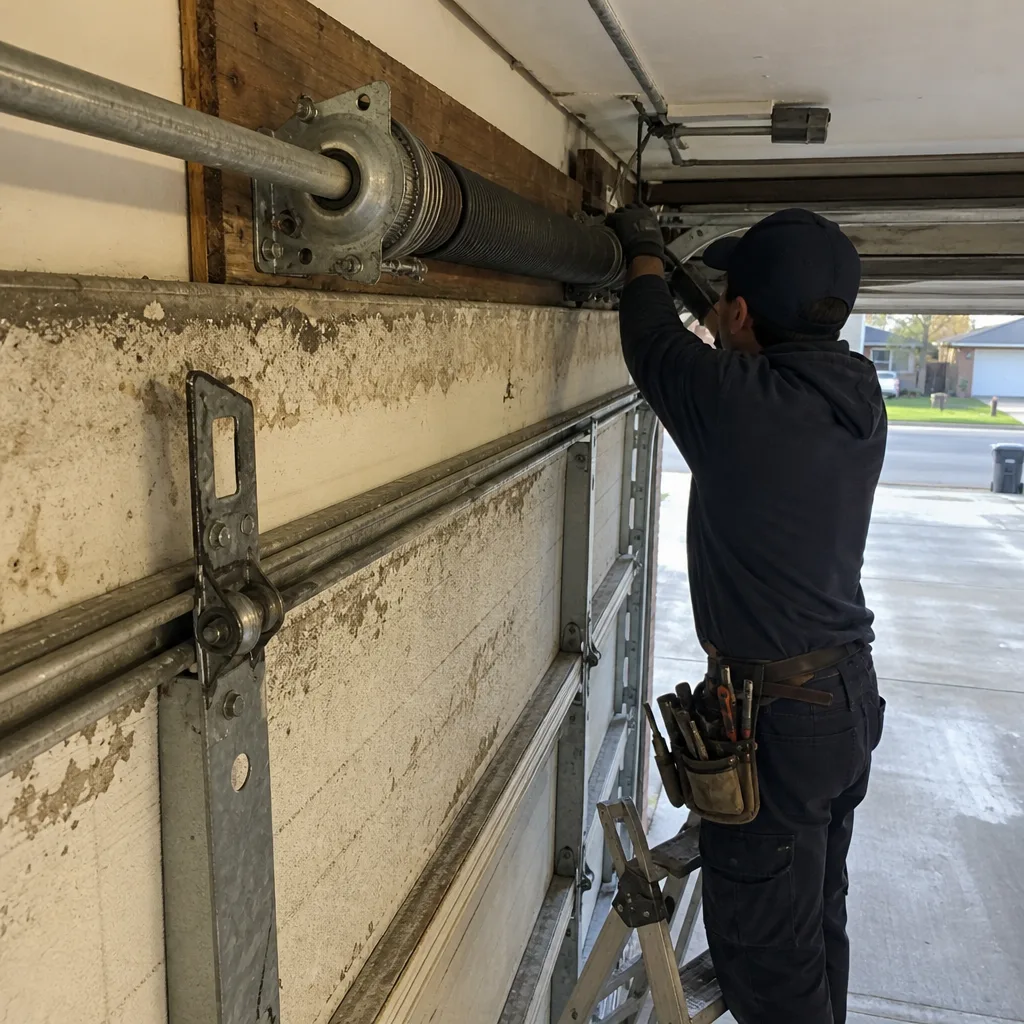 Before
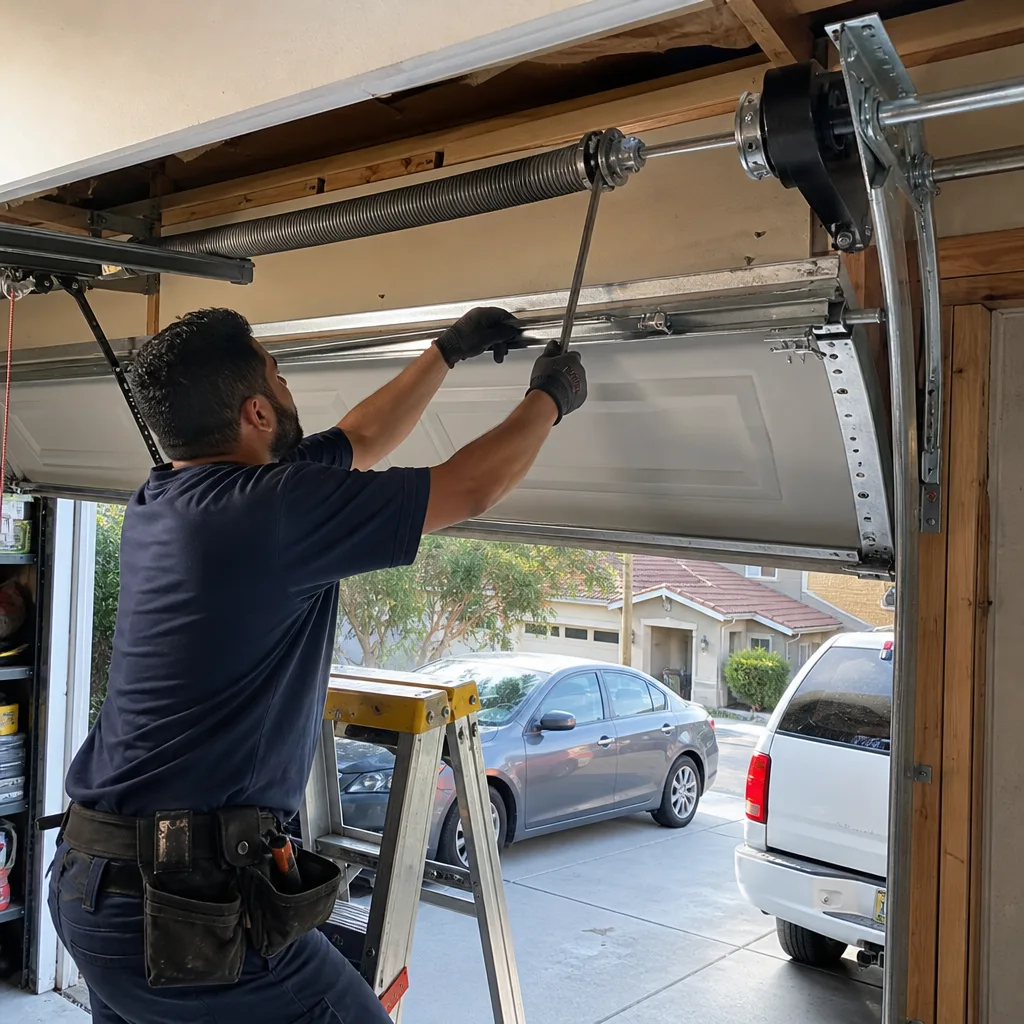 After