
Last updated October 30, 2026
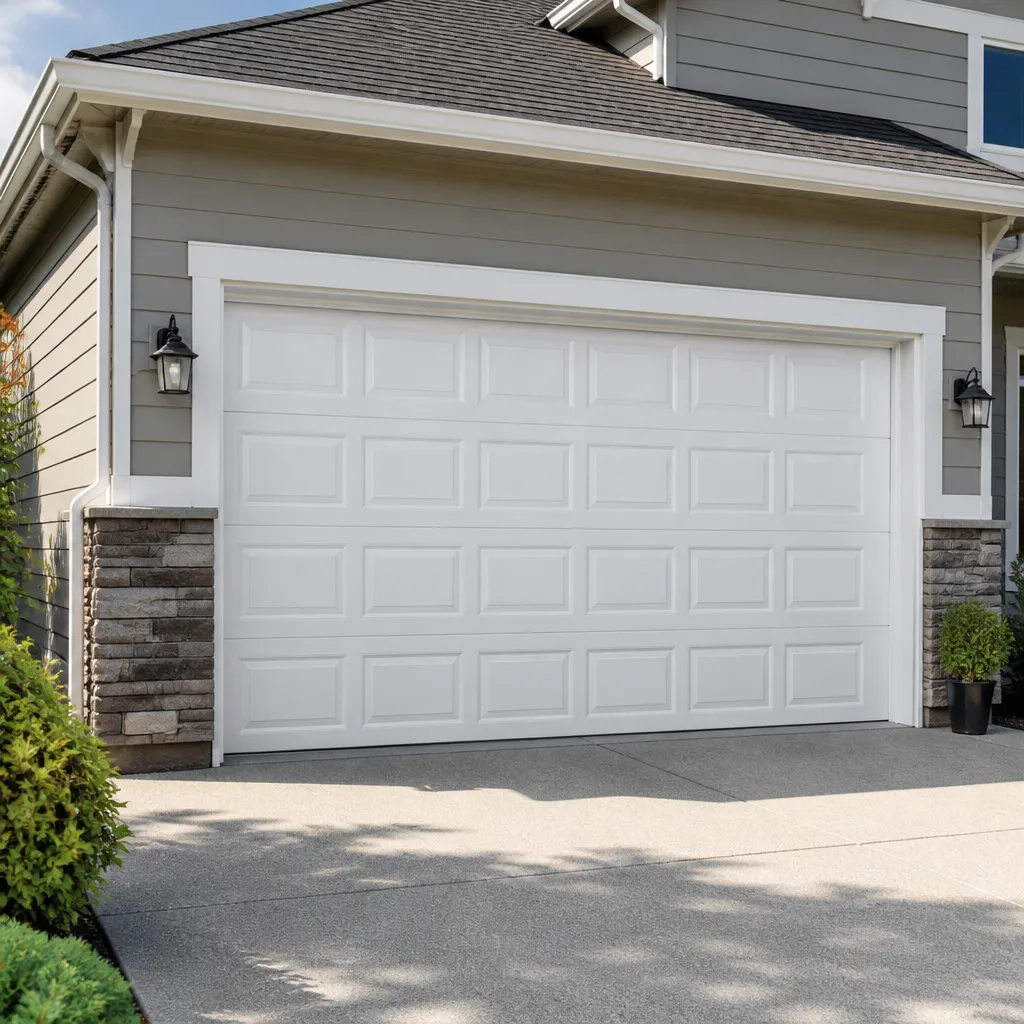 Raised-panel steel
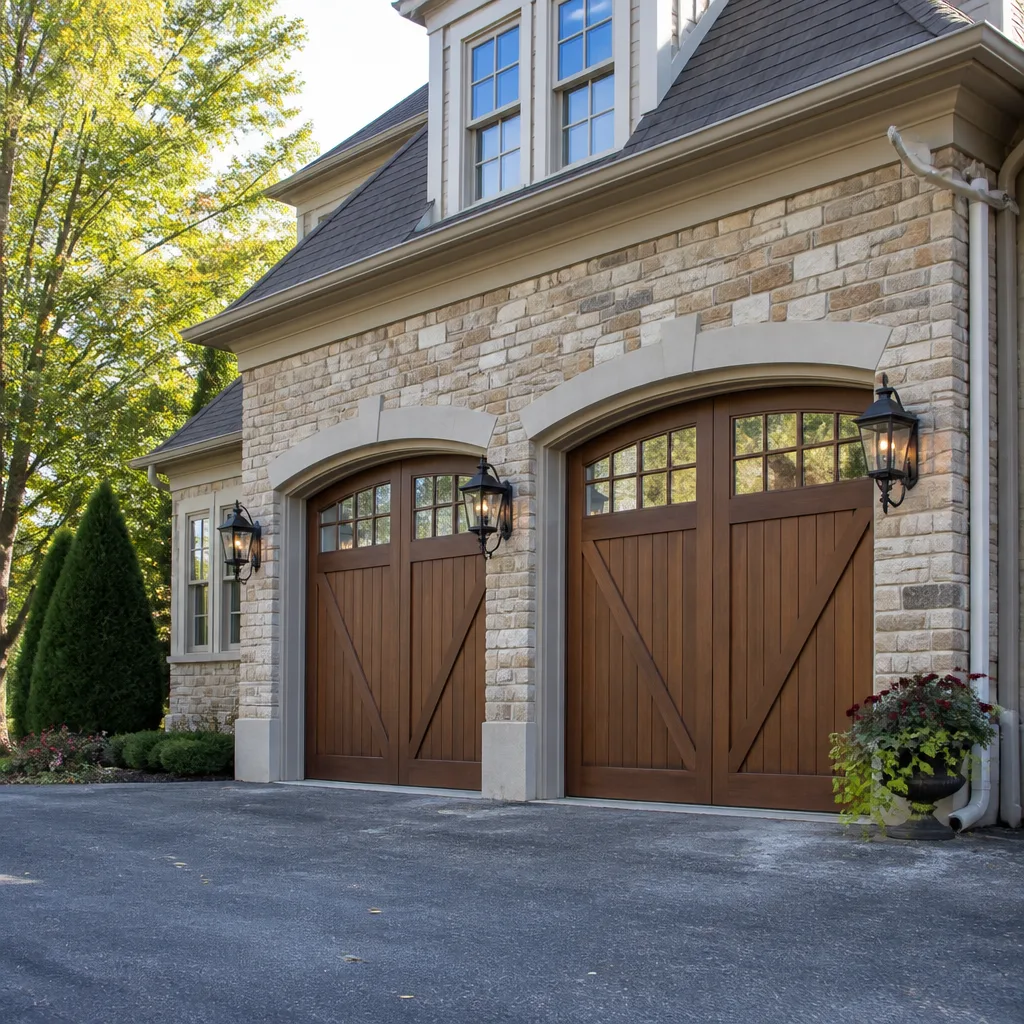 Carriage house
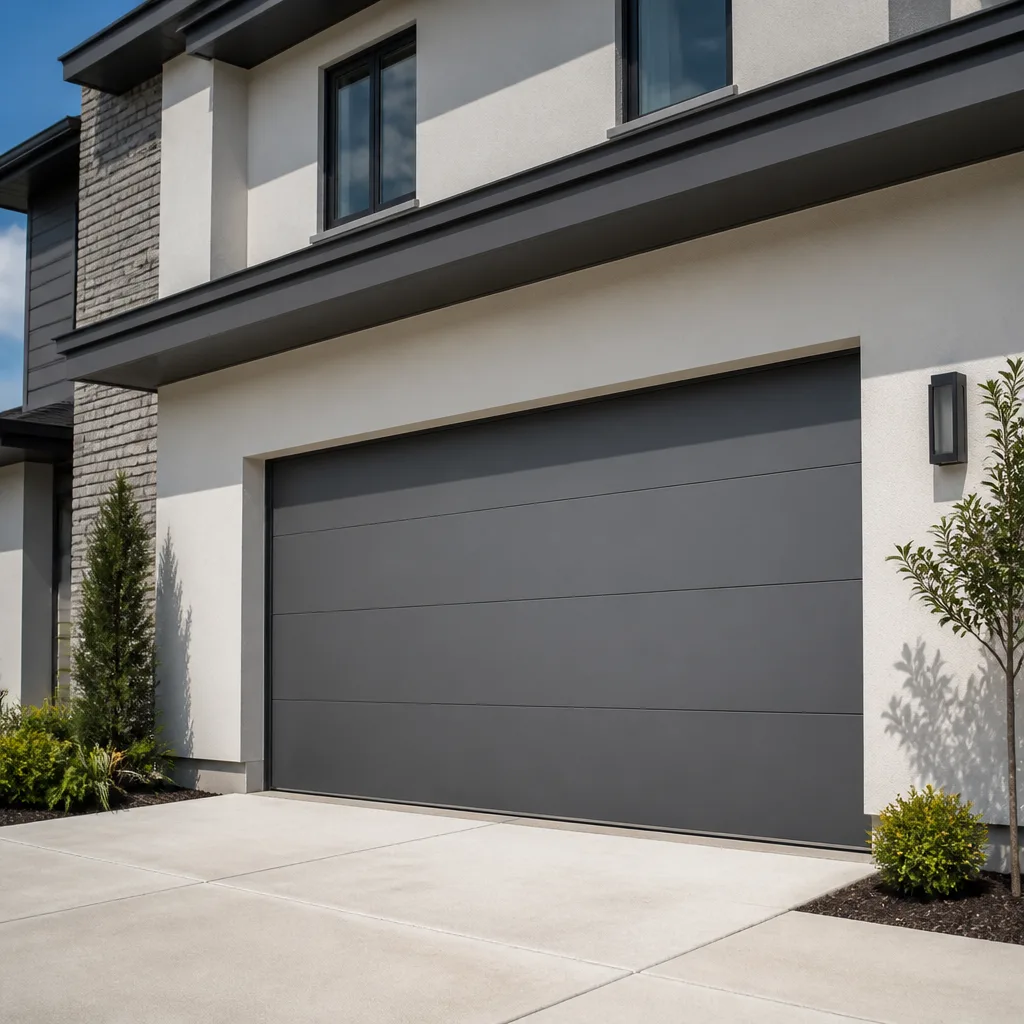 Modern flush
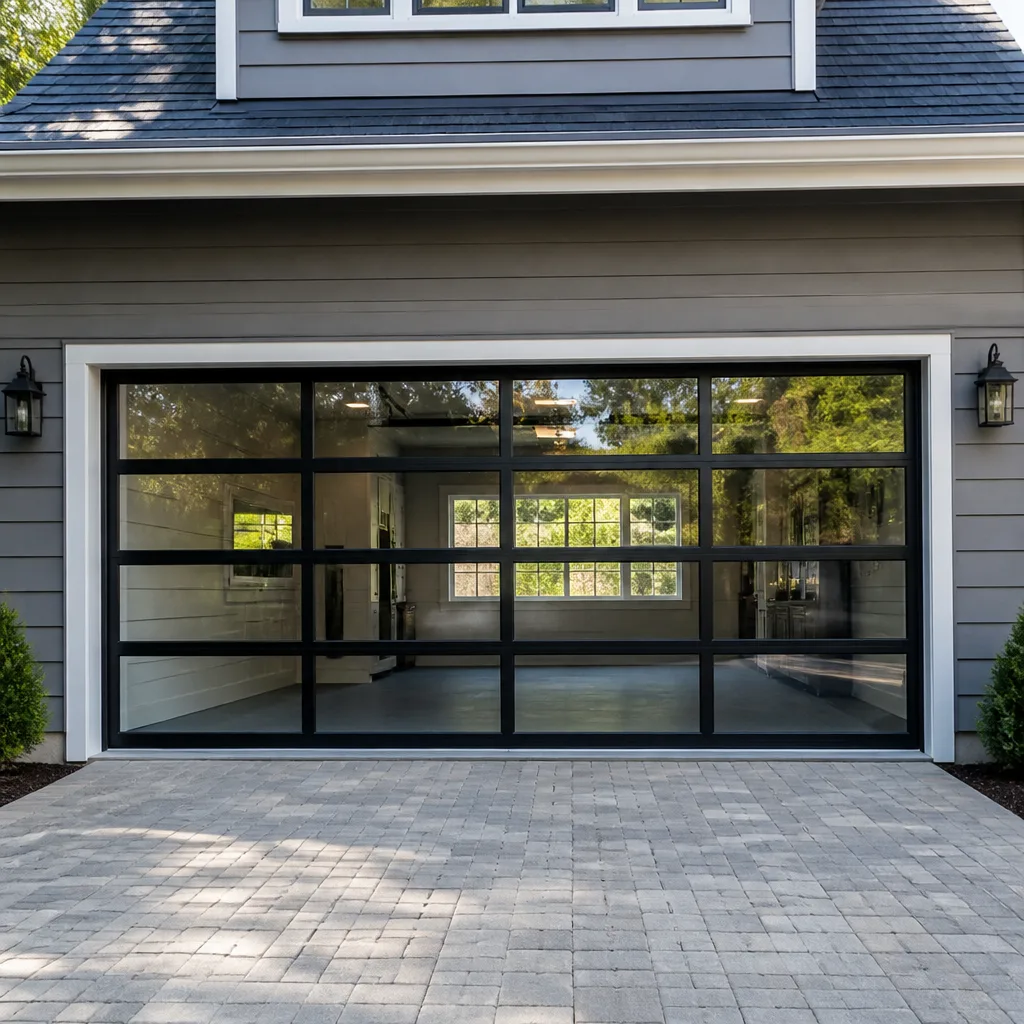 Full-view glass
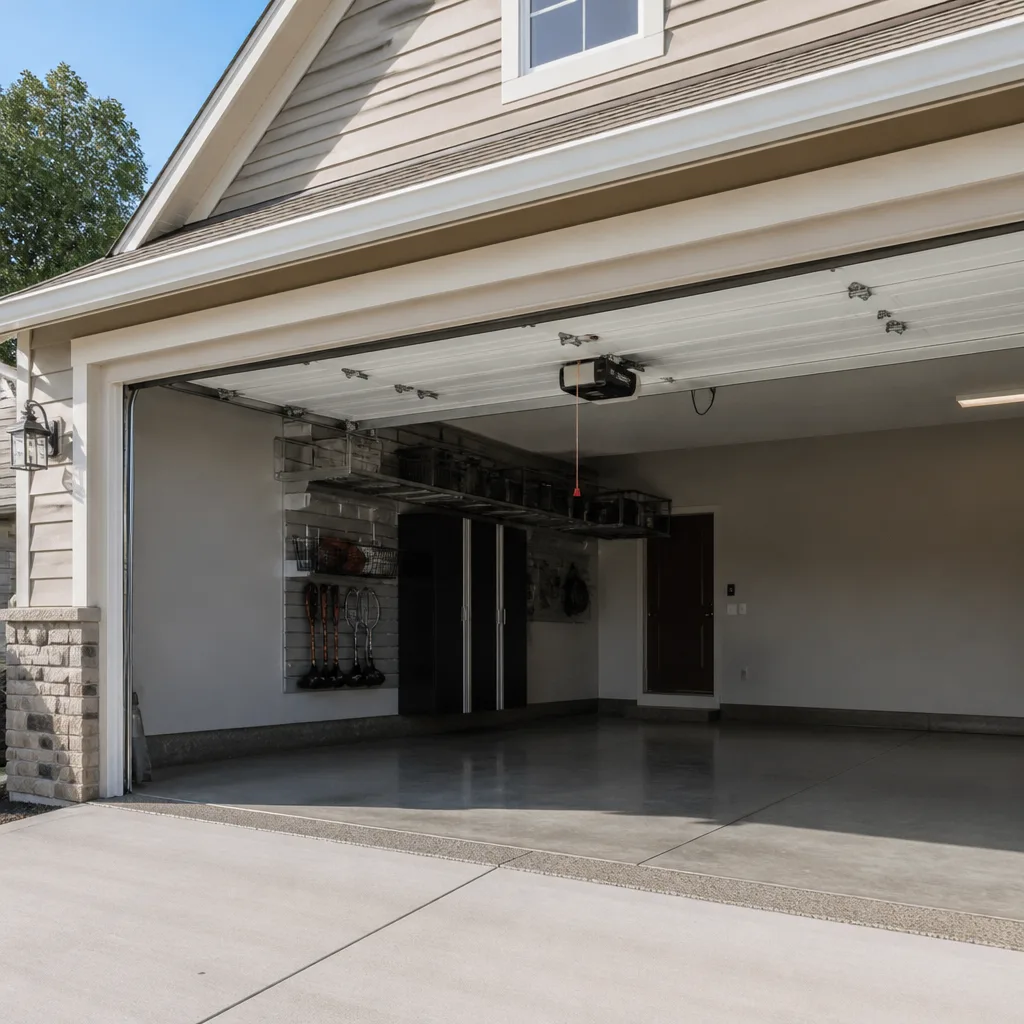 LiftMaster openers
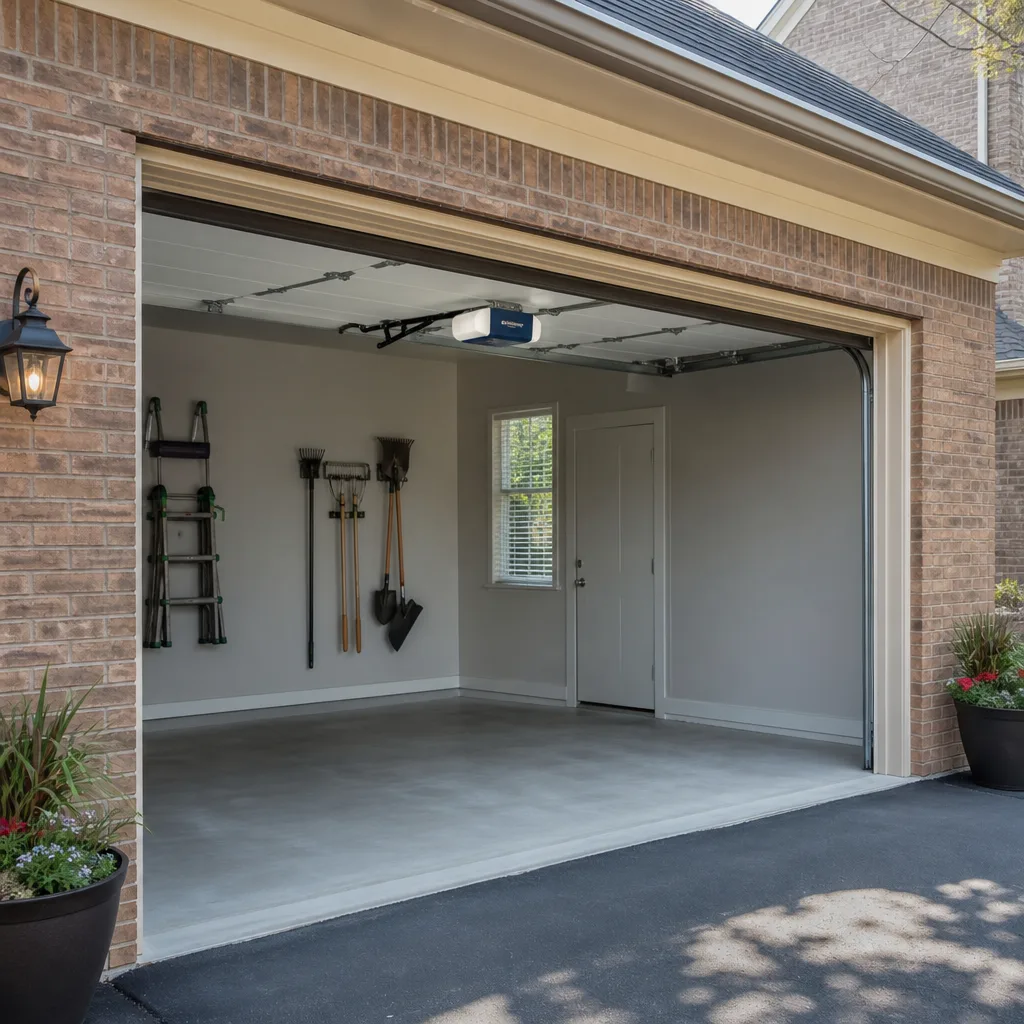 Chamberlain openers
Full 25-point door and opener safety check with every visit - springs, cables, rollers, tracks, and your LiftMaster or Chamberlain opener included
You get a price before we start. It does not change when the truck arrives.
Get your free estimateSeasonal Garage Door Care for San Bernardino: Year-Round Homeowner’s Guide
While most of the country winterizes their garage doors, San Bernardino homeowners face a different challenge entirely. August temperatures inside an uninsulated garage routinely climb past 130°F, and that heat quietly destroys opener logic boards, breaks down lubricants, and bakes weatherstripping until it cracks like old leather. This guide and our complete guide to garage door in San Bernardino explain what actually fails here, when it fails, and the maintenance calendar that gets ahead of it. You’ll learn which lubricants survive an Inland Empire summer, why Santa Ana winds loosen hardware you never look at, and how to time your maintenance around the two failure windows we see most in San Bernardino.
Quick Answer
San Bernardino garage doors don’t need winterizing; they need a three-phase calendar built around heat season (May through September), Santa Ana season (October through January), and the temperature-swing weeks of late winter. The highest-value maintenance in this climate is annual lubricant replacement with high-temperature products, weatherstripping inspection before summer, and hardware tightening before wind season. Most homeowners can handle basic inspection in 30 minutes twice a year; spring, cable, and opener circuit board issues require a trained technician.
Styles & brands we work with
Table of Contents
- Heat Season: May Through September
- The Right Lubricants for a 100°F+ Garage
- Santa Ana Season: October Through January
- Winter Temperature Swings and Spring Fatigue
- Weatherstripping: The Underrated Line of Defense
- The Twice-Yearly Maintenance Calendar
- The Two Peak Failure Windows in San Bernardino
Heat Season: May Through September
Your garage door opener’s logic board is a computer, and computers do not like 130°F. We’ve replaced more boards in August than in every other month combined. The heat doesn’t just stress the board itself: it accelerates capacitor degradation inside the motor unit, which is why openers that worked fine all winter suddenly refuse to lift in July. A door that hesitates, reverses mid-cycle, or requires holding the wall button is often showing early heat-related circuit failure rather than a mechanical problem; see our complete garage door repair guide for San Bernardino homeowners for what to check next.
Before the heat arrives, take these steps:
- Inspect the opener’s ventilation. LiftMaster and Chamberlain units have cooling vents that collect dust and cobwebs over the winter. Vacuum them gently in April. A clogged vent adds 10 to 15 degrees to the internal operating temperature, which is often the difference between a board that lasts ten years and one that dies in five.
- Check the opener’s force settings. Heat expands metal, which slightly increases rolling resistance. If your opener was set to a tight margin in cooler weather, a hot afternoon can push it into false reversal. This is a five-minute adjustment but requires knowing where the settings live on your specific unit.
- Watch the safety sensor alignment. Metal garage door tracks expand in high heat, and we’ve seen sensors that were perfectly aligned in spring drift out of alignment by August. A door that reverses for no obvious reason is often a sensor issue driven by thermal expansion.
- Test the door balance. Disconnect the opener (pull the red release cord) and lift the door manually. It should stay put around waist height. If it creeps upward or slams down, the springs are compensating incorrectly and the opener is working harder than it should in the worst possible conditions.
For Genie and Craftsman openers specifically, heat degradation tends to show up first in the wall console connection rather than the motor itself. If your keypad stops responding on a hot afternoon but works again at night, that’s a classic thermal connectivity issue worth addressing before it becomes permanent. If you’re in the Grand Terrace area and want a professional diagnosis rather than guesswork, our Garage Door Opener Repair in Grand Terrace page shows what’s covered.
The Right Lubricants for a 100°F+ Garage
Standard garage door lubricant fails in San Bernardino summers. The generic white lithium spray sold at big-box stores is rated for intermittent use up to about 300°F on metal-to-metal contact, but it thickens and gums in sustained heat when mixed with dust, which the Inland Empire supplies generously. What you need is a specialized garage door lubricant, solvent-based rather than grease-based, that penetrates pivot points and leaves a dry film instead of a sticky residue. Sticky residue attracts grit, and grit on rollers and hinges is what turns a quiet door into a grinding one by October.
What we use and recommend:
- Blaster Garage Door Lubricant: a silicone and Teflon blend that holds up in high-heat conditions and does not collect the fine desert dust that settles into everything in San Bernardino.
- 3-IN-ONE Professional Garage Door Lube: a clean formula that works well on tracks, rollers, hinges, and springs. Good heat resistance, widely available.
- WD-40 Specialist White Lithium: acceptable in a pinch for metal-on-metal pivot points, but avoid the standard multi-use WD-40, which is a solvent first and a lubricant second. It will strip existing lubrication and leave components dry.
What to actively avoid: anything labeled “penetrating oil” as your primary lubricant. Penetrating oils are for breaking free seized parts, not for ongoing lubrication. Also skip axle grease and heavy bearing grease, which turn into a gritty paste when combined with dust and 100°F heat. Clopay and Amarr doors use nylon rollers that actually perform worse with heavy grease: the grease holds sand and accelerates roller wear. A dry-film silicone lubricant is the right choice for those doors.
Santa Ana Season: October Through January
Santa Ana winds produce sustained gusts of 40 to 60 miles per hour in the San Bernardino foothills, and those gusts find every loose bolt, worn seal, and under-tensioned spring on your door. A garage door is essentially a large sail, and a 16-foot-wide door at 50 mph wind load transfers enormous force through the hinges and into the frame. The doors that fail during Santa Ana season are rarely the ones with broken parts; they’re the ones with loose parts that the wind finds before the homeowner does.
Run this checklist in late September, before the winds really pick up:
- Tighten every hinge bolt and track bracket. A 9/16-inch wrench handles most residential hardware. You’re not cranking anything down with maximum force; you’re confirming nothing has worked loose over the summer. Two or three slightly loose bolts spread across sixteen hinges add up to a door that rattles and wears unevenly.
- Inspect the side and top clearance seals. These are the rubber or vinyl strips that close the gap between the door and the frame. Wind forces air through any gap, and air carries dust and debris directly into your garage. Worn seals also let wind pressure get behind the door, which increases the effective load during gusts.
- Test the lock engagement. If you have a manual slide lock or an opener with an automatic lock, apply it and try to lift the door from outside. A properly engaged lock should make the door feel completely rigid. Any play means the strike plate or lock bar needs adjustment. Santa Ana season is the one time of year a manual lock actually matters as more than a theft deterrent.
- Check the bottom seal. A bottom seal that’s cracked or flattened lets wind-driven dust and debris enter at the floor line. In San Bernardino, this is how garages fill with leaves and tumbleweeds during wind events.
Wind-related wear also shows up in the torsion spring mounting brackets. These brackets hold the spring assembly to the header, and repeated pressure cycling from wind gusts can slightly loosen the lag bolts. If the bracket moves at all when you push on it, the lag bolts need attention. Do not attempt to tighten or adjust anything connected to a torsion spring under tension. That’s a job for a technician with the right winding bars and training, and it’s one of the several reasons customers call Tradesman Garage Door Repair home for seasonal tune-ups.
Winter Temperature Swings and Spring Fatigue
San Bernardino winters are mild by any reasonable standard, but the overnight temperature drops matter more than the daytime averages. A garage that hits 75°F at 3 p.m. can drop to 38°F by 5 a.m., and that daily 35-degree swing causes measurable expansion and contraction in torsion springs. Steel springs are rated for a finite number of cycles, typically 10,000 for standard springs and 20,000-plus for high-cycle versions, but those ratings assume consistent operating conditions. The thermal cycling we get in the Inland Empire effectively adds stress to every cycle during the winter months.
What this means in practical terms: if a spring is nearing the end of its life, winter is when it breaks. We see a noticeable spike in spring failures from late December through February, not because it’s cold, but because the temperature swings accelerate the fatigue that’s been building for years. Here’s what to watch for:
- The door feels heavier than normal. Winter’s cooler temperatures make the metal springs slightly stiffer, which changes the feel of manual operation. If the door has felt heavy for months and now feels like dead weight, the spring has likely already begun to lose tension.
- Visible gaps in the spring coil. Torsion springs look like tightly wound coils. If you see a visible separation or a jagged gap in the coil when the door is in the closed position, the spring is cracked or broken. Do not attempt to operate the door by hand or by opener if you observe this.
- The door only opens halfway. With a broken spring, the opener is trying to lift the full weight of a door it was never designed to handle alone. Operating it in this state risks burning out the opener motor and damaging the gear train.
If you’re replacing springs during the winter, ask for high-cycle springs. The price difference is modest, and in a climate where temperature swings are the norm, the extended cycle rating pays for itself in added service life. The same logic applies if you have a newer Clopay or Amarr door: these doors are often lighter than older steel ones, which means their springs are rated for specific weight profiles and should be matched precisely, not approximated. For full-system evaluation, our Garage Door Repair in Grand Terrace service covers springs, cables, and tracks.
Weatherstripping: The Underrated Line of Defense
Weatherstripping on a garage door does more than keep out weather. In San Bernardino, it’s the barrier against dust, heat, and the insects that follow both. A garage door with degraded weatherstripping lets in the fine particulate dust that coats everything you store, accelerates the wear on every moving part, and makes the garage five to ten degrees hotter in summer, which then cooks your opener’s circuit board faster. It’s a small component with outsized consequences, and it’s one of the most commonly overlooked items on a maintenance walkthrough.
The three seals that matter:
- Bottom seal (astragal): the rubber strip along the bottom edge of the door. It compresses against the floor to create the primary seal. San Bernardino’s concrete floors expand and contract with temperature, and the seal wears faster where the concrete has settled or cracked. Look for flattening, cracks in the rubber, and light visible under the door when it’s closed.
- Side and top seals (weatherstrip): the vinyl or rubber strips on the door jambs and header. These close the gap between the door and the frame. They harden and crack in the heat, especially on west-facing garages that get the full force of afternoon sun. Once cracked, they lose their flexibility and can’t conform to the door’s slight movements during wind.
- Panel joint seals (on sectional doors): the thin strips between door panels that prevent wind and water intrusion at the panel seams. These are less critical in our dry climate but still worth a look, particularly on wood doors, which expand and contract more than steel.
Replacing weatherstripping requires removing the old material, cleaning the channel or mounting surface, and seating the new material properly. On a bottom seal, the old strip often needs to be lubricated with soapy water to slide out, and the new one needs to be centered so it doesn’t bind at the ends. This is straightforward work for most homeowners with basic tools, though door-specific seal profiles matter. A Wayne Dalton bottom seal is not interchangeable with a Clopay or Amarr seal, and forcing the wrong profile creates gaps that defeat the purpose. If you’re unsure which seal your door takes, our buyer’s guide for choosing the right garage door brand in San Bernardino can help you identify your door’s specs, or a quick call to a garage door shop saves you from buying the wrong part twice.
The Twice-Yearly Maintenance Calendar
You do not need to maintain your garage door monthly, and anyone who tells you otherwise is probably selling a subscription service. In this climate, two focused maintenance sessions per year cover the bases if you do them properly. The timing matters more than the frequency: you’re not maintaining the door in general, you’re maintaining it for the conditions that are about to arrive.
Late April, before heat season:
- Lubricate all moving parts. Apply a dry-film garage door lubricant to the rollers, hinges, springs, and bearing plates. Wipe away any excess. The goal is a light, even coat, not a dripping application.
- Inspect weatherstripping. Check the bottom seal for cracks and the side seals for hardening. Replace anything that’s lost its flexibility. A pliable seal is what keeps the garage cooler and the dust out.
- Vacuum opener vents. Remove the dust and cobwebs around the motor unit’s cooling openings. The less trapped heat, the longer the circuit board lasts.
- Test the auto-reverse safety function. Place a 2×4 flat on the ground under the door’s path and close the door. It should reverse within a second of contacting the wood. If it doesn’t, address the sensor or force settings before regular use resumes.
- Check the door balance. Disconnect the opener and operate the door manually. A properly balanced door opens smoothly with consistent resistance and stays put at the halfway point.
Late September, before Santa Ana season:
- Tighten hardware. Go through the hinges, track brackets, and opener rail mounting points with a wrench. Check the torsion spring mounting bolts for any visible movement.
- Inspect seals again. The summer heat has done its worst by September. Replace anything that cracked during the hot months, particularly the bottom seal on west-facing doors.
- Test the lock. If your door has a manual lock, engage it and confirm the door has no play. Adjust the strike plate if needed.
- Listen to the door. Operate the door from both the opener and manually, listening for grinding, squeaking, or rattling. A quiet door is a correctly adjusted door. Any new noise in the fall is a signal to investigate.
- Check the safety sensors. Confirm the photo eyes are clean, aligned, and free of obstruction. This is a two-minute check that prevents most false-reversal service calls.
The Two Peak Failure Windows in San Bernardino
If we plotted every service call we respond to on a calendar, two clusters would stand out clearly: the second half of August and the weeks right around New Year’s. The August cluster is heat-driven, and the January cluster is spring-driven. Understanding why these windows exist helps you schedule maintenance before them and avoid being stuck with a non-functional door at the worst possible moment.
Peak One: Mid-to-late August. By August, the garage has been baking well above 120°F for three solid months. Circuit boards that were marginal in June have been thermally stressed every afternoon. Lubricant that was applied last fall has broken down and collected dust. The door is dry, the opener is hot, and every component is operating at a slight disadvantage. This is when opener motors burn out, circuit boards fry, and the accumulated heat finally kills components that were already weakened. The fix window is the April maintenance we outlined earlier: fresh lubricant, clean vents, balanced door. An opener that coasts through August without issue will almost always make it through the rest of the year.
Peak Two: Late December through January. The winter failure cluster is all about springs. The temperature swings are at their widest, the door gets used more frequently during the holidays, and springs that were already at 80 to 90 percent of their cycle rating cross into failure territory. The door feels heavy one morning, the spring lets go on the next cycle, and now the opener is straining against a full-weight door. This failure is predictable if you’re paying attention: doors with aging springs typically show increased opener strain noise, slower operation, and a heavier manual feel for weeks before the actual break.
For homeowners in Grand Terrace and the surrounding Inland Empire communities, knowing these windows means scheduling your twice-yearly checks early enough to act. The Garage Door Installation in Grand Terrace page covers what happens when a door is beyond repair and replacement becomes the right call, but a well-maintained door should serve for 15 to 20 years before that conversation is necessary.
Common Mistakes to Avoid
- Using WD-40 as a garage door lubricant. The standard multi-use product is a solvent that strips existing lubricant and leaves components dry within days. You’ll make the door quieter for about a week, then noisier than before.
- Greasing the tracks. Tracks don’t need lubrication at all. Rollers ride on bearings inside the track, and grease on the track surface just attracts dust and creates resistance. Lubricate the rollers, hinges, and springs, not the track itself.
- Ignoring a noisy door because “it still works.” Noise is feedback. A grinding sound is metal-on-metal contact, which means something is wearing out. Catching a worn roller at the noise stage costs a small roller replacement; ignoring it leads to a track or hinge failure.
- Disconnecting the opener during a spring break and operating the door manually. If a spring has broken, the door’s weight is no longer counterbalanced. Operating it manually risks the door slamming down and causing injury or property damage.
- Replacing weatherstripping with whatever’s on the shelf at the hardware store. Door-specific profiles matter. A generic seal that doesn’t match the channel won’t seat properly and will tear within a season. San Bernardino’s sun and heat accelerate that wear.
- Skipping the balance test because the opener “handles it.” The opener is not designed to lift the door’s full weight; the springs do that. If the springs are losing tension, the opener picks up the slack until it burns out. A two-minute manual balance test catches this before the opener becomes the casualty.
- Waiting until the door stops working to schedule maintenance. By the time a door fails, the repair is usually more expensive than the maintenance that would have prevented it. The entire point of seasonal care is to act before the failure windows arrive.
See the difference
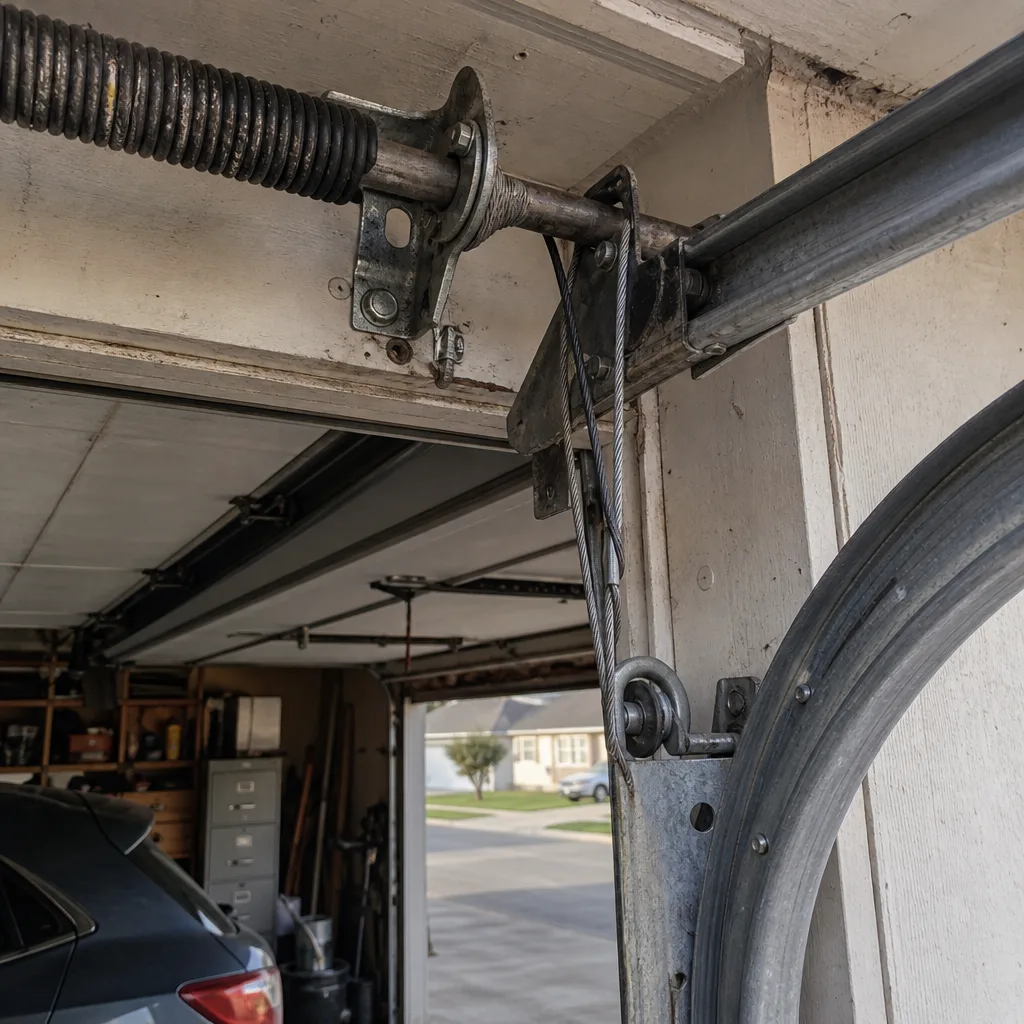 Before
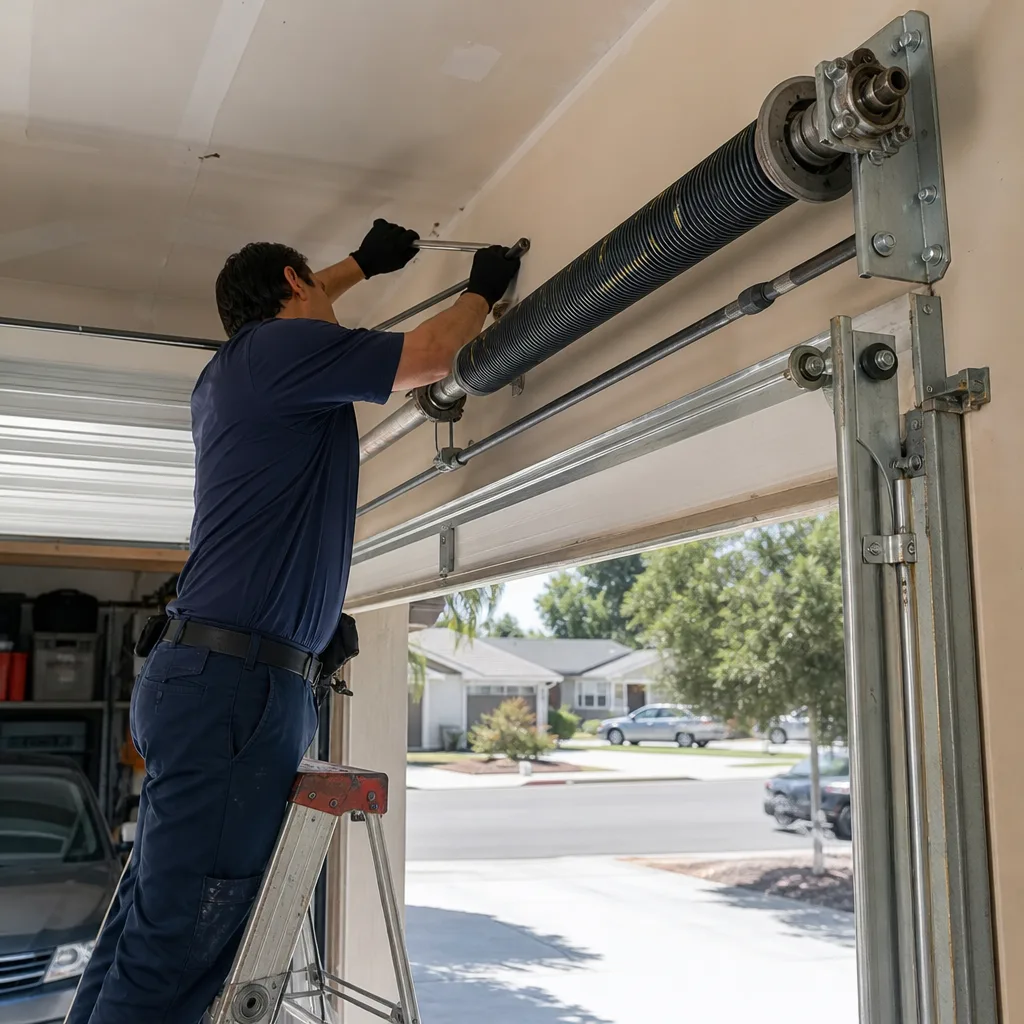 After
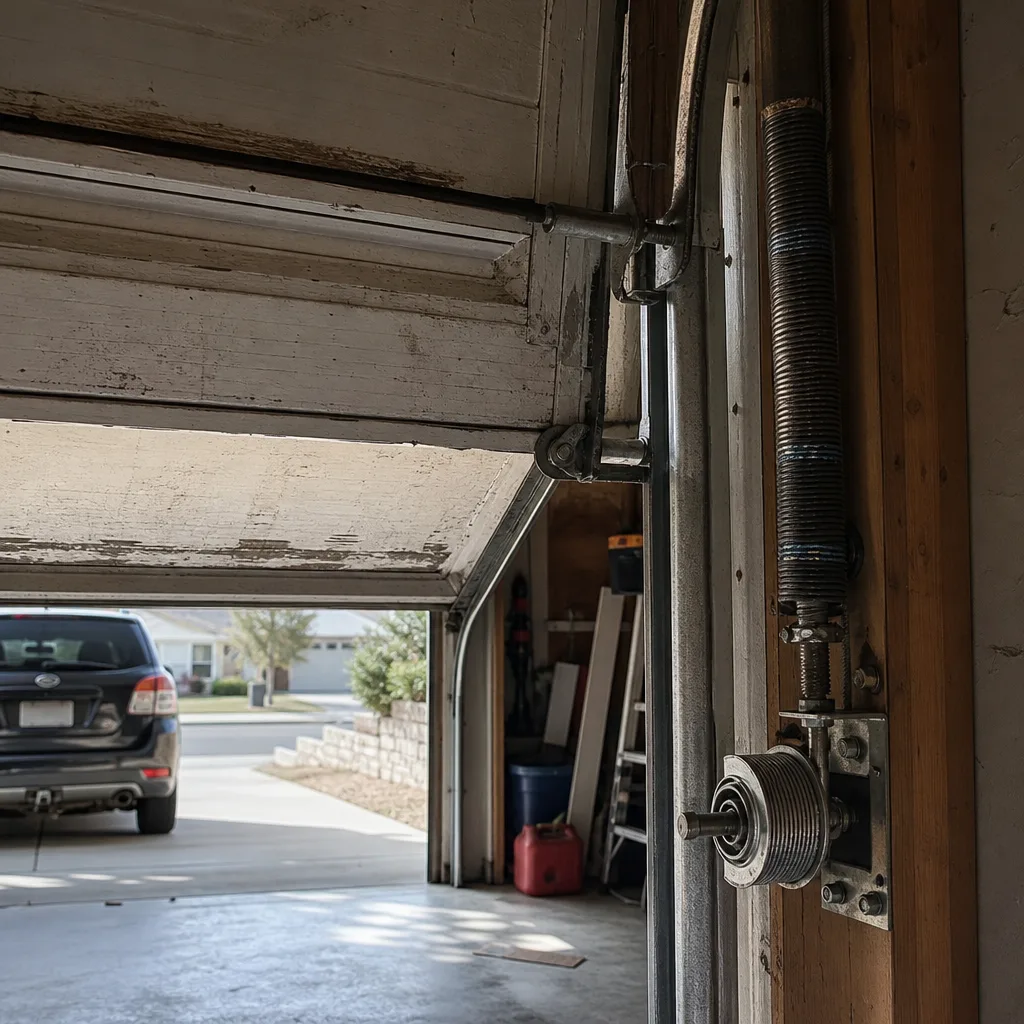 Before
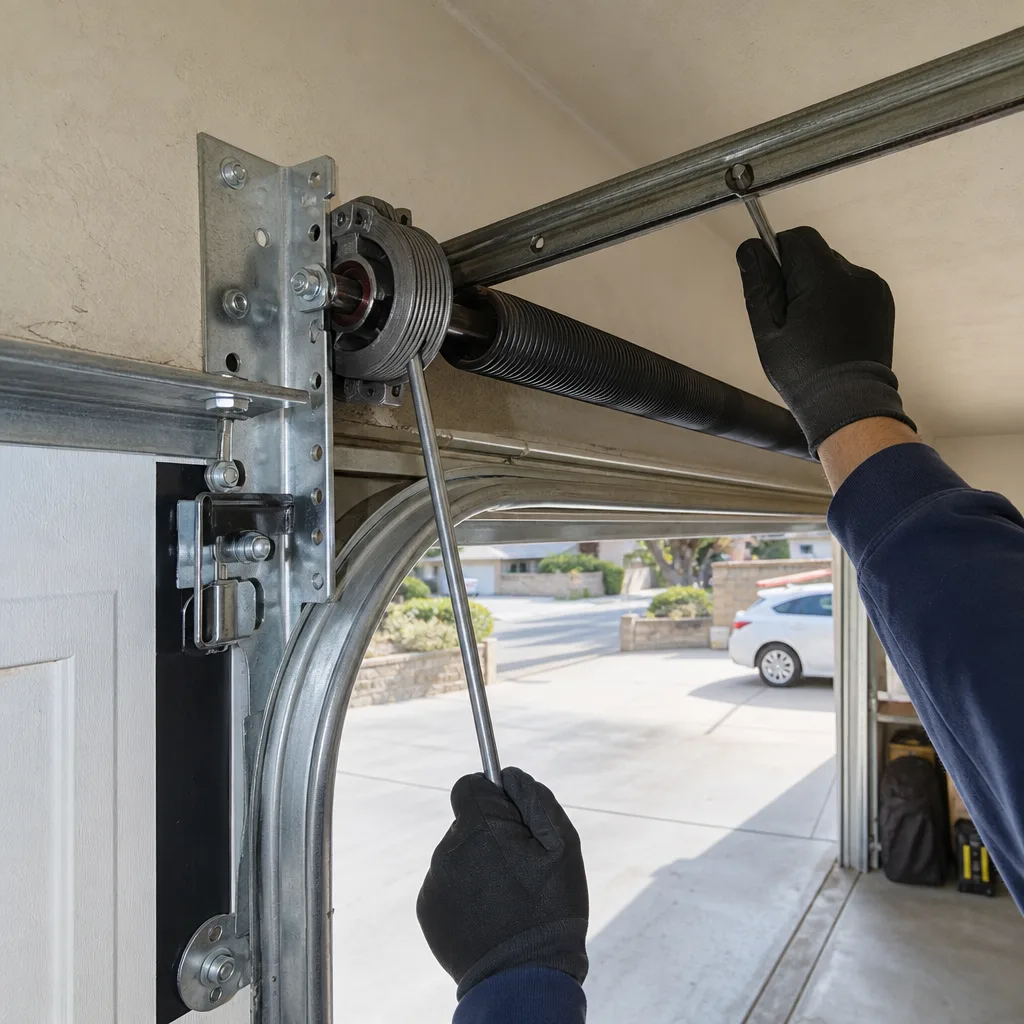 After
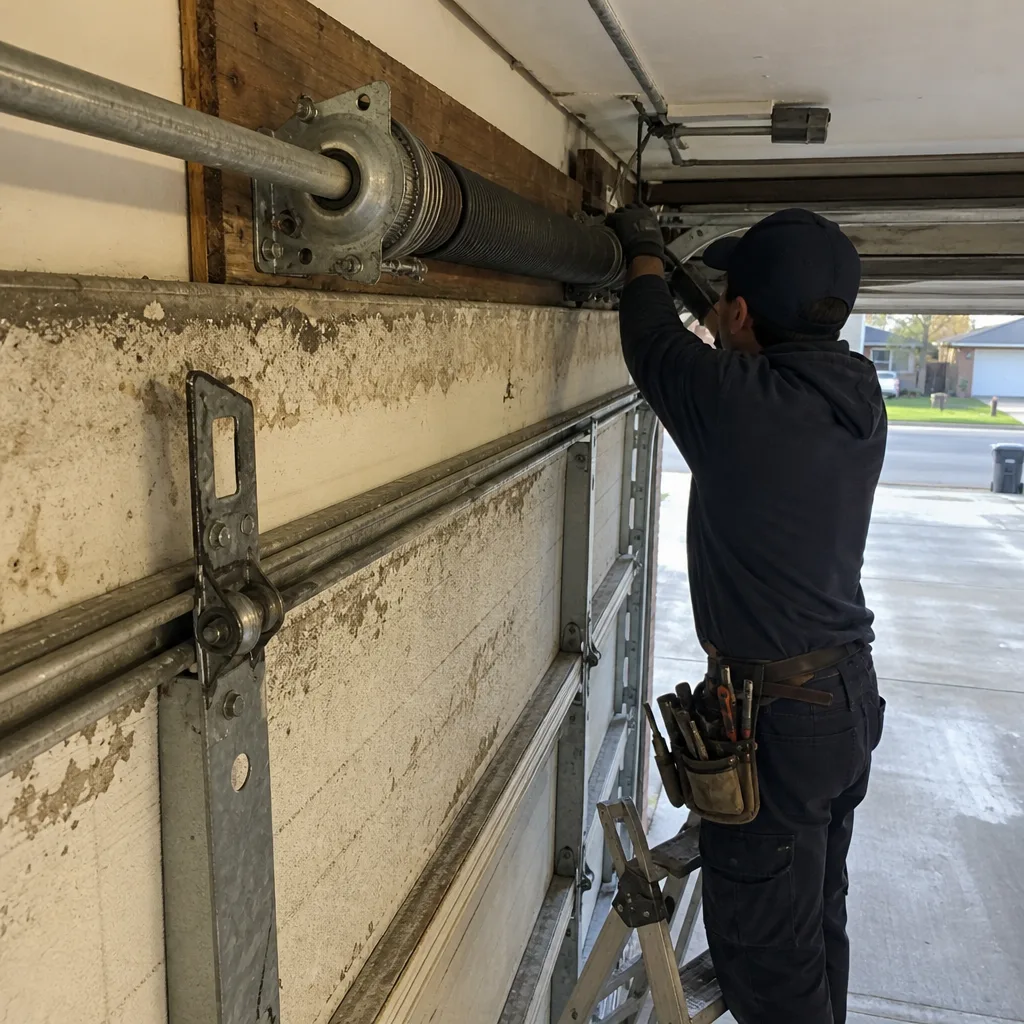 Before
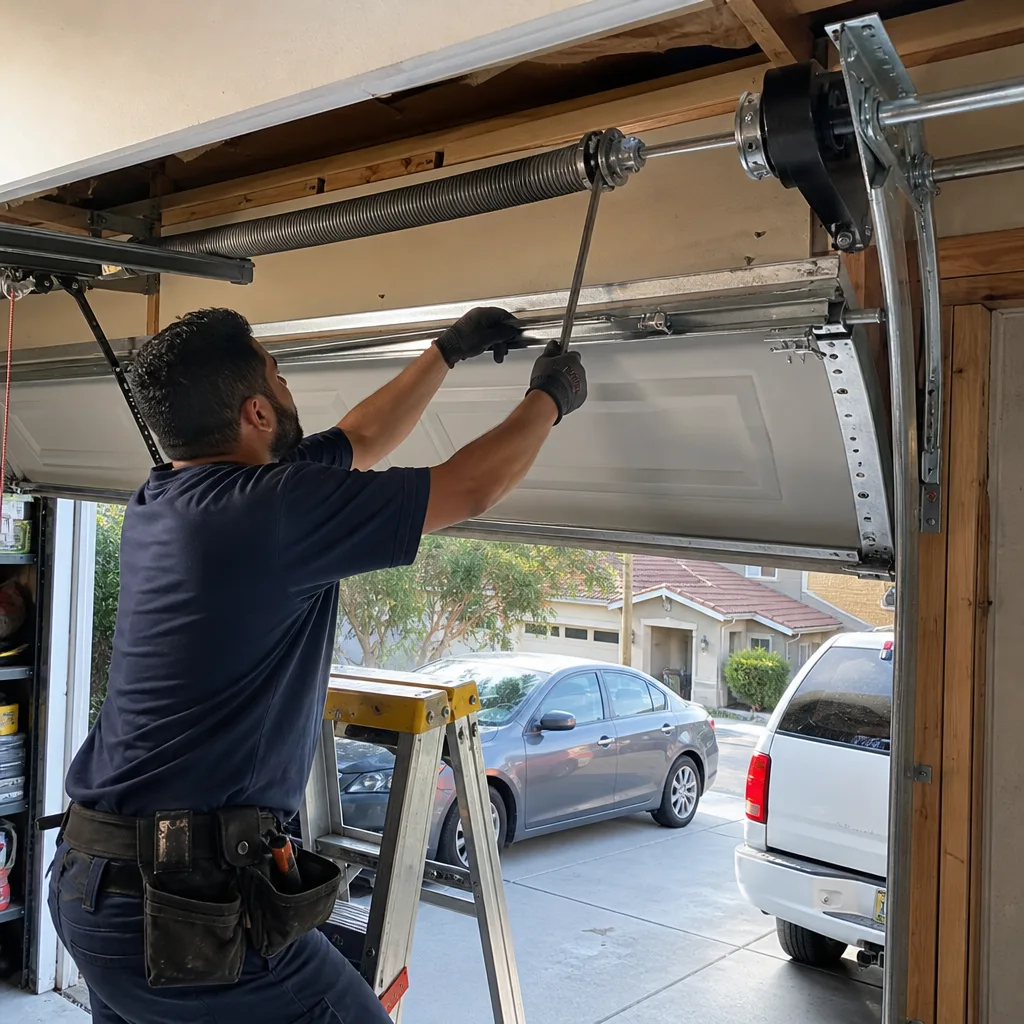 After
When to Call a Professional
Some maintenance tasks are safe for homeowners, and some are not. Anything involving torsion springs falls firmly into the second category. Springs under tension store enough energy to cause serious injury, and proper service requires winding bars, specific technique, and an understanding of how to balance the spring pair correctly. If you see a gap in a spring coil, hear a loud bang from the garage, or find that the door won’t open more than a few inches, stop operating the door and call a technician. The same applies to cable replacement: cables route through pulleys under spring tension, and a snapped cable can whip with considerable force.
Opener circuit board issues are also best left to professionals, particularly if the failure is intermittent and heat-related. Diagnosing a failing board versus a failing capacitor versus a sensor issue requires testing equipment and experience with the specific opener model. Tradesman Garage Door Repair offers free estimates in San Bernardino and the surrounding area. Call (855) 916-6950 and we’ll diagnose the issue, quote the repair before any work begins, and make sure you’re not paying for work you don’t need.
Frequently Asked Questions
Twice a year is right for this climate: once in late April before the heat builds, and once in late September before Santa Ana season. The summer heat breaks down lubricants faster than the manufacturer’s recommended six-month interval accounts for, so sticking to an April/September schedule keeps your door lubricated during the two most demanding periods. Use a dry-film garage door lubricant, not a standard multi-use spray. Call (855) 916-6950 if you want a professional lubrication service as part of a seasonal tune-up.
Heat is the biggest threat by far. Garage interiors in San Bernardino routinely exceed 130°F in July and August, which accelerates circuit board failure, capacitor degradation, and motor wear. An opener that’s well-ventilated, properly adjusted, and paired with a balanced door handles the heat much better than one that’s fighting a heavy door with clogged cooling vents. The seasonal maintenance we recommend in April specifically targets these heat-related failure points.
Sustained Santa Ana winds put real structural stress on garage doors by pressing against the full face of the door and forcing air through gaps at the seals. The damage is usually accumulative rather than sudden: loose hardware rattles, seals degrade faster, and wind-driven dust accelerates wear on rollers and hinges. Tightening hardware and inspecting seals before wind season is the most effective prevention.
The warning signs are a heavier-feeling door, a door that opens slower than it used to, increased opener noise during operation, and a visible gap in the spring coil when the door is closed. Springs have a finite cycle life, and in San Bernardino’s temperature-swing climate, the last five to ten percent of that life often comes with noticeable changes in door behavior. If you observe any of these signs, stop using the door and have the springs inspected before they fail completely.
Not necessarily every year, but inspect it twice a year and expect to replace the bottom seal every two to three years in this climate. The UV exposure and heat in San Bernardino degrade rubber and vinyl faster than coastal climates experience, and a west-facing garage door shortens that lifespan further. Replace weatherstripping when it shows cracks, hardening, or when you can see light under the closed door.
Yes, especially if your door gets opened four or more times per day. High-cycle springs are rated for roughly double the cycles of standard springs, which translates to significantly longer service life in practical terms. The upgrade cost is modest relative to the inconvenience and expense of an unexpected spring failure, and in a climate where temperature swings add stress to every cycle, the extended rating is genuinely worth it. Call (855) 916-6950 for a quote on spring replacement with high-cycle options.
The Bottom Line
San Bernardino’s garage door maintenance picture comes down to three seasons: heat, wind, and temperature swing. Get ahead of heat with April lubrication and opener care. Get ahead of wind with September hardware tightening and seal inspection. Get ahead of spring failure by replacing aging springs before winter’s daily thermal cycles finish them off. Two focused maintenance sessions per year, roughly 30 minutes each, prevent most of the failures that leave Inland Empire homeowners stuck outside their garages. For anything involving springs, cables, or opener electronics, a professional inspection is the safer route, and you can find more guides & resources on our blog. Tradesman Garage Door Repair serves San Bernardino and the surrounding communities with repairs, opener service, and full installations; we work on the brand you already have, and we quote the price before any work begins.
Written by the team at Tradesman Garage Door Repair, serving San Bernardino since 2016.