
Last updated October 30, 2026
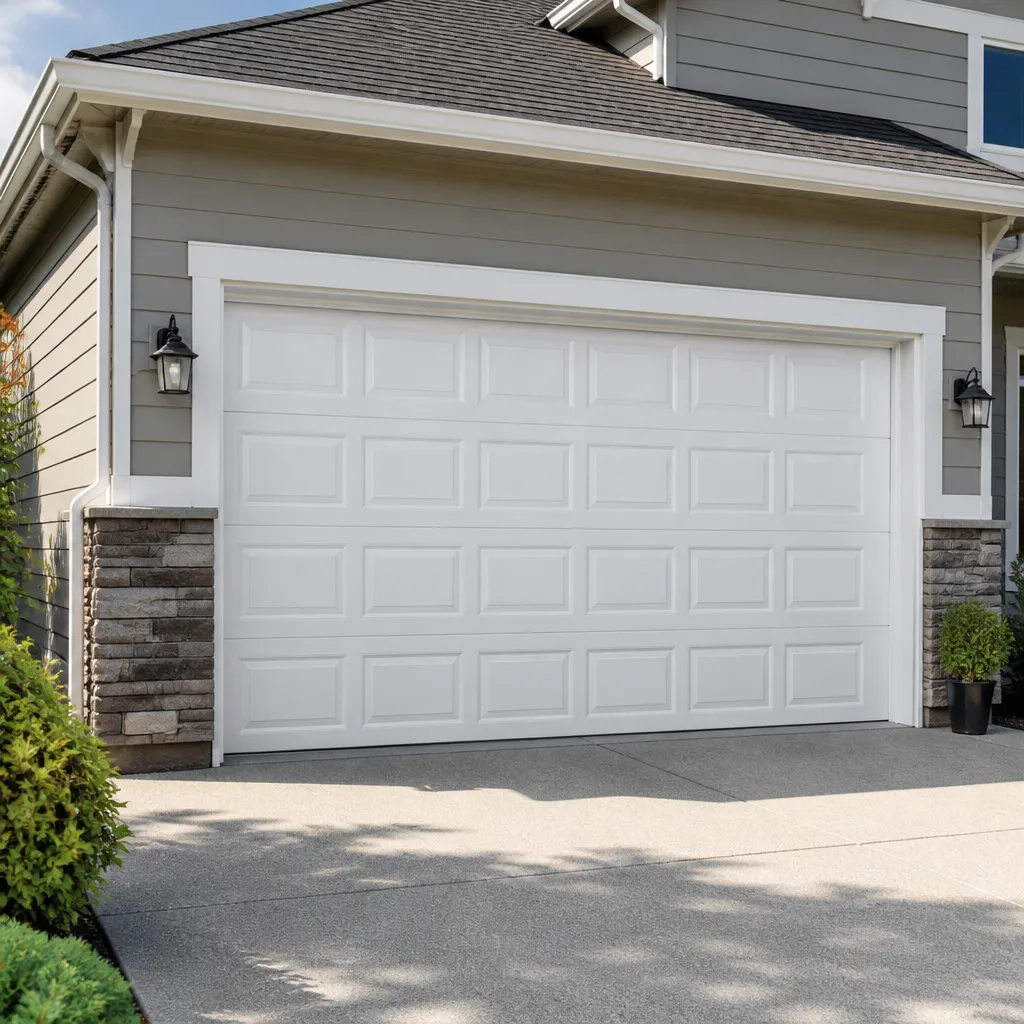 Raised-panel steel
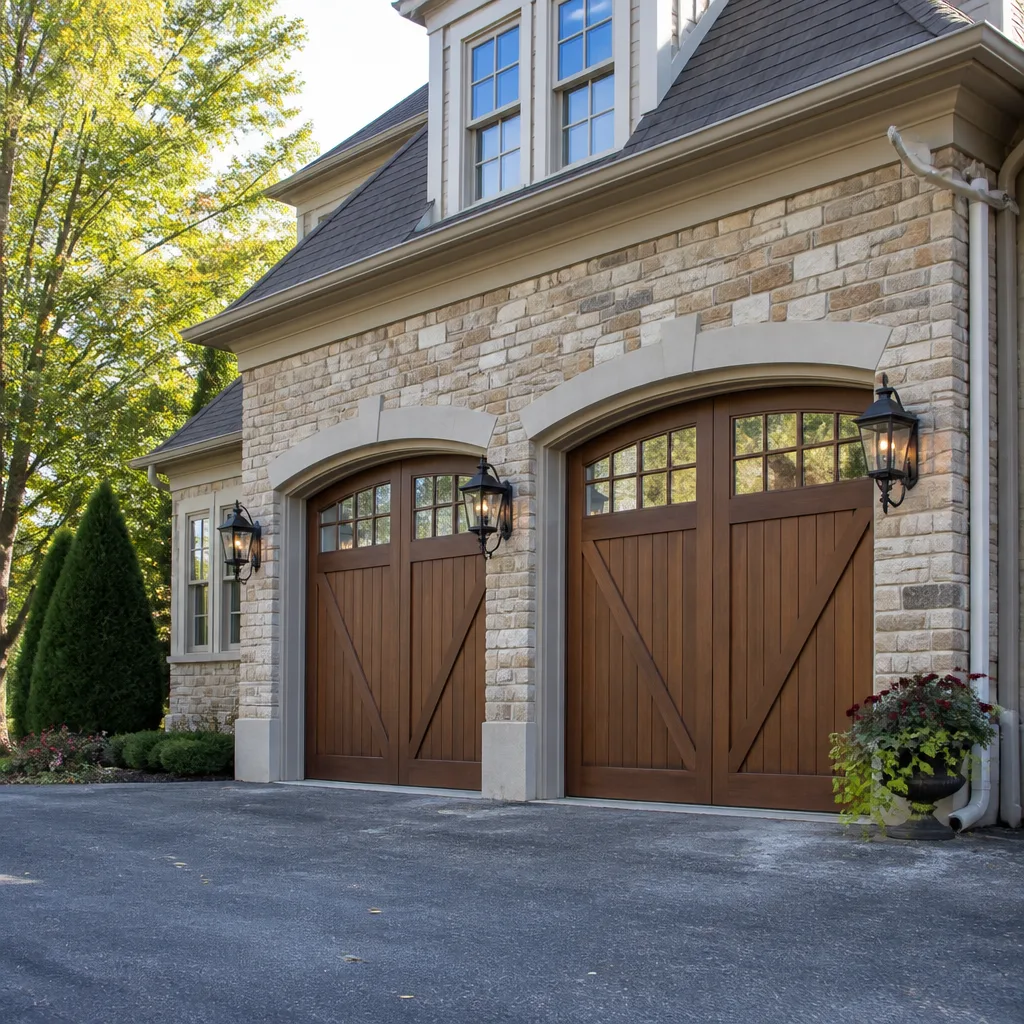 Carriage house
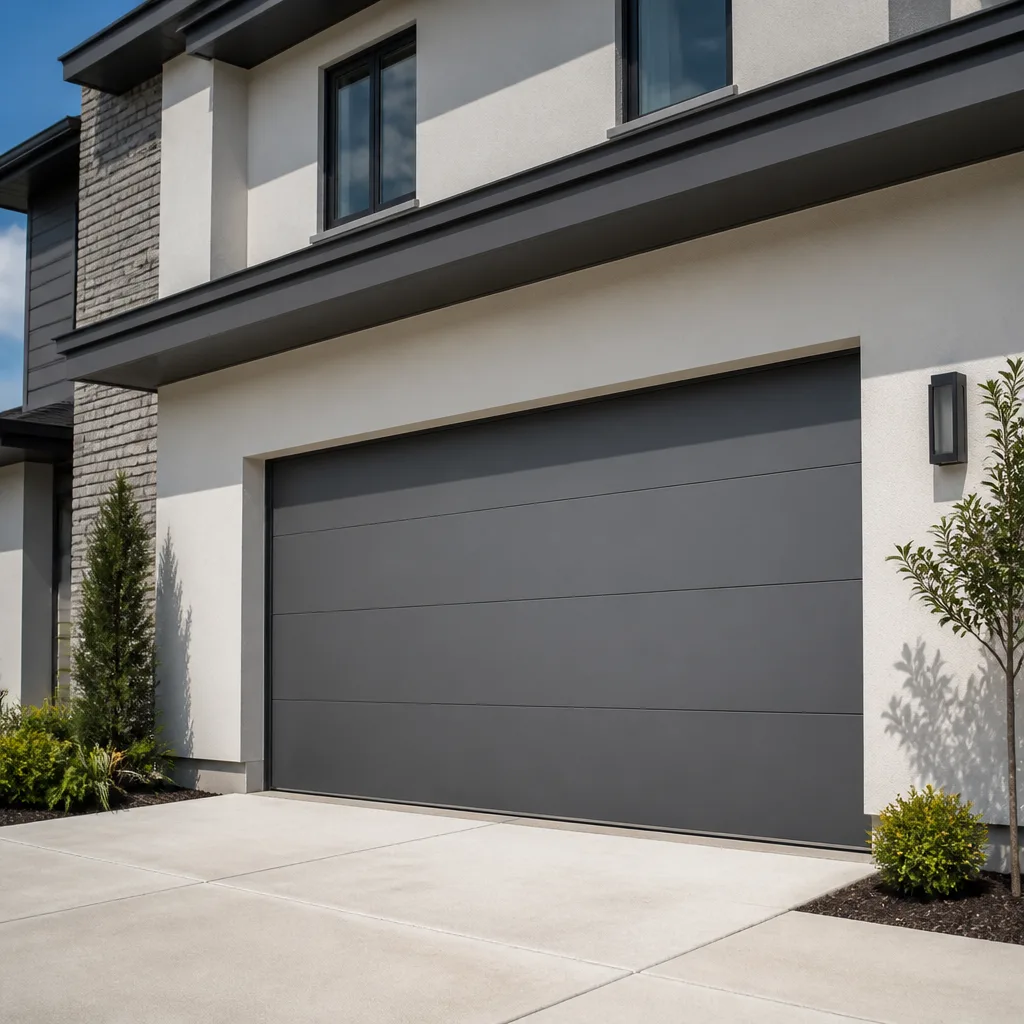 Modern flush
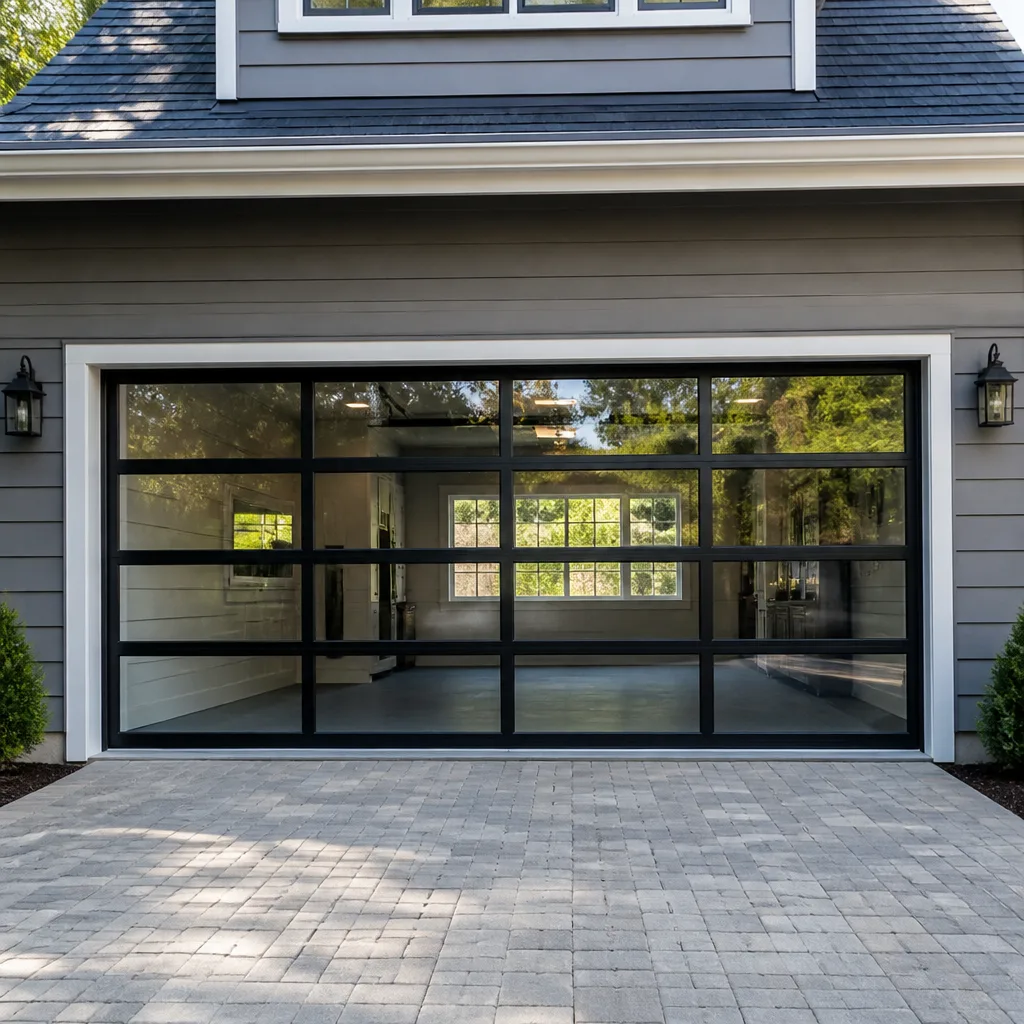 Full-view glass
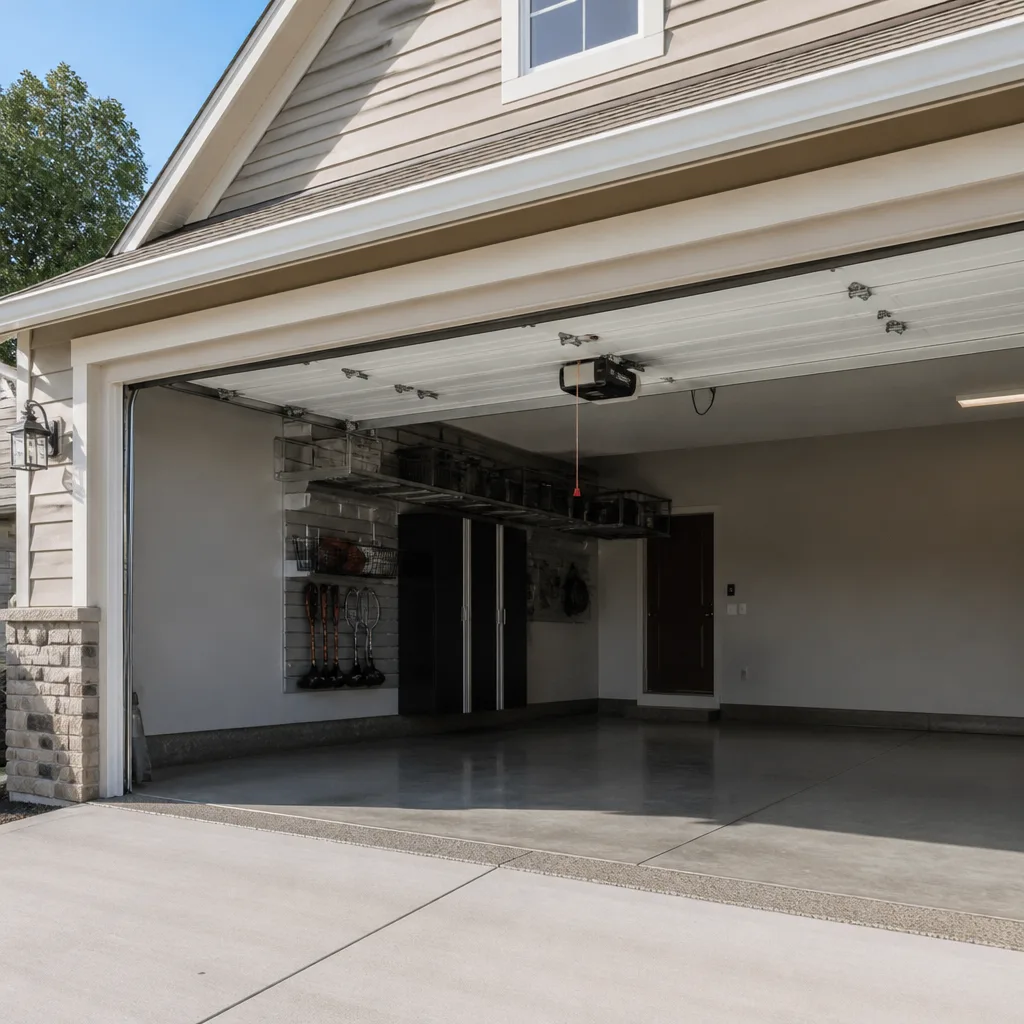 LiftMaster openers
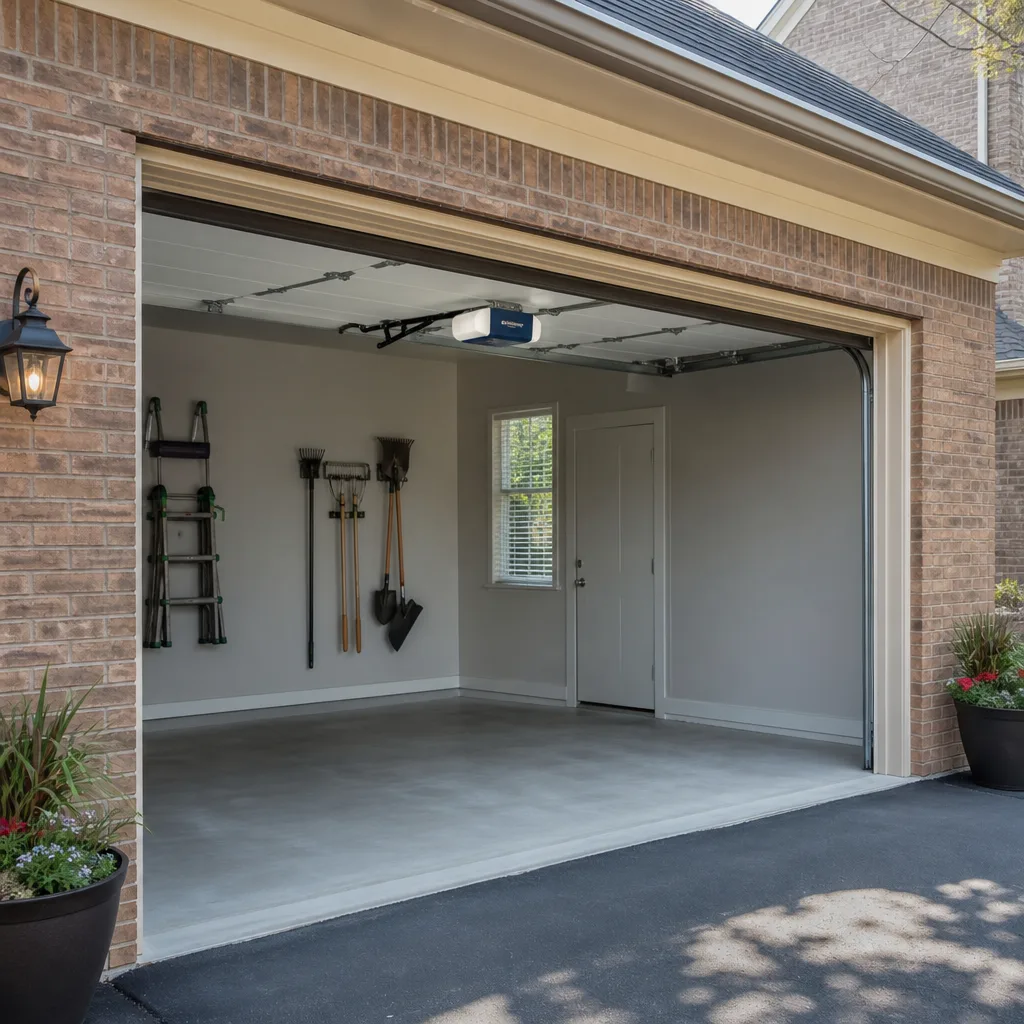 Chamberlain openers
Full 25-point door and opener safety check with every visit - springs, cables, rollers, tracks, and your LiftMaster or Chamberlain opener included
You get a price before we start. It does not change when the truck arrives.
Get your free estimateThe Complete Guide to Garage Door in San Bernardino
San Bernardino sits in one of the hottest inland valleys in Southern California, where summer temperatures routinely crack 105°F, and most garage doors sold here are spec’d for milder climates. That single fact changes nearly every decision you’ll make about your garage door, from the material you choose to the springs that lift it. This guide covers what actually breaks here, what lasts here, and what you need to know before you pay for a repair or a new door. We work on the brand you already have, and we’ve seen how San Bernardino’s conditions treat every major door type on the market.
Quick Answer
Garage door decisions in San Bernardino hinge on three local factors: extreme inland heat that degrades materials faster than coastal climates, temperature swings that affect spring performance, and a housing stock that spans 1960s tract homes to new construction north of the 210. The right door for this market is typically a steel door with a minimum R-9 insulation value, properly sized torsion springs rated for the local temperature range, and hardware inspected at least twice a year. For a deeper look at how these choices affect your budget, see our Garage Door Cost Breakdown: The San Bernardino Homeowner’s Reference for 2026. When something fails, the fix is usually faster and cheaper than most homeowners expect, provided the technician understands the actual system rather than pushing a replacement.
Styles & brands we work with
Table of Contents
- How San Bernardino’s Climate Changes Everything
- Door Materials: What Survives Inland Heat
- Why Spring Sizing Matters More Here Than at the Coast
- Older Homes vs. New Construction: What Your House Needs
- Insulation Values: What Actually Makes Sense for Attached Garages
- Reading a DASMA Rating and Why It Matters in San Bernardino
- Repair First: When to Fix and When to Replace
- Garage Door Openers: What Works in This Heat
- Common Mistakes to Avoid
- When to Call a Professional
- Frequently Asked Questions
How San Bernardino’s Climate Changes Everything
San Bernardino is part of the Inland Empire’s heat belt, where summer days above 100°F are normal and overnight lows can still hover in the 80s. That sustained heat does measurable things to a garage door system. Metal expands. Lubricant thins and runs off. Rubber weather stripping dries and cracks. The glues and sealants used in some door panels break down faster than they would in Temecula or Costa Mesa. A door that performs flawlessly in a mild coastal climate will show wear here within three to five years if it wasn’t spec’d for inland conditions.
We’ve seen this pattern consistently across San Bernardino, Grand Terrace, and Colton: doors installed with undersized springs or thin-gauge steel panels fail years earlier than their rated lifespan. The culprit isn’t bad manufacturing, it’s that the door was ordered for a generic climate profile rather than this specific valley. The temperature delta between a January morning at 38°F and a July afternoon at 108°F puts unusual stress on every moving component.
What This Means for Your Door
- Steel doors absorb heat directly. A dark-colored steel door facing west in San Bernardino can reach surface temperatures above 140°F in July.
- Wood doors expand and contract with humidity swings, and the dry inland air accelerates cracking and paint failure.
- Composite doors handle the heat better but cost more upfront, which makes the value calculation different for a 1970s ranch home in Grand Terrace than for a new build in Loma Linda.
- Torsion springs lose spring rate faster in sustained heat, which is why spring sizing has to account for this specific temperature range.
This isn’t theoretical. A homeowner near Perris Hill Park called us about a door that wouldn’t stay open in the summer. The springs were spec’d correctly for a coastal climate but undersized for inland heat cycling. The fix was a spring replacement, not a new door, and the difference in cost was roughly $600 versus $2,400. That’s the local knowledge gap in action, and it’s why our DIY vs Professional Garage Door: The San Bernardino Homeowner’s Decision Guide matters.
Door Materials: What Survives Inland Heat
The three most common door materials in San Bernardino are steel, wood, and composite, and each one behaves differently under sustained inland heat. Choosing the right material isn’t about picking the “best” one on paper. It’s about matching the material to your house, your garage’s orientation, and how long you plan to stay in the home.
Steel Doors
Steel is the most common material in San Bernardino for good reason: it’s affordable, it holds paint well, and it doesn’t warp. The catch is that thin-gauge steel, typically under 24 gauge, dents easily and transfers heat efficiently. If your garage faces west and gets afternoon sun from 2 p.m. onward, a non-insulated 25-gauge steel door turns the garage into an oven. The door itself survives, but everything stored in that garage suffers. Look for 24-gauge or thicker steel with a factory-applied finish. Brands like Clopay and Amarr both make steel doors specifically tested for sun-intensive markets, and the difference shows up in the finish warranty terms.
Wood Doors
Wood doors look great in the right home, and San Bernardino has plenty of mid-century ranch houses where a wood door fits the architecture. But wood here demands maintenance. The dry inland air pulls moisture out of the wood faster than coastal air does, which means more frequent sealing and painting. A wood door that would need refinishing every five years in a coastal climate might need it every three years here. Wayne Dalton and Clopay both make wood and wood-look doors, but a true solid wood door in San Bernardino is a commitment, not a set-it-and-forget-it purchase.
Composite and Fiberglass Doors
Composite doors handle San Bernardino’s heat the best of the three. They don’t warp, they don’t dent as easily as steel, and they don’t absorb heat the way metal does. The tradeoff is cost. A composite door typically runs 30 to 50 percent more than an equivalent steel door. For a homeowner in a newer Loma Linda or north San Bernardino build who plans to stay long term, that premium often makes sense. For a rental property or a home that’s a stepping stone, steel with a good insulation core is usually the smarter spend.
Why Spring Sizing Matters More Here Than at the Coast
Garage door springs are the least understood and most dangerous component of the entire system, and in San Bernardino the stakes are higher than in most of Southern California. A torsion spring’s job is to counterbalance the weight of the door, and it’s rated for a specific number of cycles, not a specific number of years. Heat changes how quickly a spring loses its rated strength.
Here’s what happens when a spring is undersized for San Bernardino’s temperature range: the spring works harder on every cycle, generates more internal heat, and fails anywhere from 30 to 50 percent sooner than its rated lifespan. We regularly see doors in older San Bernardino neighborhoods where springs spec’d for a 10,000-cycle life fail after roughly 6,000 to 7,000 cycles. The homeowner thinks they got a defective spring. What they got was a spring that was never sized for inland heat.
What Proper Spring Sizing Accounts For
- Door weight, which varies by material and insulation level. An insulated steel door weighs more than a non-insulated one.
- Door height and track radius, which affect how much cable travel the spring has to accommodate.
- Temperature range, which changes the spring’s effective rate across the year. San Bernardino’s 70-degree annual swing requires a different calculation than a coastal market with a 40-degree swing.
- Cycle rating, expressed as a number like 10,000 or 20,000. In this climate, we recommend 20,000-cycle springs on any door you expect to keep for more than five years.
One more thing about springs: they are genuinely dangerous. A torsion spring under load stores enough energy to cause serious injury if it lets go. Do not attempt to adjust, replace, or even inspect a spring without training. This is the single most common way we see homeowners hurt themselves in garage door work. If you suspect spring failure, call a professional who works on the brand you already have. The repair typically runs $180 to $340 in San Bernardino, and it’s usually done same-day.
Older Homes vs. New Construction: What Your House Needs
San Bernardino County’s housing stock is a patchwork. The older neighborhoods of San Bernardino proper and Grand Terrace are full of 1960s and 1970s tract homes with original or early-replacement garage doors. Colton has similar vintage housing along with some 1980s and 1990s additions. Newer construction in Loma Linda, north San Bernardino, and the foothill communities tends toward larger attached garages with higher ceilings and modern door openings.
That difference matters for what your door actually needs. An older Grand Terrace home with a 16×7 opening and a single-panel door from the 1980s has completely different requirements than a 2020 build with an 18×8 opening and a sectional door rated for an R-12 insulation value.
What Older Homes Typically Need
- Spring replacement on the original hardware, which has usually been through tens of thousands of cycles.
- Track alignment work, because 50 years of settling shifts the framing enough to bind the rollers.
- Upgraded weather stripping, because the original rubber has turned brittle in the inland heat.
- Opener retrofit, because the original chain-drive unit was underpowered even by the standards of its era.
What Newer Homes Typically Need
- Less often, honestly. Doors installed in the last 10 years were spec’d with better materials and higher cycle springs than anything from the 1980s.
- Sensor alignment and recalibration, which drifts over time and trips the auto-reverse.
- Smart opener upgrades, since many builders installed basic openers even in homes that otherwise have modern systems.
- Periodic hardware tune-ups to extend the life of a door that’s otherwise in good shape.
If you’re in an older home and comparing repair quotes, ask whether the technician knows your neighborhood’s housing vintage. The right fix for a 1975 Grand Terrace door isn’t always the same as the right fix for a 2018 Loma Linda door, even if the symptom looks identical.
Insulation Values: What Actually Makes Sense for Attached Garages
Most garages in San Bernardino are attached, which means the garage shares at least one wall and sometimes a ceiling with conditioned living space. That changes the insulation conversation. An attached garage with an uninsulated door isn’t just a hot room in the summer. It’s a heat reservoir that radiates into the house for hours after the sun goes down, driving up cooling costs from July through September.
Insulation Values by Scenario
- Detached garage, door closed most of the time: Insulation matters less. R-6 or R-9 is adequate. You’re not paying to cool that space anyway.
- Attached garage, no living space above: R-9 is the practical minimum. It keeps the garage from becoming a blast furnace and protects stored items.
- Attached garage with a bedroom or living room above: R-12 or higher. The ceiling of your garage is the floor of that room, and heat transfer through that assembly is relentless in July.
- Garage used as a workshop or gym: R-12 minimum, plus ventilation strategy. The door insulation is only part of the equation, but it’s the biggest single variable.
Clopay and Amarr both make steel doors with polyurethane cores that hit R-12 to R-18, and Wayne Dalton has options in the same range. The cost difference between an R-6 door and an R-12 door is often a few hundred dollars installed, which pays back quickly when the alternative is cooling a house that’s fighting its own garage all summer.
Reading a DASMA Rating and Why It Matters in San Bernardino
DASMA is the Door and Access Systems Manufacturers Association, and every garage door sold in the United States carries a DASMA rating that tells you two things: wind load resistance and, for insulated doors, thermal performance. The wind load number matters more in hurricane zones than in San Bernardino. The thermal number matters a lot here.
The thermal rating appears as an R-value, and it’s measured in the same units as wall insulation. A DASMA R-9 door has an R-value of 9, which is roughly equivalent to the insulation in a 2×4 wall built in the 1980s. In San Bernardino’s summer heat, that’s the minimum for any attached garage. Below that, the door is effectively transparent to heat.
How to Read the DASMA Label
- Find the label on the inside face of a door section, usually near the bottom section.
- Look for the R-value if the door is insulated. Non-insulated doors won’t list one.
- Check the wind load class if you’re in the foothills. San Bernardino proper doesn’t require hurricane-rated doors, but some unincorporated areas have local wind requirements.
- Note the door model and manufacturer, which you’ll need when ordering replacement panels or hardware.
Why does this matter more here than in coastal California? Because coastal homes can get away with uninsulated doors almost year-round. The marine layer keeps ambient temperatures moderate, and an uninsulated garage door is just a door. In San Bernardino, an uninsulated door is a liability for seven months of the year. The DASMA label tells you exactly what you’re working with before you commit to a repair or a replacement.
Repair First: When to Fix and When to Replace
A garage door doesn’t fail as a unit. It fails component by component, and most failures are repairable without replacing the whole door. That’s the repair-first approach, and it’s how a tradesman’s standard works: diagnose the actual problem, fix the actual problem, and skip the upsell.
Components That Are Usually Repairable
- Torsion springs: Replaceable as a pair. The most common repair we do in San Bernardino.
- Broken rollers: Inexpensive to replace, and upgrading from plastic to steel rollers smooths out the whole door.
- Bent track sections: Individual sections can be straightened or replaced without touching the rest of the system.
- Worn cables: Replaceable, though this is another high-tension component that warrants a trained technician.
- Opener issues: Gears, sprockets, travel modules, and sensors are all replaceable parts. Brands like Genie and Chamberlain use modular designs that make repair straightforward.
- The door is 25-plus years old and the sections are rusting through or delaminating.
- Multiple components failed at once, and the cumulative repair cost approaches 50 percent of a new door’s price.
- The door was never spec’d for this climate, and you’re tired of chasing symptoms that a properly insulated, properly sprung door would eliminate.
- You want the aesthetic and security upgrade that a new Amarr or Clopay door provides, and the current door has no remaining value to salvage.
- DC motor with soft start and stop: Runs cooler and extends gear life in sustained heat.
- Battery backup: San Bernardino gets its share of grid stress events in fire season and heat waves. A working door when the power’s out matters.
- Wi-Fi connectivity: Useful for checking door status remotely, which is genuinely practical if you leave the house and can’t remember whether the door closed.
- Auto-reverse sensors: Required by federal law since 1993, and worth testing monthly. We find misaligned or bypassed sensors on a surprising number of doors.
- Buying a non-insulated door for an attached garage. In San Bernardino’s summer, the energy penalty shows up on the first cooling bill, and it never goes away.
- Replacing one spring instead of both. Springs wear together. Replacing one leaves you with an unbalanced door that wears out the new spring prematurely. This is the most expensive short-term savings in the trade.
- Attempting to adjust a torsion spring without training. This is how serious injuries happen. The spring holds enough energy to break bone, and no door repair is worth that risk.
- Ignoring grinding or scraping noises. These sounds always mean something specific: a worn gear, a failing roller, a fraying cable. Catching them early usually means a $50 to $150 fix instead of a $400 to $800 repair later.
- Spec’ing springs for a generic climate. If your technician can’t explain how San Bernardino’s temperature range affects spring sizing, they may be using a coastal formula. The difference shows up a few thousand cycles later.
- Painting a dark steel door a darker color and facing it west. You’re building a solar collector. The door will hit 140°F surface temperature by 3 p.m., and every component connected to it pays the price.
- Skipping annual maintenance because the door “works fine.” Garage doors don’t fail by announcement. They fail by accumulation, and the annual tune-up catches the accumulation before it becomes a breakdown.
When Replacement Makes More Sense
We’ve talked homeowners out of replacements more often than into them. A 2005 Clopay door with good springs and decent insulation is usually worth repairing. The door’s not the problem, the component is. Fix the component.
Garage Door Openers: What Works in This Heat
The opener sits at the top of the garage, which means it runs hotter than any other component in the system. On a 105°F San Bernardino afternoon, the air temperature at ceiling level in an attached garage can exceed 120°F. Electronics don’t love that. Motors don’t love that. And the cheap openers installed by production builders fail first.
The openers we see hold up best in San Bernardino are the major residential brands: LiftMaster, Chamberlain, Genie, and Craftsman. Each has belt-drive and chain-drive options, and belt-drive is the better choice here for two reasons. First, belt drives run cooler because they don’t transfer as much friction heat. Second, they’re quieter, which matters when the garage shares a wall with a bedroom.
Opener Features Worth Paying For in This Market
If your opener is making a grinding noise or the door reverses mid-travel, the opener may just need gear work rather than replacement. Garage door opener repair in Grand Terrace involves the same diagnostic work we do across San Bernardino: identify the failing part, replace that part, and test the full cycle. The fix is usually under $250, and a new opener starts around $400 installed.
Common Mistakes to Avoid
When to Call a Professional
Call a professional the moment you notice the door is off-balance, sluggish, noisy, or reversing unexpectedly. These are not cosmetic symptoms. A door that’s off-balance is putting uneven load on the springs, the cables, and the opener, and that cascade failure gets more expensive the longer it runs. If you see a gap in a torsion spring, that spring has already failed and the door is being held by the opener alone, which is a dangerous situation. If the cables are frayed or hanging loose, do not operate the door. A garage door under cable tension can do real damage when it lets go. Tradesman Garage Door Repair offers free estimates in San Bernardino, call (855) 916-6950, and we’ll tell you what you’re actually looking at and whether it needs to be addressed today or can wait. For after-hours situations, our Garage Door Emergency Preparedness Guide for San Bernardino Homes covers what to do until help arrives.
For homeowners in surrounding areas, we provide the same brand-specific service. Garage door repair in Grand Terrace is one of our core service areas, along with garage door installation in Grand Terrace for full replacements and new construction.
Frequently Asked Questions
Garage door repair in San Bernardino typically costs $150 to $600 depending on the component: spring replacement runs $180 to $340, roller replacement $120 to $200, cable work $150 to $300, and opener gear repairs $180 to $250. The most common repair, a torsion spring pair, usually lands around $280 including parts and labor. Call (855) 916-6950 for an exact quote, estimates are free.
San Bernardino’s sustained inland heat causes torsion springs to lose spring rate faster than they would in a coastal climate, which means a spring spec’d for a generic California location can fail 30 to 50 percent sooner than its rated lifespan. Proper spring sizing for this market accounts for the 70-degree annual temperature swing and typically calls for 20,000-cycle springs on any door you expect to keep long term.
Yes, if your garage is attached and especially if there’s living space above it. An R-9 insulated steel door is the practical minimum for attached garages in this climate, and R-12 or higher makes sense when the garage shares a wall or ceiling with a conditioned room. The cost difference between an uninsulated and an R-9 door is often only a few hundred dollars installed.
Most opener failures in San Bernardino are repairable, and the common fixes, worn gears, failed capacitors, misaligned sensors, and stripped sprockets, all involve replacing a modular part rather than the whole unit. We work on LiftMaster, Chamberlain, Genie, and Craftsman openers, and we’ll tell you when a repair no longer makes financial sense. Typical opener repairs cost under $250, while a new opener installed starts around $400.
A torsion spring mounts above the door opening and twists to store energy, while an extension spring stretches along the horizontal track and extends to store energy. Torsion springs are safer, smoother, and longer-lasting, and they’re the standard on any modern door. If your San Bernardino home still has extension springs from a pre-1990 installation, converting to torsion is an upgrade worth considering.
Twice a year is ideal in this climate, once in spring before the heat arrives and once in fall after it breaks. The annual cycle catches heat-related wear, dried lubricant, and hardening weather stripping before they become failures. A basic tune-up includes spring inspection, roller and hinge lubrication, track alignment check, and an opener safety test, and it runs $75 to $125 in the San Bernardino market.
The Bottom Line
Garage doors in San Bernardino live a harder life than most. The inland heat stresses springs, dries lubricants, cracks weather stripping, and turns uninsulated steel doors into radiators. The right approach is simple: work on the brand you already have, fix components before replacing doors, and spec every part for this specific climate rather than a generic California profile. Whether you’re in an older Grand Terrace home with original hardware or a new Loma Linda build with a builder-grade door, the same tradesman’s standard applies. For more guides & resources on keeping your door running in this climate, explore our blog. Diagnose accurately, repair honestly, and replace only when the math says it’s the better value. The opener, the springs, the panels, the tracks, we handle the whole door.
For more information on our services, visit the Tradesman Garage Door Repair home page or call us at (855) 916-6950 for a free estimate.
Written by the team at Tradesman Garage Door Repair, serving San Bernardino since 2016.
See the difference
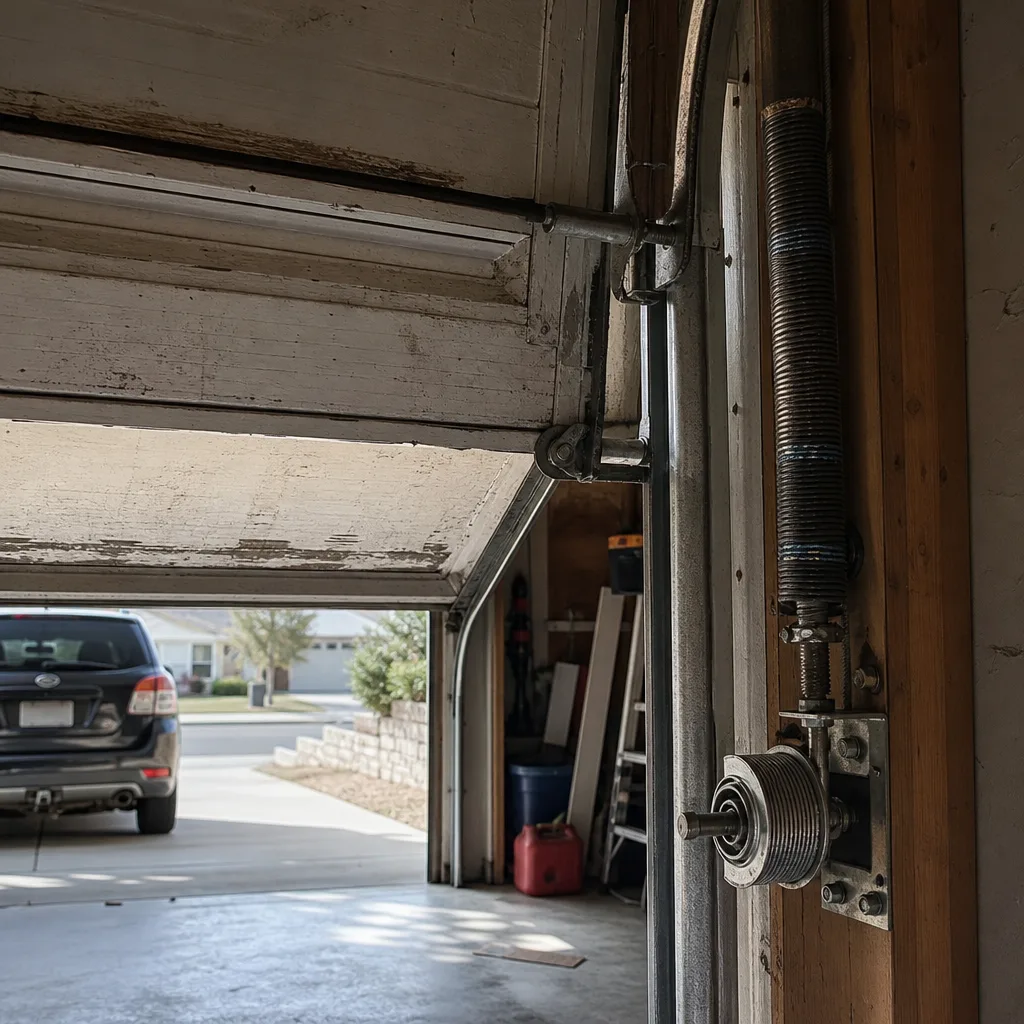
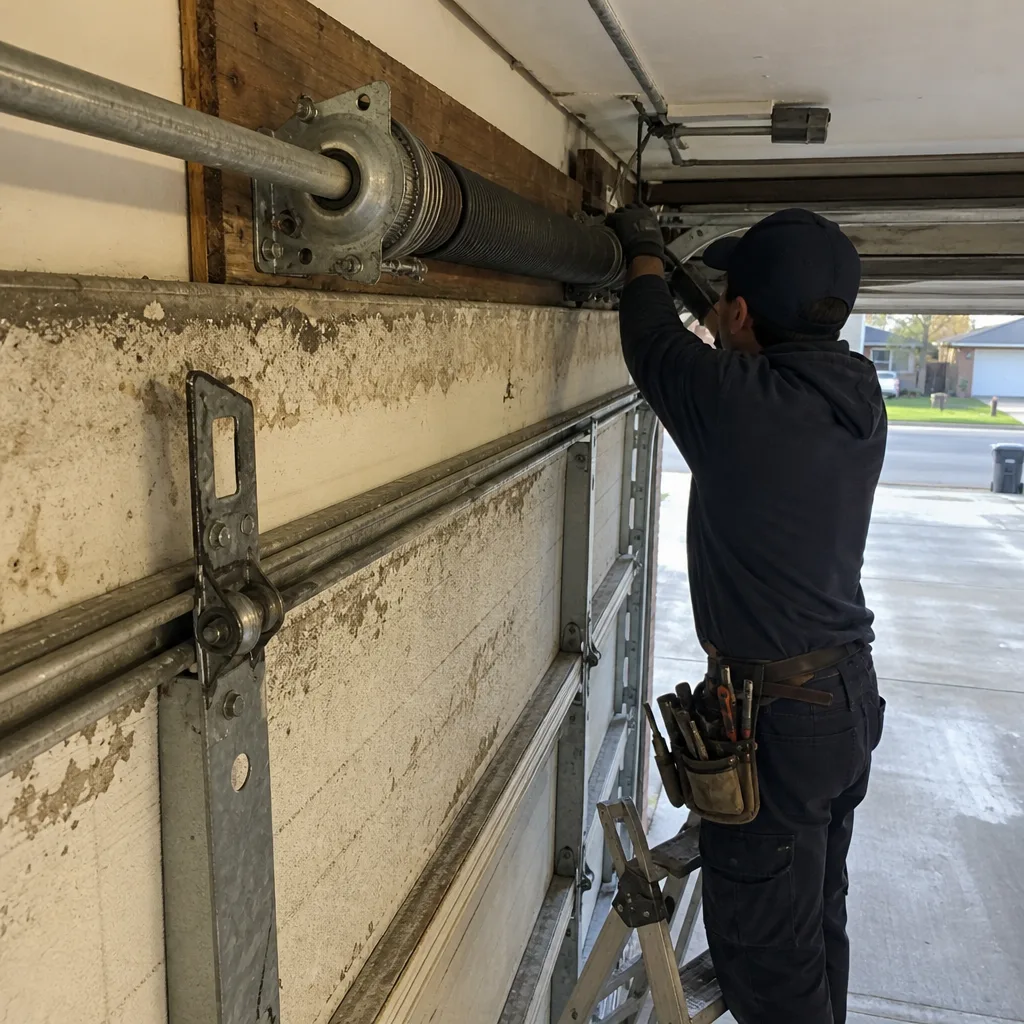
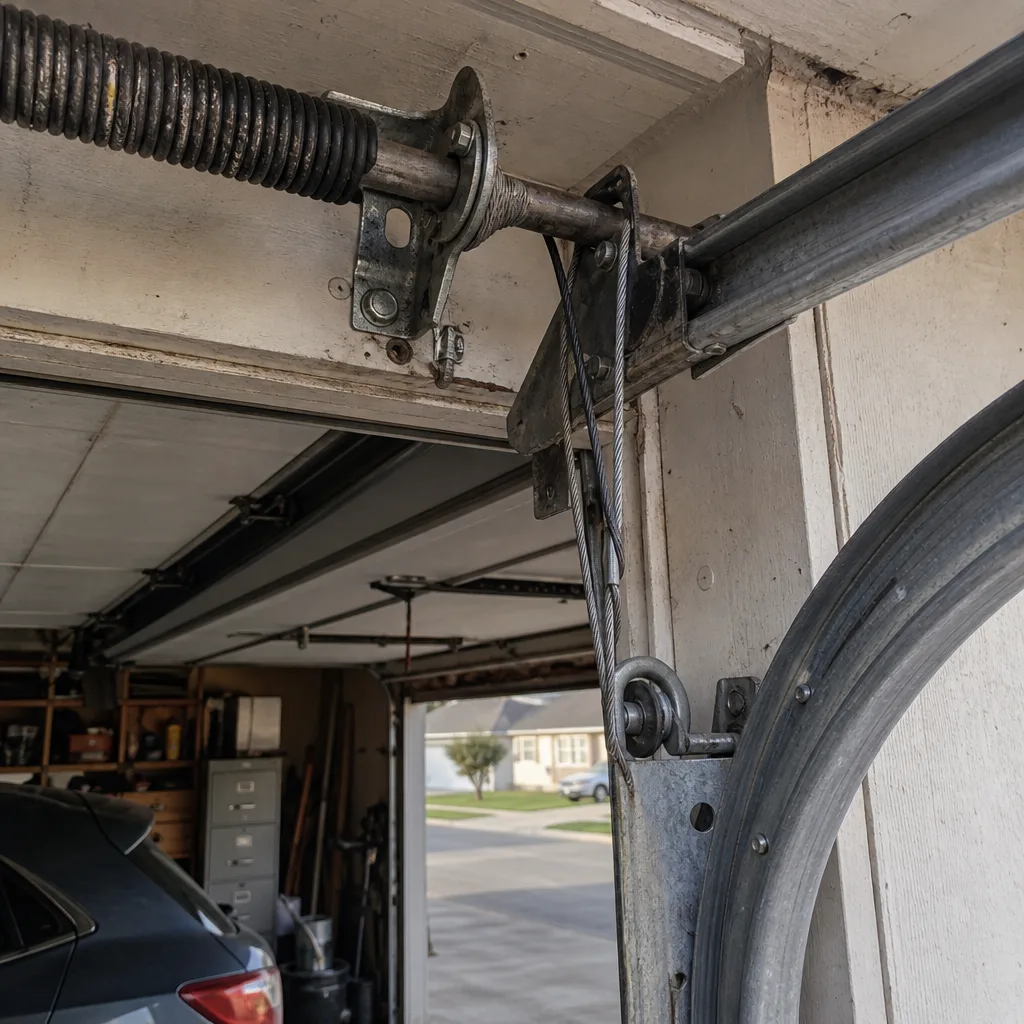 Before
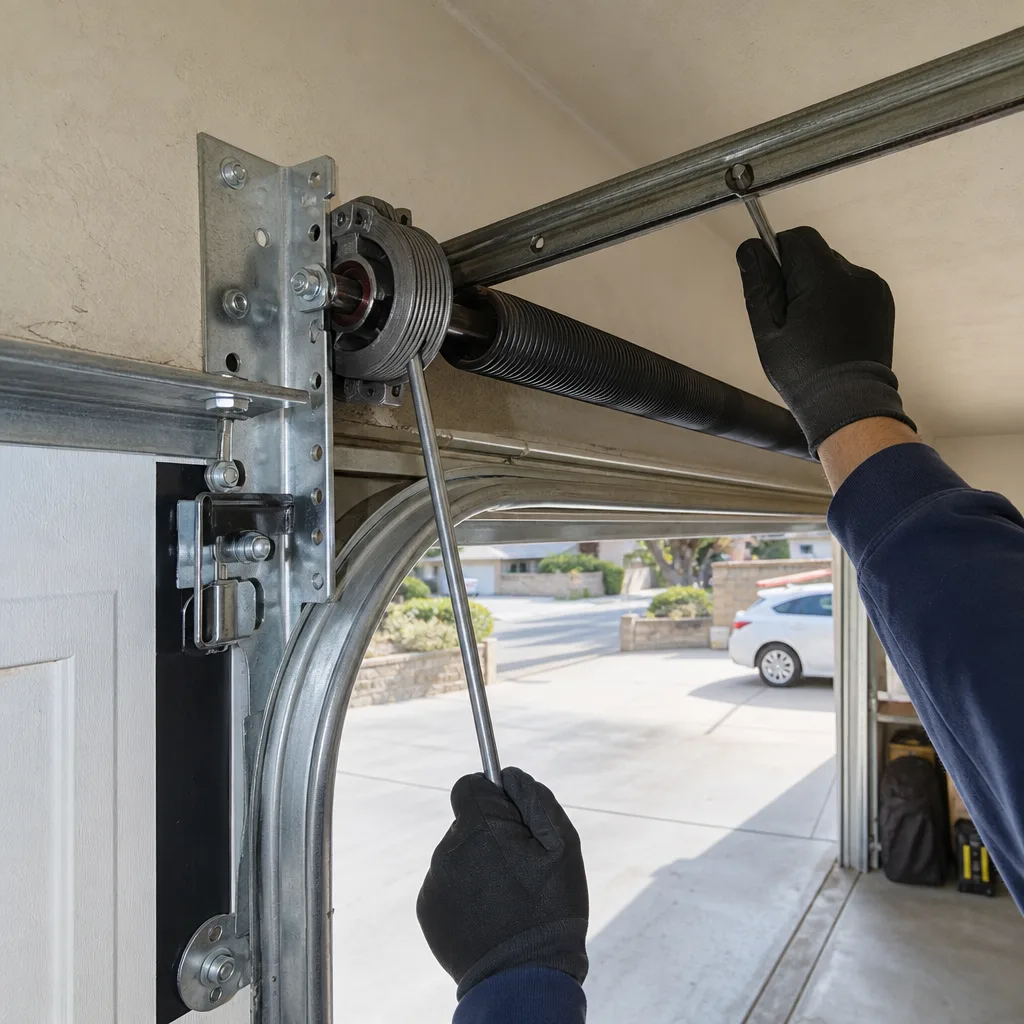
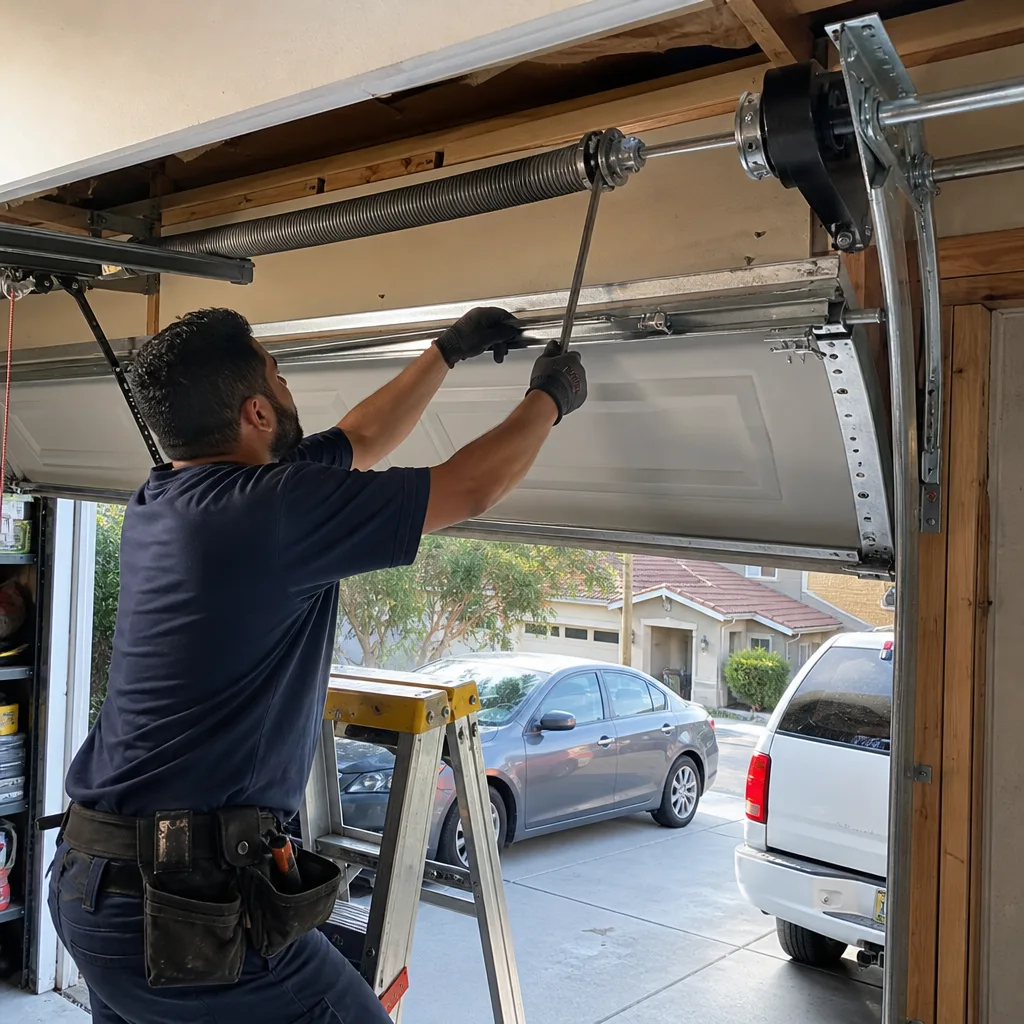
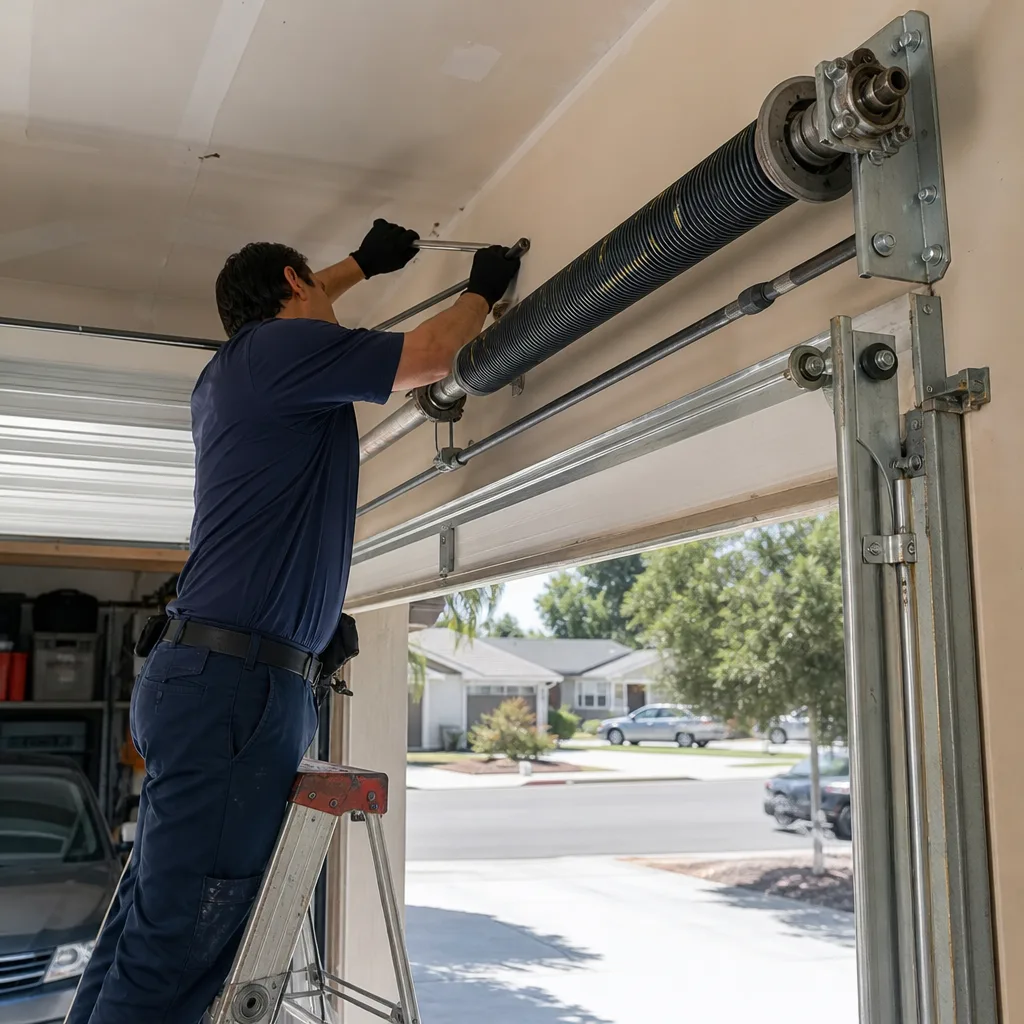 After
 Before
 After
 Before
 After