
Last updated October 30, 2026
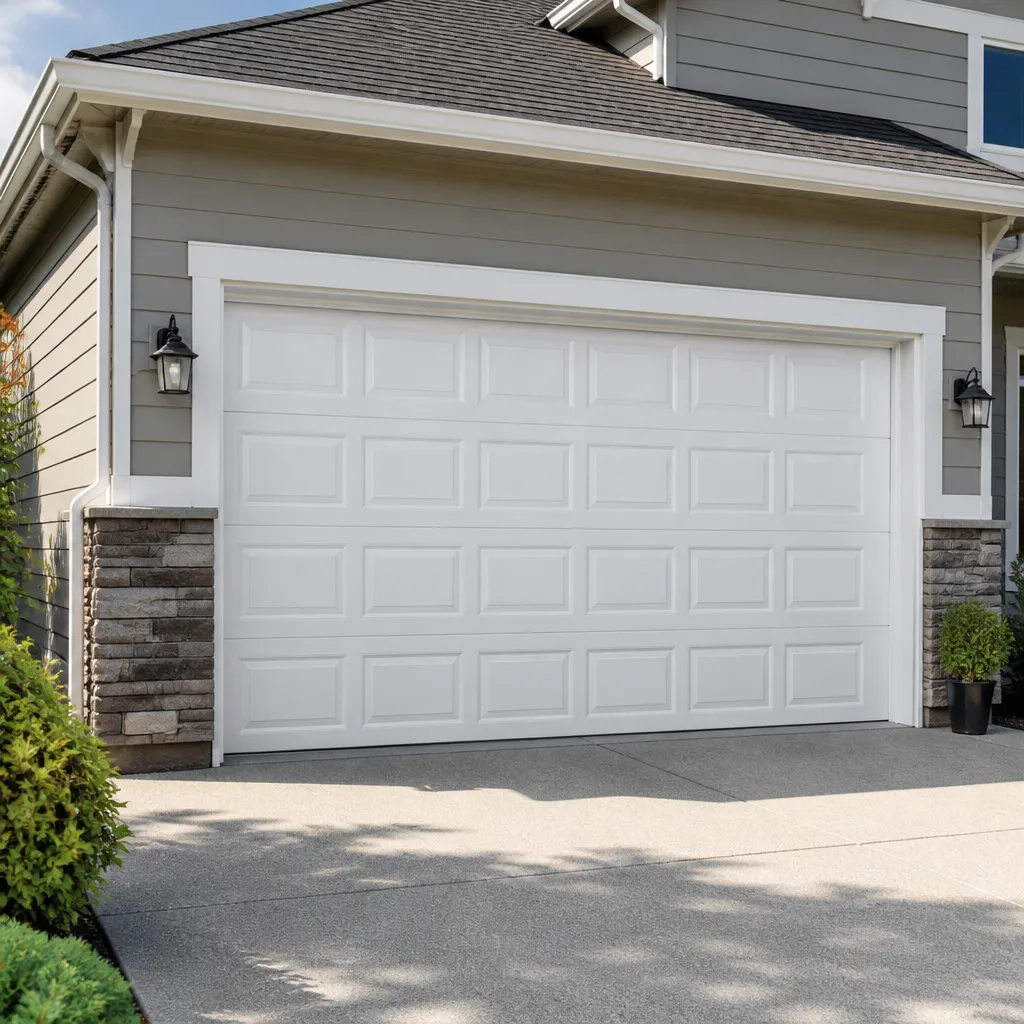 Raised-panel steel
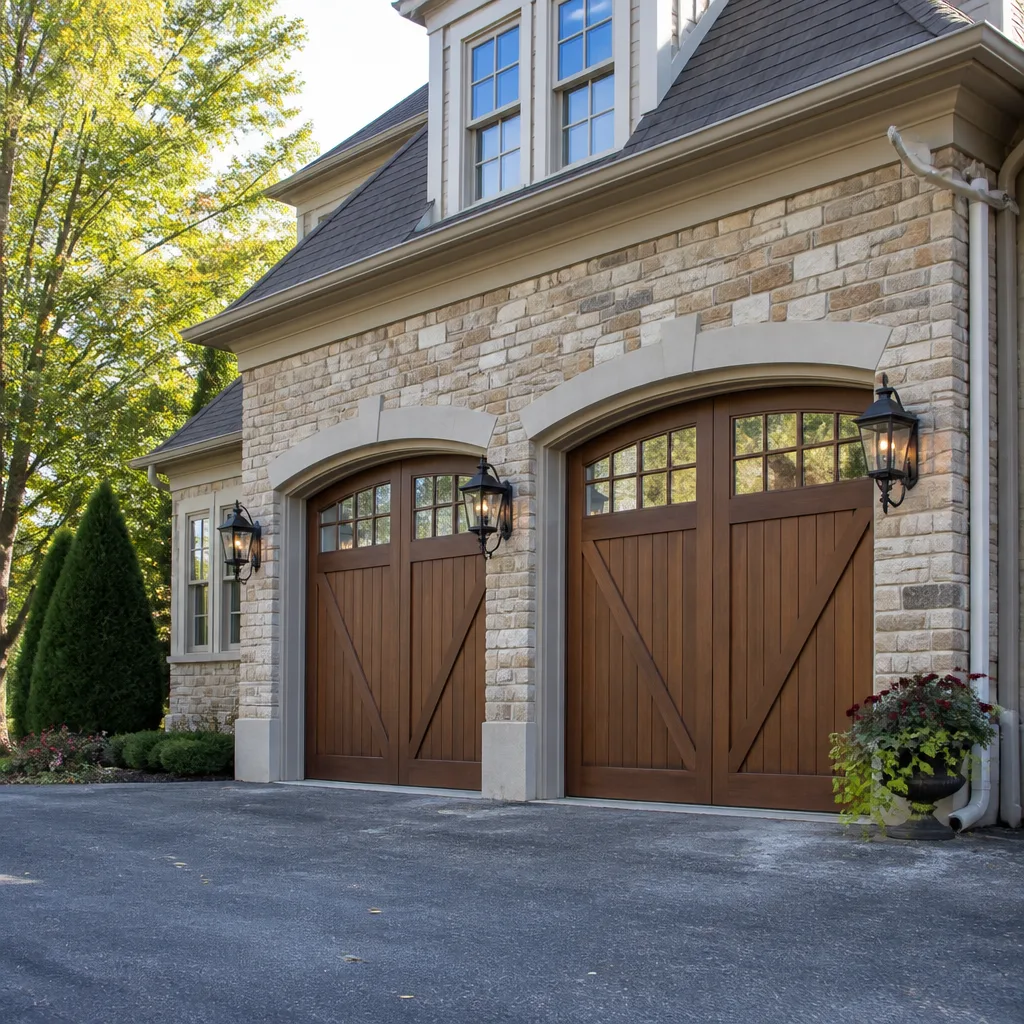 Carriage house
 Modern flush
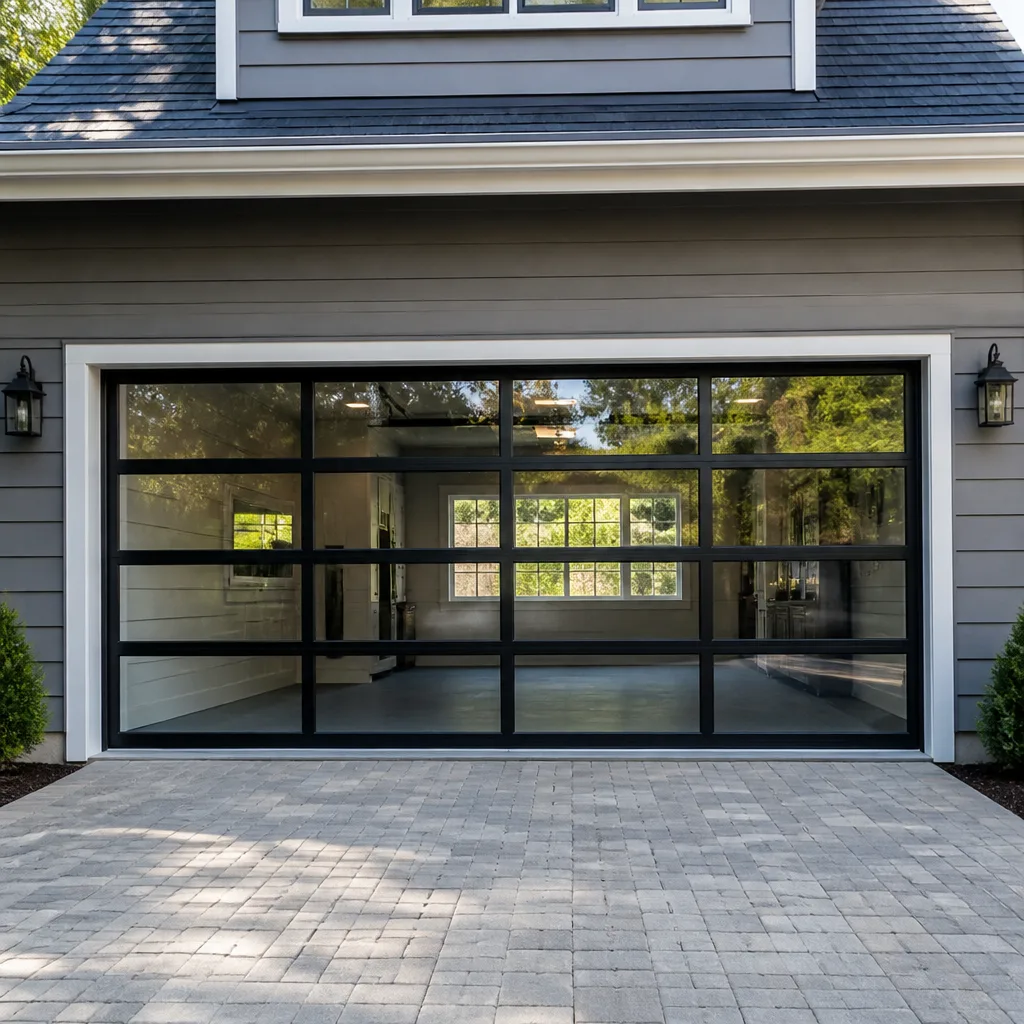 Full-view glass
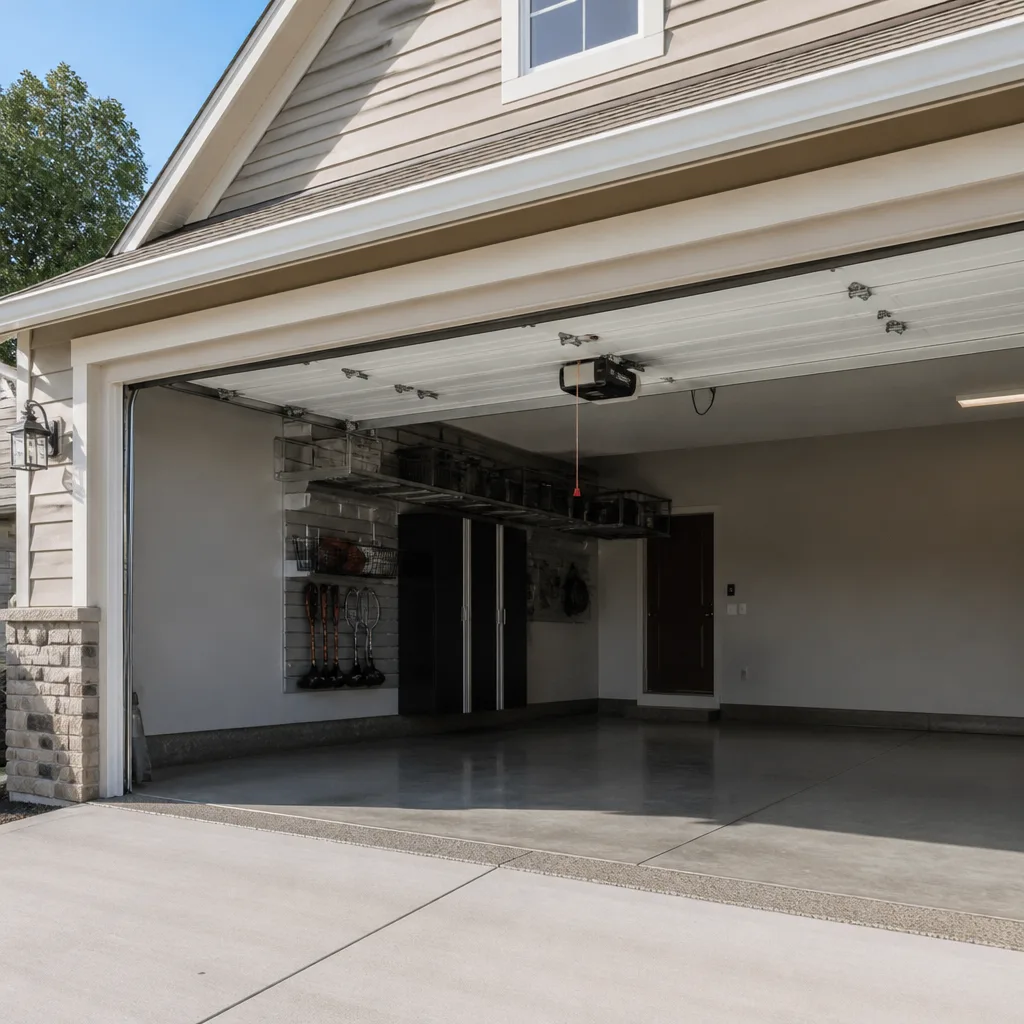 LiftMaster openers
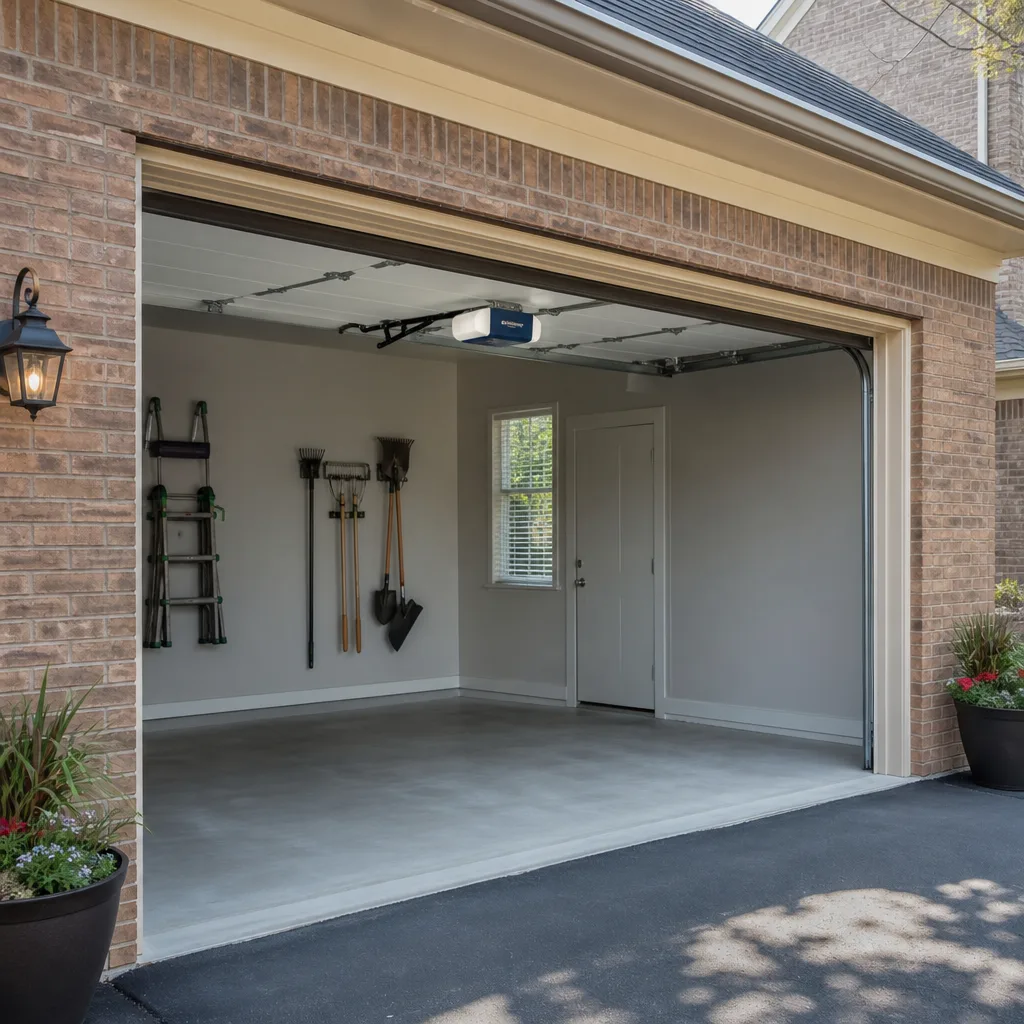 Chamberlain openers
Full 25-point door and opener safety check with every visit - springs, cables, rollers, tracks, and your LiftMaster or Chamberlain opener included
You get a price before we start. It does not change when the truck arrives.
Get your free estimateGarage Door Emergency Preparedness Guide for San Bernardino Homes
Here’s something most San Bernardino homeowners don’t think about until it’s too late: your garage door is likely the largest moving object in your house, but when the power dies or an earthquake hits, it becomes something else entirely. A barrier. In the October 2020 wildfire evacuations across Southern California, emergency crews documented homeowners who couldn’t get their vehicles out because their automatic opener had no battery backup and the power was already gone. This guide covers exactly what you need to know before the next emergency, not after it. You’ll learn how to manually operate any opener type, what post-earthquake damage actually looks like, and why San Bernardino’s specific risk profile makes your garage door a real emergency planning variable.
Quick Answer
Garage door emergency preparedness in San Bernardino comes down to three things: knowing how to manually disengage and operate your opener (it takes about 20 minutes to learn), having a battery backup system for wildfire or Public Safety Power Shutoff events, and inspecting your door’s tracks, springs, and weatherstripping after any significant earthquake. Most homeowners can handle the manual release instruction and basic inspection themselves, but spring replacement, track realignment, and opener backup installation should be left to a trained technician—our Garage Door Repair Troubleshooting: Common Problems and How to Fix Them explains which issues are DIY-safe.
Styles & brands we work with
Table of Contents
- How to Manually Release and Operate Any Garage Door Opener
- Battery Backup Openers for Inland Empire Power Outages
- Post-Earthquake Garage Door Inspection Protocol
- Wildfire Ember Protection and Weatherstripping Evaluation
- Securing a Manually Opened Door During Evacuation
- Why San Bernardino’s Risk Profile Is Different
- The 20-Minute Emergency Preparedness Checklist
- Common Mistakes to Avoid
How to Manually Release and Operate Any Garage Door Opener
Every automatic garage door opener in a San Bernardino home has a manual release mechanism, but the location and operation differs by model. Here’s what you need to know for the three most common drive types found in the Inland Empire.
Belt Drive Openers (most common in newer San Bernardino homes)
Belt drive openers use a rubber belt to move the trolley along the rail. The emergency release is a red cord hanging from the trolley itself, typically about six feet from the door. Pull straight down firmly. You’ll hear a click when the trolley disengages from the carriage. The door now moves freely by hand. To re-engage, pull the cord straight down again while the door is in the closed position, then operate the opener once to re-seat the trolley.
Chain Drive Openers
Chain drive openers operate similarly, but the release cord tends to hang from a metal trolley that rides along a chain rail. The pull is the same, straight down with authority. Chain drive releases sometimes require more force to re-engage because the chain mechanism is heavier. After pulling the release, check that the chain itself hasn’t jumped the sprocket. If it has, don’t force the opener. Call a technician.
Screw Drive Openers
These are less common now but still installed in many older San Bernardino neighborhoods built from the 1970s through the 1990s. Screw drive releases are typically located on the trolley assembly near the motor head. The pull is identical. Screw drive units can be harder to operate manually because the screw mechanism adds resistance. Expect to use more effort moving the door by hand.
Important safety note: When a door is disengaged from its opener, the only thing counterbalancing its weight is the spring system. If a spring is broken or weakened, a manual door can slam down with tremendous force. Always test the door’s balance by lifting it halfway before attempting to move it by hand. If it doesn’t stay put, the springs need professional attention. We’ve seen doors drop hard enough to injure homeowners in Rialto and Fontana who assumed their springs were fine. They weren’t.
Battery Backup Openers for Inland Empire Power Outages
Since 2018, California building code requires battery backup on newly installed residential garage door openers. But most homes in San Bernardino predate that requirement. That’s a problem because Southern California Edison’s Public Safety Power Shutoff program has made extended outages a regular feature of high-wind fire season across the Inland Empire.
A battery backup opener does exactly what the name suggests: it keeps your garage door fully operational when grid power is down. Most units provide 20 to 30 open-close cycles on a full charge, which is enough for an evacuation scenario and several days of intermittent use. Installation takes a technician about an hour for most openers.
The models we recommend most often for San Bernardino homes:
- Chamberlain B970 – belt drive with integrated battery backup, reliable in testing across our service area
- LiftMaster 8550WLB – premium belt drive with backup, known for quiet operation and consistent performance
- Genie Signature Series with battery backup – solid alternative, particularly easy release mechanism for emergency use
If you don’t want to replace your entire opener, some manufacturers offer add-on battery backup kits. These work with select Chamberlain and LiftMaster models. A Tradesman Garage Door Repair technician can check compatibility in about ten minutes, or you can call our team at (855) 916-6950 and we’ll help you figure out what’s compatible before scheduling anything.
One note on solar: if you already have a home solar system, don’t assume it powers your garage door during a grid outage. Most grid-tied systems shut down automatically for utility worker safety. Unless you have a home battery like a Tesla Powerwall, your solar panels won’t help you here.
Post-Earthquake Garage Door Inspection Protocol
The San Andreas and San Jacinto faults run close enough to San Bernardino to make earthquake preparedness a practical daily reality, not an abstraction. After any quake strong enough to wake you up, your garage door needs inspection before you rely on it again; follow our Garage Door Repair Maintenance Checklist for San Bernardino Homeowners to stay prepared.
Here’s the post-earthquake inspection protocol we use, in order:
- Visual check from a distance. Stand at the back of your garage and look at the door. Is it still in its tracks? Is there visible bowing or twisting? Do the horizontal panels look aligned? If the door looks deformed, don’t open it. Call a technician.
- Listen during operation. If the visual check passes, open the door using the opener. Listen for grinding, scraping, or any sound that wasn’t there before. Stop immediately if you hear something new.
- Check the tracks. The vertical and horizontal tracks on both sides should be straight and firmly anchored to the wall. A gap between the track and the wall means a mounting bracket has pulled loose. That’s a repair call, not a DIY fix.
- Inspect the cables. The lift cables on both sides should be taut and seated in their drums. A frayed cable or one that’s jumped its drum is a serious hazard. The door can drop suddenly if a cable lets go.
- Test the balance. Pull the manual release and lift the door halfway. It should stay put. If it drifts down, the springs have lost tension. Call a technician before using the door again.
- Check the rollers. Rollers can pop out of tracks during seismic shaking. Replace any nylon or steel roller that’s wobbling, loose, or no longer riding in the track.
Earthquake movement also stresses the structural connection between your opener motor and the ceiling. Check that the motor unit is still level and securely mounted. A sagging opener can strain the rail and eventually fail.
Wildfire Ember Protection and Weatherstripping Evaluation
San Bernardino sits at the foot of the San Bernardino National Forest. When the Santa Ana winds pick up in October, embers can travel more than a mile from the fire line. Your garage door’s bottom seal and side weatherstripping are the first line of defense against ember intrusion into what is typically the most flammable room in the house.
Ember entry points on a garage door are predictable:
- The bottom seal (astragal). This rubber strip along the bottom of the door wears down over time. If you can see daylight under a closed door, an ember can get through. Replace when cracked, compressed, or shorter than the door’s width.
- The side and top weatherstripping. Vinyl or rubber strips that seal the perimeter. Check for gaps around the entire frame. A gap of a quarter inch is enough for wind-driven embers.
- The panel seams. On sectional doors, the horizontal seams between panels can open slightly as the door ages. This is less common but worth checking on older doors.
Weatherstripping replacement is one of the least expensive and most effective preparedness upgrades you can make on a garage door. A complete weatherseal kit typically runs $80 to $150 in San Bernardino, installed. Manufacturers like Clopay and Amarr sell door-matched replacement seals, and for homeowners with top-tier doors from those brands, the manufacturer-specific seal is worth the extra cost because it fits precisely.
If you’re building or planning a major renovation in a wildfire-prone area of San Bernardino, look into dual-pane garage doors from Wayne Dalton. They’re not cheap, but they add an additional thermal barrier that single-skin steel doors don’t have, which matters when your garage is attached to your house and you’re trying to slow fire spread. That’s a topic for a separate consultation, but it’s worth knowing the option exists.
Securing a Manually Opened Door During Evacuation
Here’s the scenario nobody plans for: you’ve pulled the manual release because power is out, you’ve got the door open to get the car out, and now you need to leave. How do you close and secure a garage door that’s not connected to anything?
First, close the door by hand. It will be heavier than you expect, even with functioning springs. Guide it down slowly. Once closed, the question is whether someone can force it open from outside.
A standard garage door opener acts as an electronic lock when engaged. A door sitting in manual release mode has no such protection. Anyone can lift it from outside if they can get a grip on the bottom.
Your options for securing a manually opened door:
- Re-engage the opener if power is on. Once the trolley reconnects, the opener’s internal lock engages. This is the fastest and most secure option.
- Manual slide lock. Many older doors have a sliding bolt lock on the inside of one track. Slide it into the slot in the track. This physically prevents the door from moving. Very effective, very simple.
- Vise grip on the track. Clamp a locking plier onto the vertical track about two inches above a roller. The roller can’t move past the clamp. This is a solid temporary lock. We’ve recommended this to homeowners in evacuation situations more than once.
- Padlock through a track hole. Some tracks have pre-drilled holes. If yours does, a padlock through the hole blocks the rollers.
One caution: never put a lock on a door you plan to open with the opener. Forcing an opener against a locked door is how you strip gears and burn out motors. That’s one of the most common opener repairs we handle, and it’s almost always avoidable.
Why San Bernardino’s Risk Profile Is Different
Every city has risks. San Bernardino has a specific combination that affects garage doors in ways most preparedness guides miss.
Wildfire evacuation corridors. Many San Bernardino neighborhoods have narrow streets and limited egress routes. When an evacuation order comes, every minute counts. A garage door that won’t open because the power’s out costs you those minutes. This is why a battery backup isn’t a nice-to-have here. It’s practical evacuation insurance.
Earthquake ground acceleration. San Bernardino sits on soft alluvial soil, which amplifies seismic waves. The 1992 Landers and Big Bear earthquakes both shook the city hard. Garage door tracks, springs, and cables all shift under that kind of loading. Post-quake inspection isn’t optional when your door is eight feet of loaded steel.
Public Safety Power Shutoff zones. Southern California Edison has designated high-fire-risk areas across the Inland Empire, including portions of San Bernardino. During high-wind events, power can be cut for 24 to 72 hours. Your garage door is one of the most power-dependent devices in your house during exactly the window when you might need to leave.
Santa Ana wind loading. Gusts through the Cajon Pass regularly exceed 60 mph. That continuous pressure against an overhead door tests its structural integrity. Door bracing that was adequate when installed in 2005 may not be adequate now. If your door visibly flexes or rattles during a Santa Ana event, the track anchors need inspection.
We’ve worked on garage doors in San Bernardino and neighboring cities like Grand Terrace for years, and the pattern holds: homes in the northern and eastern foothills face the highest combination of wind and fire risk, while every home in the valley faces the same earthquake and power shutoff exposure. Your specific address determines the emphasis, not the checklist.
The 20-Minute Emergency Preparedness Checklist
Do this once. It takes 20 minutes. It could save you hours of frustration when an emergency hits San Bernardino.
- Find your manual release cord. Stand in your garage and locate the red cord hanging from the opener rail. Practice pulling it once. Re-engage the opener after. You now know how it works.
- Test your door’s balance. Pull the release, lift the door to halfway, and let go. If it holds, your springs are doing their job. If not, schedule a spring inspection.
- Check the weatherstripping. Close the door and look for light intrusion along the bottom and sides. Replace anything that’s visibly deteriorated.
- Locate your manual slide lock. If your door has one, confirm it works. If it doesn’t have one, buy a pair of vise grips and store them near the garage door, not in a tool box somewhere else.
- Check for battery backup. If your opener has one, test it by unplugging the opener and operating the door. If it doesn’t have one, decide whether add-on or replacement makes sense.
- Clear the tracks. Remove anything stored within six inches of either track. During an earthquake, stored items shift and can fall into the track path.
- Save our number. Put (855) 916-6950 in your phone now. When an emergency is happening, you won’t have time to search for a garage door company. Call us from the driveway, not from a desperate Google search at midnight.
Common Mistakes to Avoid
- Assuming the opener works when the power’s out. It doesn’t, unless you have a battery backup. Every year, San Bernardino homeowners discover this fact for the first time at exactly the worst possible moment.
- Testing the manual release for the first time during an emergency. Fumbling with an unfamiliar mechanism in the dark, possibly in a panic, is how doors get dropped and fingers get crushed. Practice now.
- Using the opener after an earthquake without inspecting anything. A shifted track or a frayed cable can fail catastrophically. The three minutes you spend checking might prevent a door from landing on your car or you.
- Locking a door and then hitting the opener button. This strips gears and burns out motors. At best it’s a $200 repair. At worst it’s a full opener replacement. We see it constantly.
- Ignoring weatherstripping as a fire issue. Most people think of weatherstripping as an energy-efficiency feature. In San Bernardino fire season, it’s a home-safety feature. Treat it like one.
- Assuming a handyman can handle garage door emergency prep. Garage doors are under tension in ways that generalists don’t fully appreciate. A specialist who works with garage door openers in Grand Terrace and across San Bernardino daily has seen the failure modes. A handyman has not.
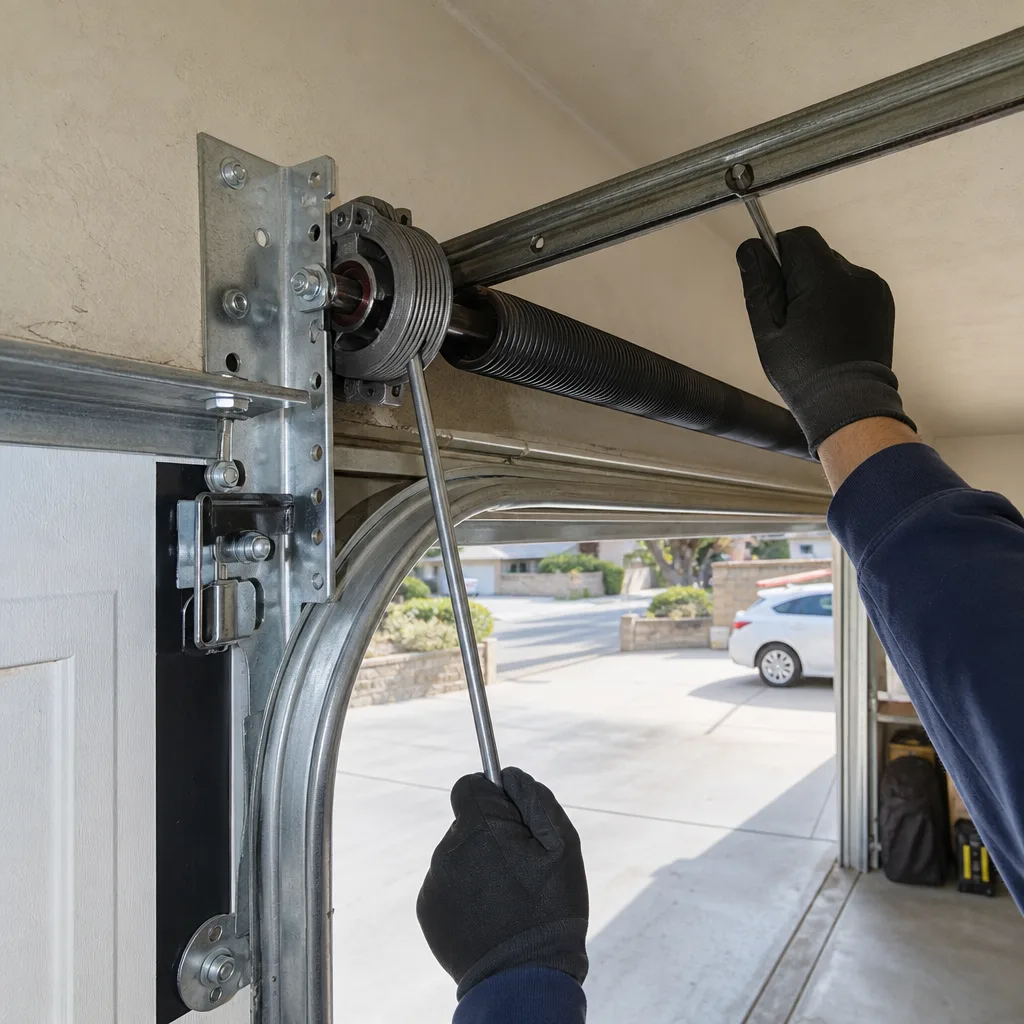
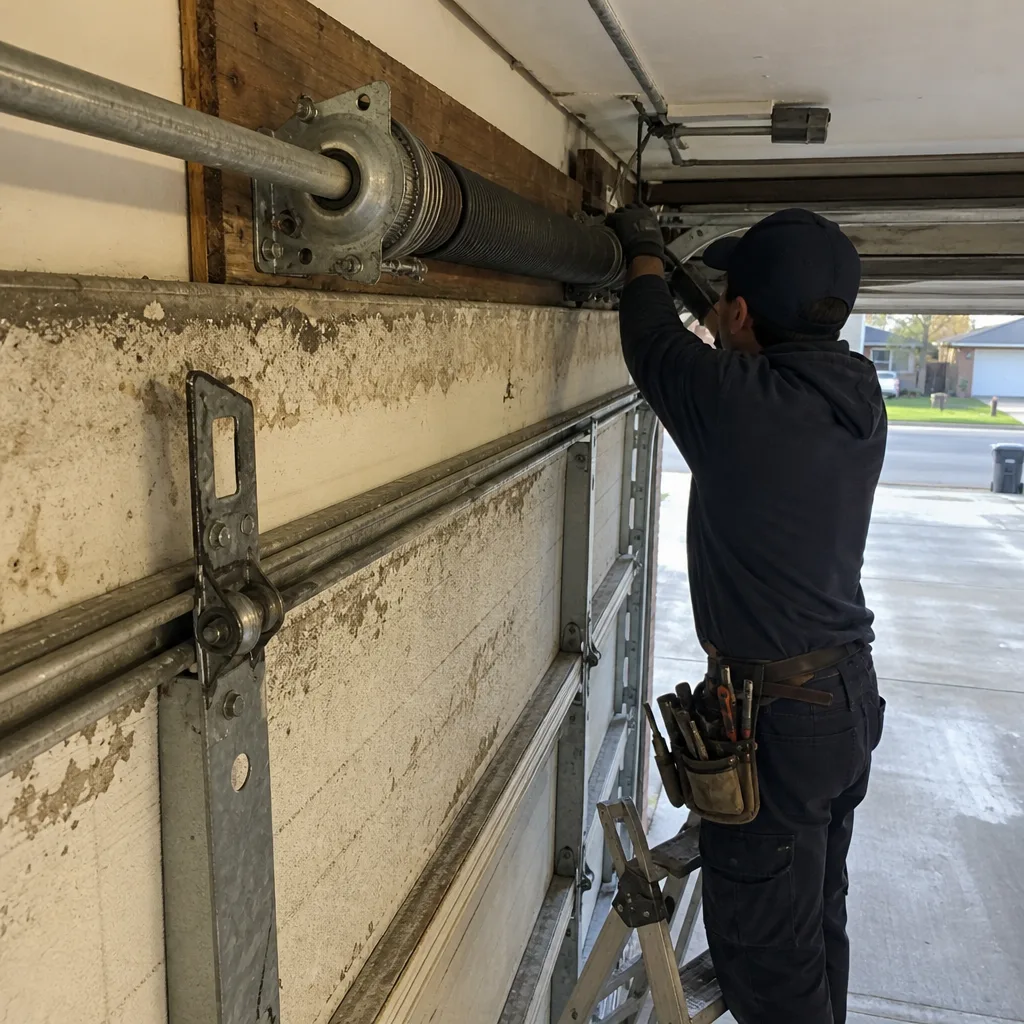
See the difference
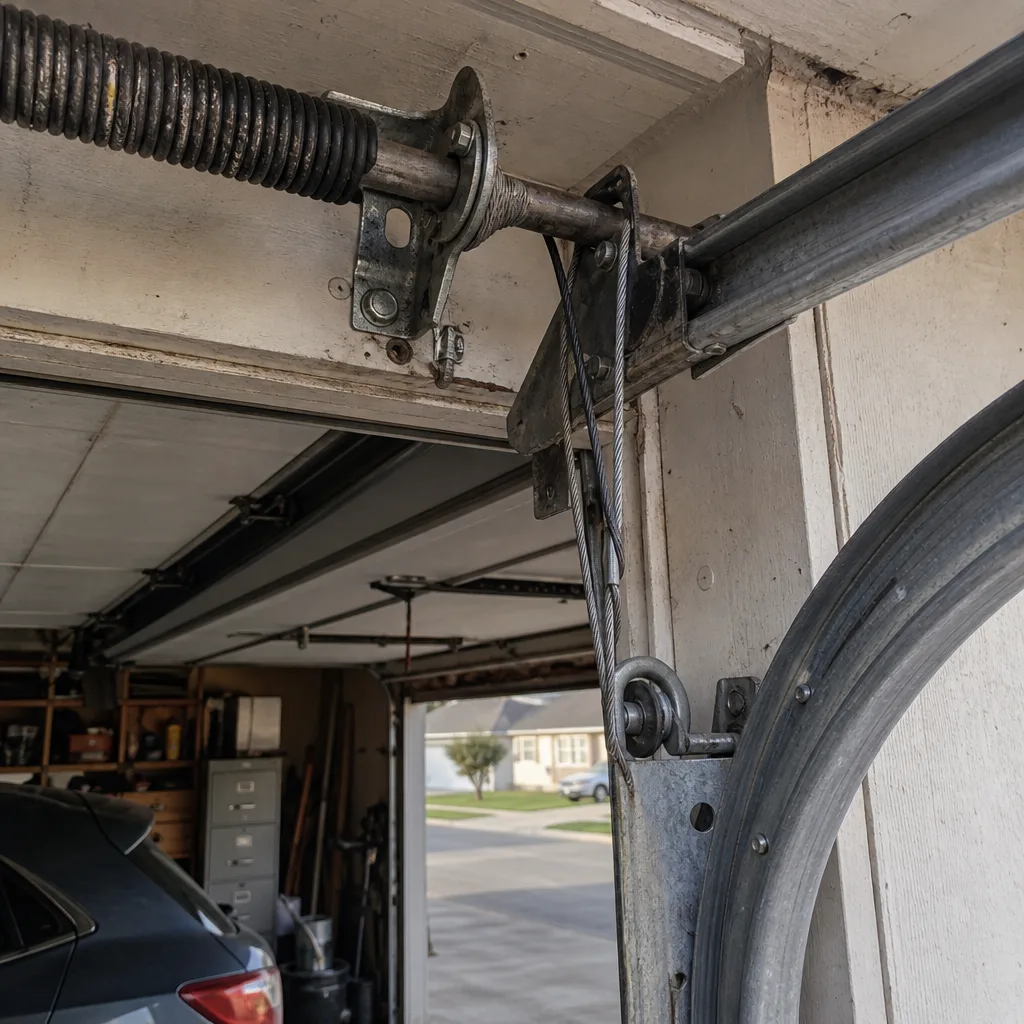 Before
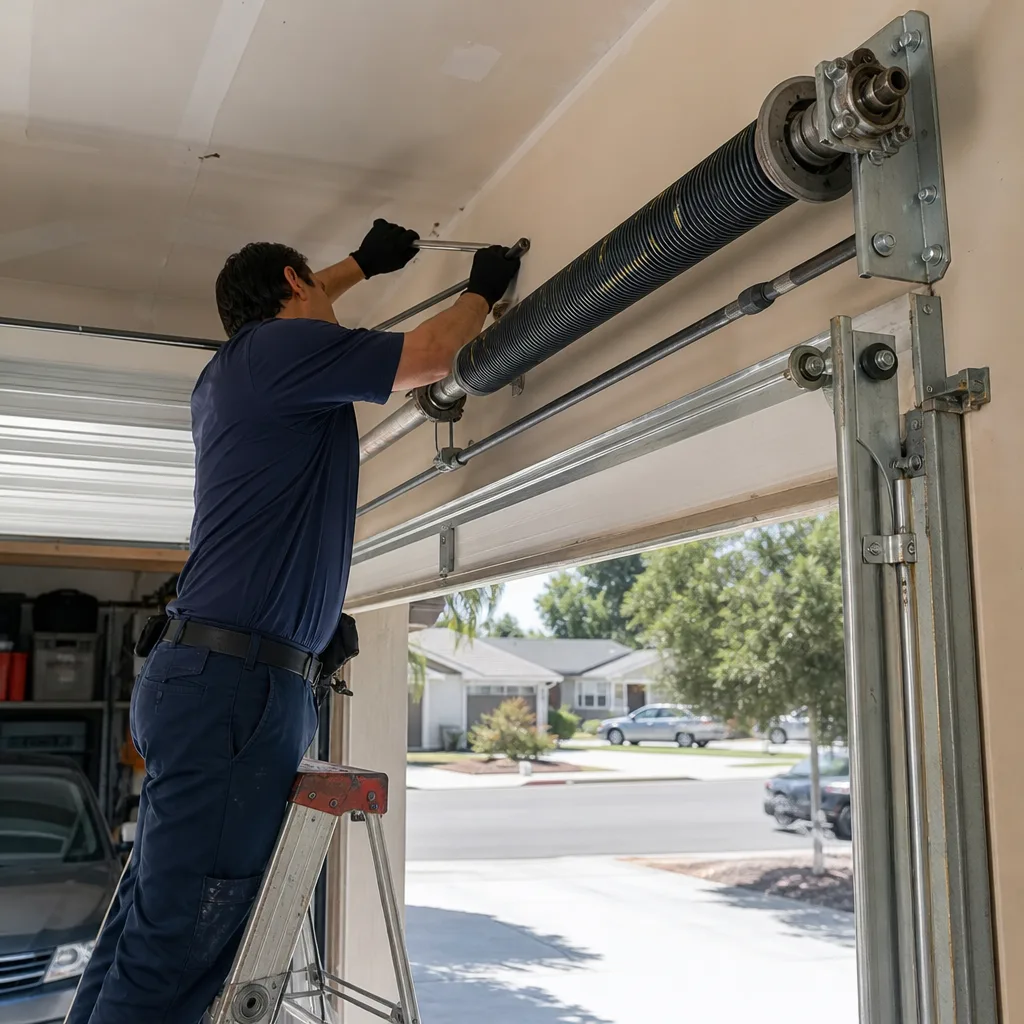 After
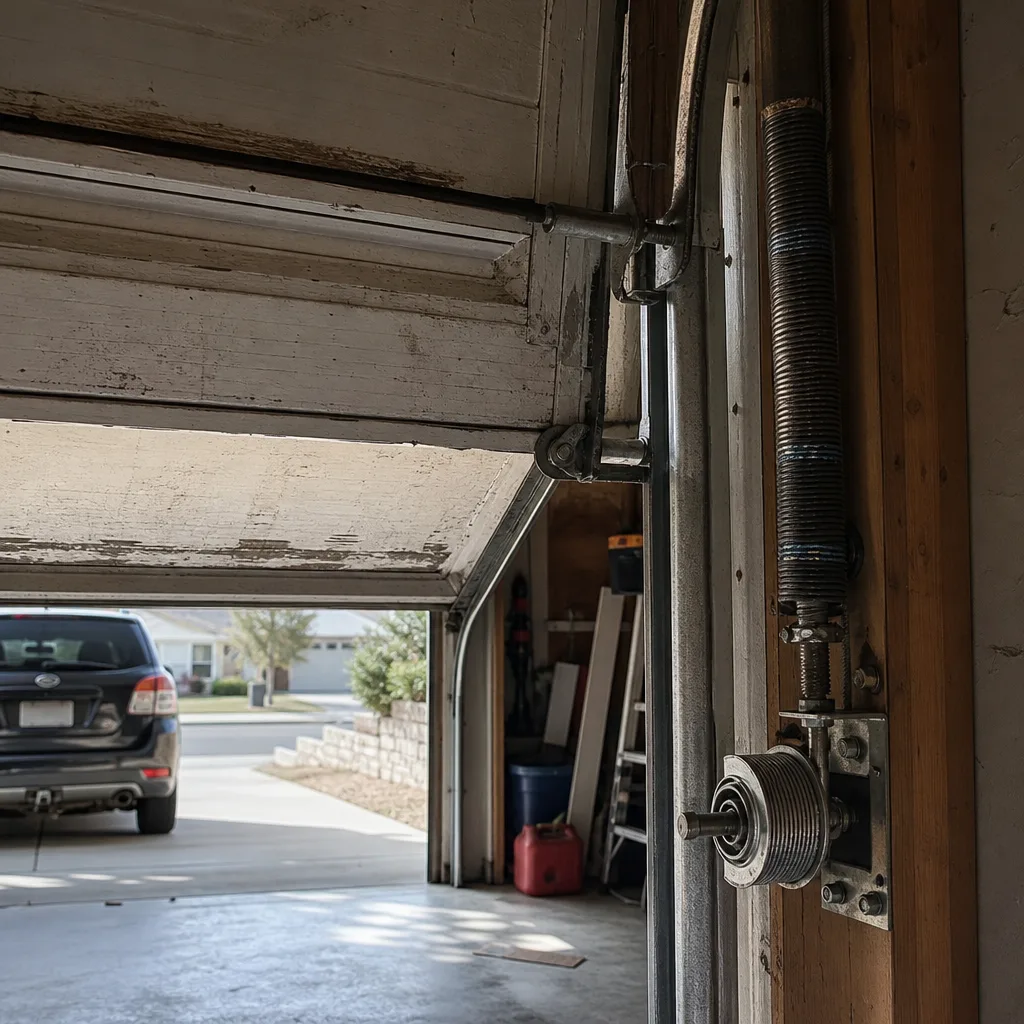 Before
 After
 Before
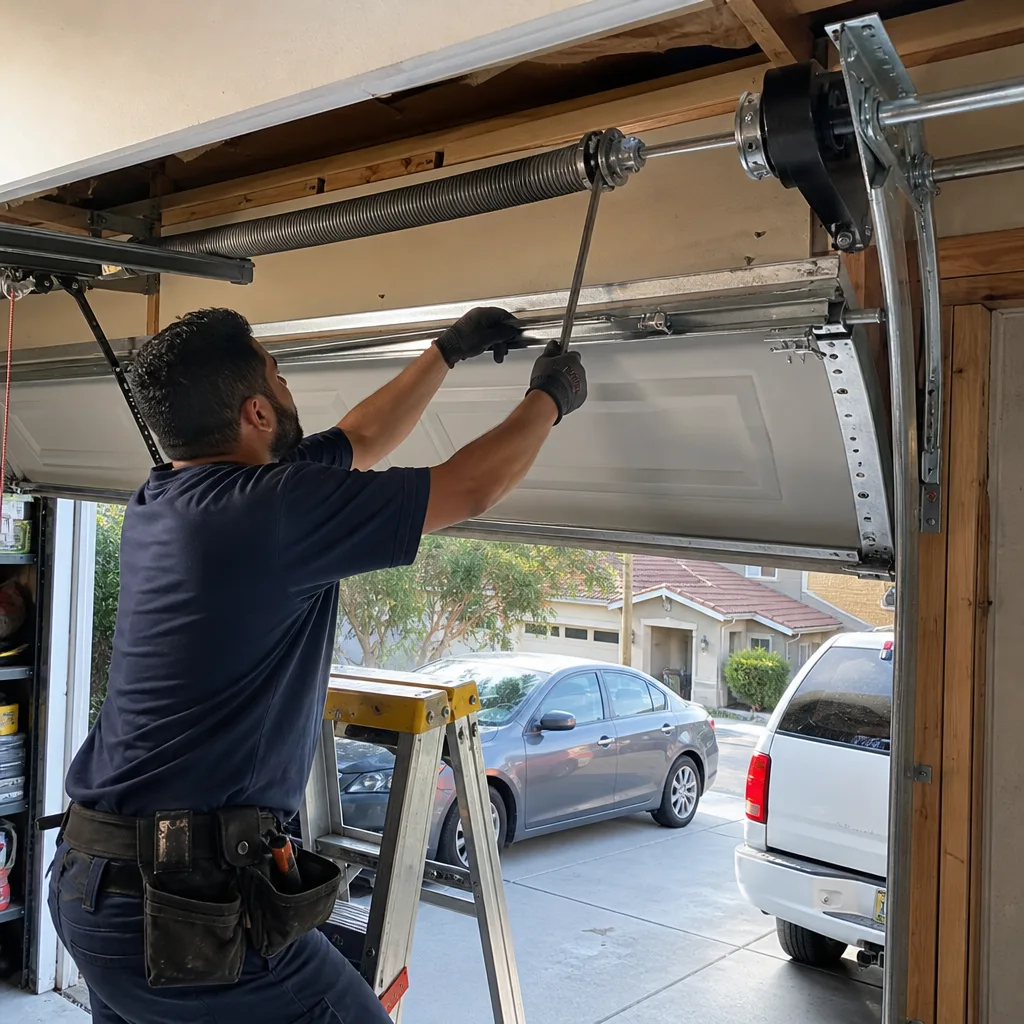 After
When to Call a Professional
Some garage door work is genuinely doable for a careful homeowner. Manual release operation, basic balance testing, weatherstripping visual inspection, even weatherseal replacement on some models. Then there’s the work that requires a trained technician: spring replacement (the torsion on a wound spring is genuinely dangerous), track realignment after an earthquake, cable replacement, and opener installation including battery backup systems.
If your door was damaged in a quake, if your springs are more than seven years old and you’ve never had them checked, or if you want a battery backup installed, that’s our work. Tradesman Garage Door Repair is garage doors, exclusively. We work on the brand you already have. We don’t upsell replacements when a repair is the right call. If you’re in San Bernardino or nearby and want an honest assessment of your door’s emergency readiness, call (855) 916-6950 for a free estimate. We’ll quote the price before any work starts, and the quote doesn’t change once we see the door.
Frequently Asked Questions
Battery backup openers typically run $450 to $700 installed in San Bernardino, depending on the model and your existing hardware. Add-on battery backup kits for compatible openers run $150 to $250. Call (855) 916-6950 and we’ll quote your exact situation for free.
If you’re installing an add-on kit on a compatible opener and you’re comfortable with basic electrical work, it’s doable. For full opener replacement with battery backup, we recommend professional installation. The mounting, balancing, and safety sensor alignment matter if the system is going to work reliably when you need it.
Run through the inspection protocol above: visual alignment, listen during operation, check the tracks and cables, test the balance. If anything looks off, don’t keep using the door. Call a technician for a more thorough inspection.
There’s no single right answer, but dual-pane insulated steel doors from manufacturers like Clopay and Amarr offer better thermal and ember resistance than single-skin models. Wayne Dalton doors are also worth considering for their structural options. The best brand is often the one already on your house that’s properly sealed and maintained.
Twice a year. Do it when you change your smoke detector batteries. Pull the cord, operate the door by hand, re-engage. It keeps the mechanism from seizing and keeps the process fresh in your memory.
Yes. We’re based in San Bernardino and this is our service area. We also handle garage door installations in Grand Terrace and surrounding communities. Call (855) 916-6950 and we’ll let you know our timeline for your address.
The Bottom Line
Your garage door is not something to think about for the first time during an emergency. San Bernardino’s combination of earthquake risk, wildfire evacuation needs, and power shutoff events makes garage door preparation genuinely important, not just a homeowner nicety. Practice your manual release, check your springs, replace degraded weatherstripping, and seriously consider a battery backup opener if you don’t have one. Twenty minutes of preparation now beats forty minutes of panic later. And when you need a specialist who knows garage doors, Tradesman Garage Door Repair is one call away.
Written by the team at Tradesman Garage Door Repair, serving San Bernardino since 2016. Explore more guides & resources for keeping your door emergency-ready.