
Last updated October 30, 2026
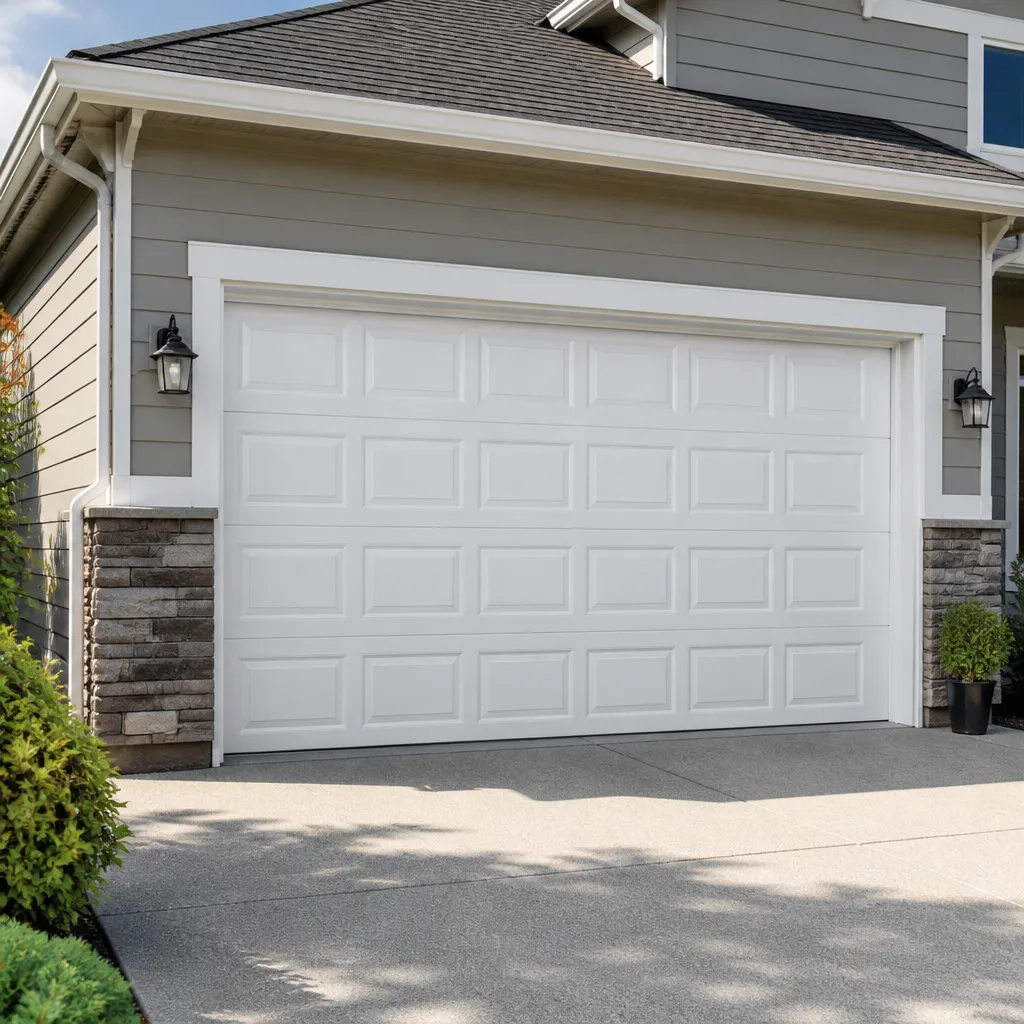 Raised-panel steel
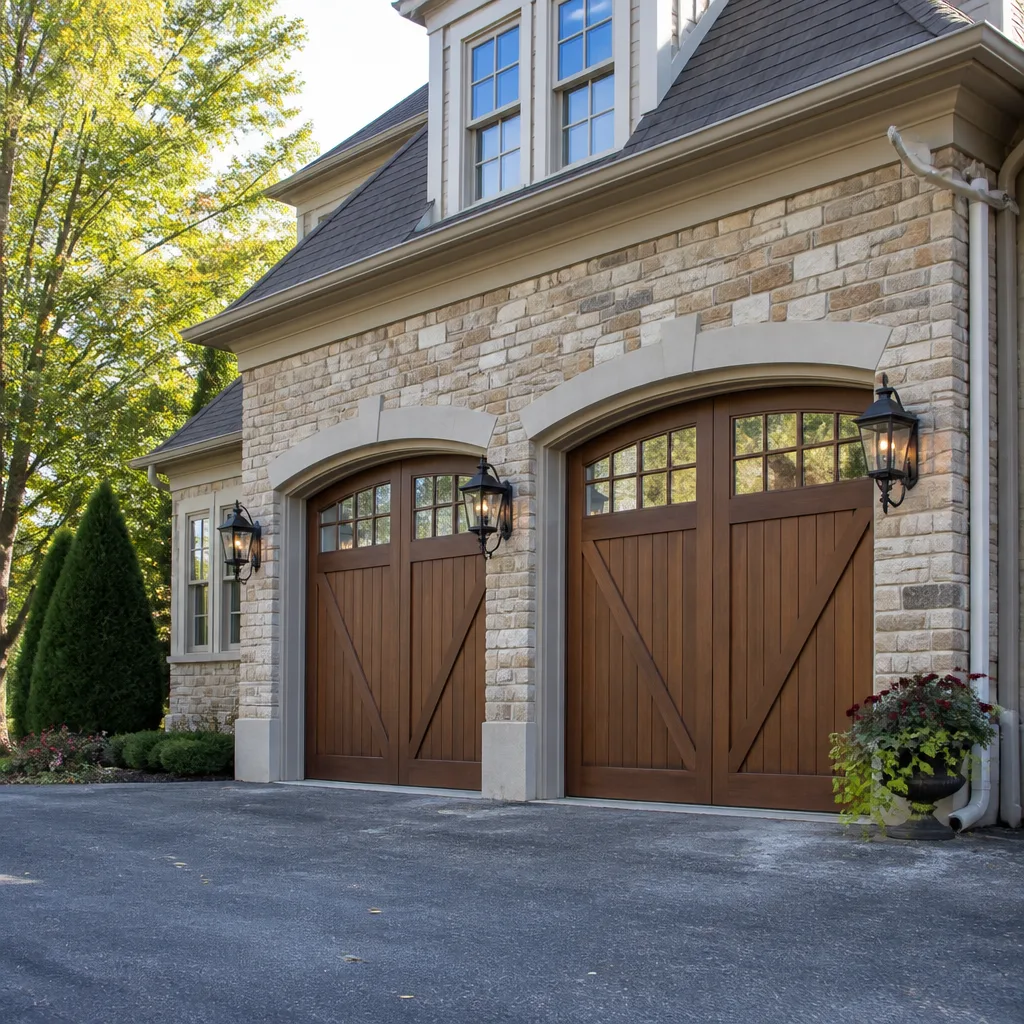 Carriage house
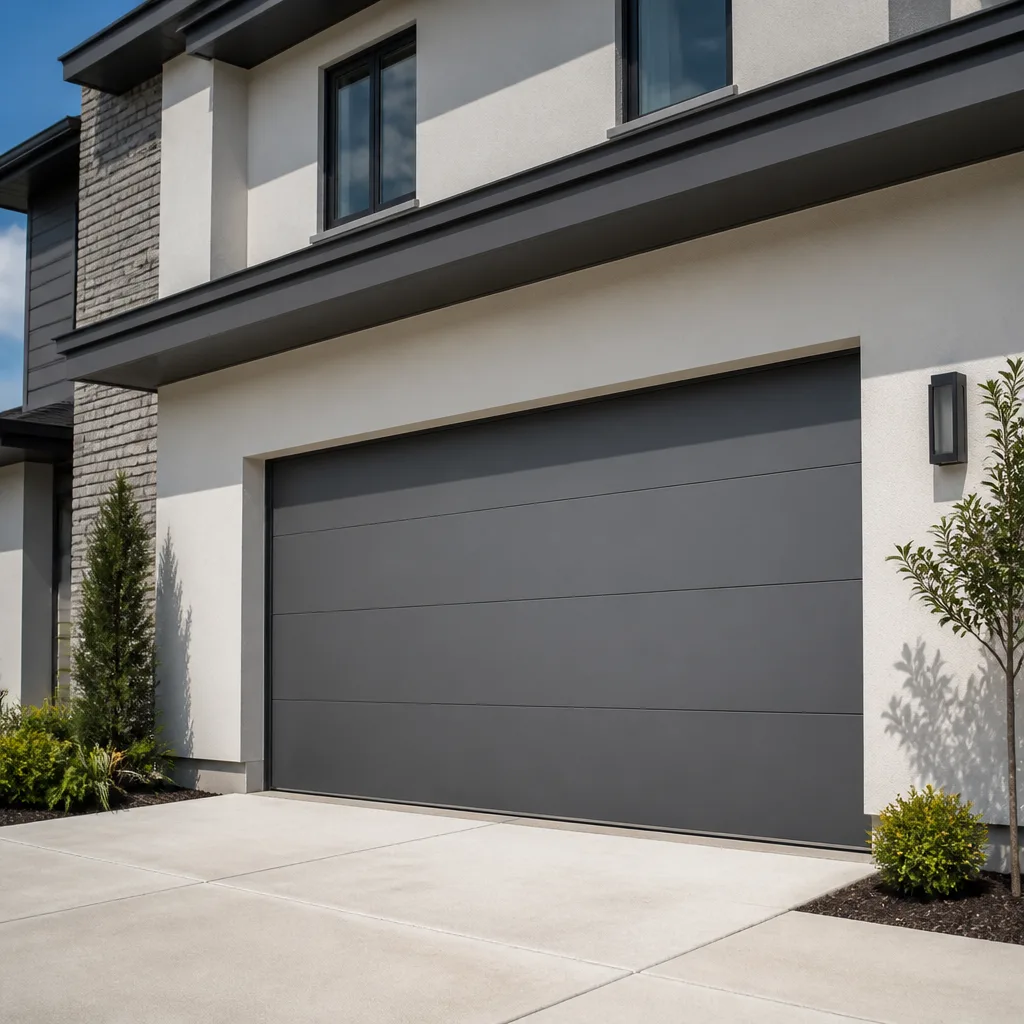 Modern flush
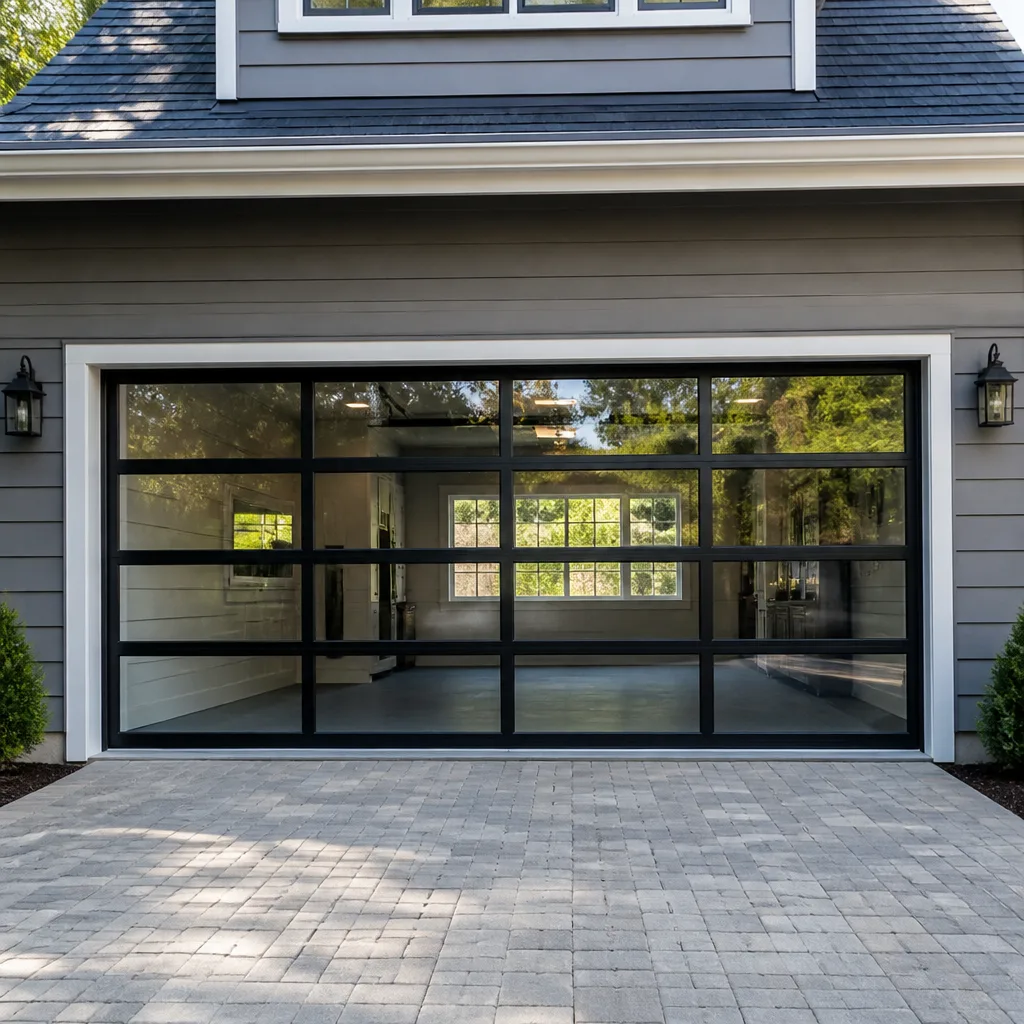 Full-view glass
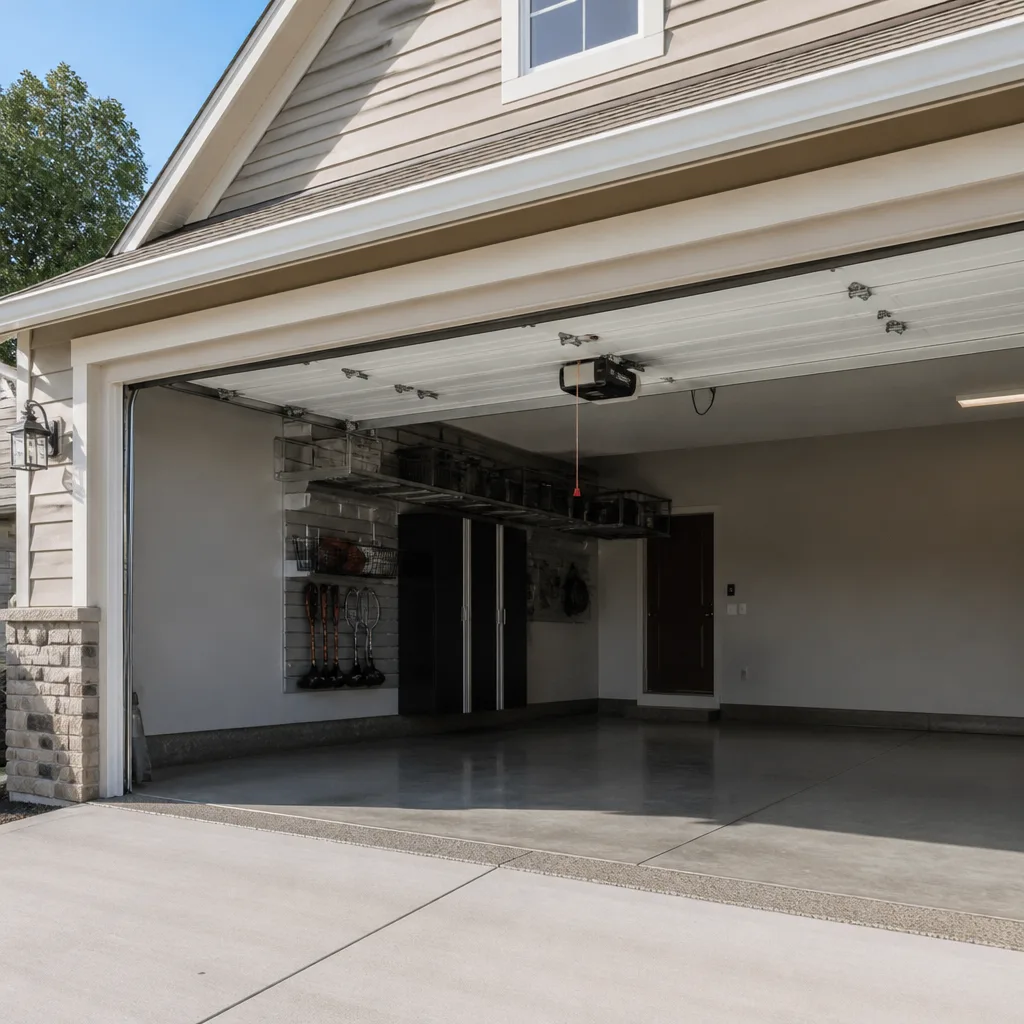 LiftMaster openers
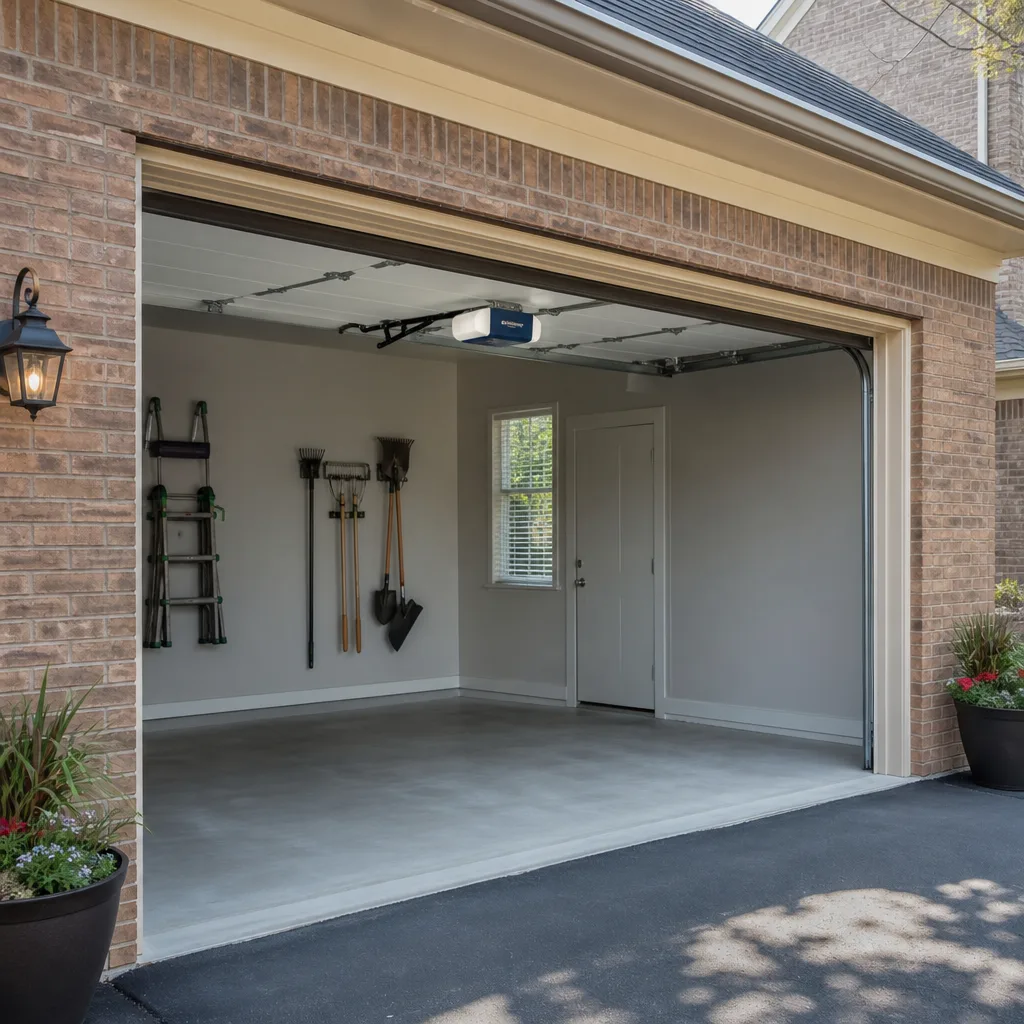 Chamberlain openers
Full 25-point door and opener safety check with every visit - springs, cables, rollers, tracks, and your LiftMaster or Chamberlain opener included
You get a price before we start. It does not change when the truck arrives.
Get your free estimateGarage Door Repair Maintenance Checklist for San Bernardino Homeowners
The Santa Ana winds that tear through the Cajon Pass carry fine particulate grit that works its way into rollers, hinges, and tracks faster than anywhere along the coast. Add three months of triple-digit summer heat baking the exterior finish, and you have a maintenance environment that punishes garage doors in ways most national checklists never mention. This guide covers the inspection and upkeep routine we’ve developed after years of providing Garage Door Repair services throughout San Bernardino, from the flatlands off Hospitality Lane to the hillside homes near Cal State. You’ll learn what actually fails here, how often to check it, and which tasks you can safely handle yourself.
Styles & brands we work with
Quick Answer
A practical garage door maintenance checklist for San Bernardino homeowners includes: monthly visual inspection of rollers and hinges for grit accumulation, quarterly lubrication with a silicone-based spray, a twice-yearly balance test, an annual weatherstripping condition check for UV brittleness, and an annual inspection of the exterior finish for paint failure or rust before winter rains arrive. Spring tension checks should be visual only, and any actual adjustment requires a trained technician.
Table of Contents
- The San Bernardino Factor: Why Local Conditions Change the Schedule
- Monthly Inspection: Rollers, Hinges, and Track Grit
- Lubrication Schedule: What to Use and What to Skip
- The Two-Minute Balance Test
- Weatherstripping: UV Brittleness Happens Faster Here
- Spring Tension: A Visual Check You Can Do Safely
- Exterior Finish: Catching Paint Failure Before Rust Sets In
- Opener Maintenance: What Gets Overlooked
- Common Mistakes to Avoid
- When to Call a Professional
- Frequently Asked Questions
- The Bottom Line
The San Bernardino Factor: Why Local Conditions Change the Schedule
Most garage door maintenance advice comes from national publications written for mild climates. San Bernardino is not a mild climate. We sit at the base of a mountain pass where wind patterns are consistent and strong, the summer heat regularly exceeds 100 degrees, and the air carries dust from the high desert. Each of these factors changes what wears out on a garage door and how quickly.
Wind-driven grit is the biggest differentiator. The Santa Ana winds, which typically peak in the fall but can arrive any month, push fine particulate matter from the Mojave through the Cajon Pass and down into the valley. This grit settles into the greased surfaces of rollers and hinges, creating a grinding paste that accelerates wear. A homeowner in a coastal city might inspect rollers annually and be fine. In San Bernardino, a monthly visual check is warranted, particularly during the fall wind season.
The heat creates a second set of problems. Prolonged exposure to direct sun and ambient temperatures above 100 degrees causes rubber and vinyl components to cure and crack faster than manufacturer timelines suggest. Weatherstripping that would last five years in a temperate climate often shows brittleness in two or three here. The same applies to the rubber seals on sectional door joints and the insulation strips on any door facing south or west.
Thermal stress is the third factor. Metal components expand and contract daily as temperatures swing from the 40s at night to over 100 by mid-afternoon. This cycling loosens hardware, shifts track alignment, and causes the door to lose its original calibration. It is why balance testing matters more here than in places with stable temperatures.
Our maintenance schedule for San Bernardino adjusts for all three: more frequent roller inspection, earlier weatherstripping replacement expectations, and spring and fall balance checks tied to the seasons when temperature swings are most extreme.
Monthly Inspection: Rollers, Hinges, and Track Grit
The highest-impact maintenance habit for a San Bernardino homeowner is a monthly visual inspection of the moving parts. It takes less than five minutes and catches most failures before they become emergency calls. Here is the routine we recommend, in order:
- Open the door halfway and look at each roller. There are typically 10 to 12 rollers on a standard two-car sectional door, riding in vertical and horizontal tracks. Check for visible grit buildup, wobble, or flat spots on the wheels. A roller that does not spin freely is creating drag.
- Inspect the hinge points where the sections connect. Look for accumulated dust that has mixed with the existing lubricant and turned dark. This paste is what wears out hinge pins and makes a door noisy.
- Run a finger along the inside of the vertical track. If you feel grit or rough patches, it is working its way into the system. A quick wipe with a dry rag removes what has not yet bonded with grease.
- Look at the bottom of the door when closed. Check for stones or debris that have blown up against the door and could interfere with the seal or the auto-reverse mechanism.
- Listen during operation. A door that scrapes, rattles, or changes pitch from open to close is signaling a new issue. Monthly familiarity with the normal sound makes an abnormal sound obvious.
During the fall wind season, from roughly September through November, we recommend doing this inspection twice a month. The Santa Ana events deposit more grit in a single weekend than the door sees in a typical summer month. Homes in the northern neighborhoods of San Bernardino, closer to the foothills, tend to see the heaviest accumulation.
Lubrication Schedule: What to Use and What to Skip
Lubrication is the task most homeowners do wrong, either by using the wrong product or by applying it to the wrong places. The right approach takes ten minutes and should be done quarterly in San Bernardino, with an extra application recommended after any major wind event.
Use a silicone-based spray or a dedicated garage door lubricant. Avoid WD-40. WD-40 is a solvent and water displacer, not a lubricant. It strips existing grease and leaves metal components dryer than they were before. We have seen doors in San Bernardino go from slightly noisy to grinding within a month because the homeowner used WD-40 on the hinges.
Here is where lubricant belongs:
- Roller bearings, if the rollers have exposed ball bearings. A small spray on each roller that rotates on a bearing, not on the wheel surface itself.
- Hinge pivot points, where the metal hinge halves rotate against each other.
- The torsion spring, applied lightly along the coil. This reduces friction as the spring winds and unwinds.
- The opener rail, if the door uses a chain-drive or screw-drive opener. Belt-drive rails do not need lubrication.
- The latch mechanism and any exterior lock or handle assembly.
Do not lubricate the track itself. A common misconception is that the rollers ride in the track on grease like a train on rails. They do not. The track serves as a guide, and lubricant on the track simply collects dust and grit, turning into abrasive sludge. A dry, clean track is a functional track. If someone sprayed lubricant in the tracks before you, wipe it out with a dry cloth.
For tune-ups and professional-grade lubrication across all moving parts, our team handles the full system in one visit, including the rollers, hinges, springs, and opener components. We work on the brands San Bernardino homeowners actually have installed, including Tradesman Garage Door Repair home service area equipment like LiftMaster and Raynor systems.
The Two-Minute Balance Test
An out-of-balance door is a quiet killer of opener motors. When the door is properly balanced, the springs carry the weight and the opener only provides a gentle push. When balance is off, the opener motor strains against the full weight of the door, and the motor, gears, and belt or chain wear out years ahead of schedule.
The balance test takes two minutes and requires no tools. Here is how it works:
- Close the door completely.
- Pull the red emergency release cord. This disconnects the door from the opener carriage.
- Lift the door manually to roughly waist height and let go.
- Observe. A balanced door stays roughly where you released it. It may drift slightly but should not move more than a few inches in either direction.
- Lift the door fully open and release it again. A balanced door stays up. If it drops back down, the springs are losing tension.
- Reconnect the opener by pulling the release cord toward the door and running the opener until the carriage re-engages.
Perform this test twice a year in San Bernardino: once in early spring and once in early fall. The temperature swings between seasons put the most stress on spring tension, and a spring that is marginal in March may fail entirely by September. An out-of-balance door costs you more in opener motor wear than in spring replacement, and most opener failures we see in San Bernardino trace back to an ignored balance problem.
Weatherstripping: UV Brittleness Happens Faster Here
The rubber weatherstripping along the bottom of a garage door has a hard job in San Bernardino. It is compressed every time the door closes, exposed to direct UV radiation for hours a day if the door faces south or west, and baked by ambient temperatures that routinely exceed 100 degrees. Manufacturer replacement timelines say every three to five years. In the Inland Empire, we see brittleness in two.
The test is tactile. Run your thumb firmly along the bottom seal. Healthy rubber feels pliable and bounces back. UV-damaged rubber feels stiff, sounds like hard plastic when tapped, and may leave a chalky residue on your fingers. Look for visible cracking along the fold of the T-shaped seal or at the ends of the strip where it meets the door frame. If the seal is so stiff that it no longer compresses fully, daylight will be visible along the bottom edge when the door is closed.
Why this matters beyond keeping dust out: a failed bottom seal is the primary entry point for the same wind-driven grit that accelerates roller wear, and it provides an opening for rodents seeking shelter during the cooler fall months. Homes near the foothills in San Bernardino, where wildlife pressure is higher, should treat bottom seal replacement as a priority when brittleness appears.
A replacement T-style seal typically costs $20 to $40 at local home improvement stores and installs in about thirty minutes. If the door is older and the seal has been glued or stapled into place by a previous repair, the job can get more involved. We see doors where multiple layers of caulk and adhesive make clean removal tedious. This is a task a homeowner can handle, but if the door frame is bent or the seal channel is damaged, a replacement may not seat properly.
Spring Tension: A Visual Check You Can Do Safely
Garage door springs operate under extreme tension. Torsion springs, the kind mounted on a metal shaft above the door opening, hold enough stored energy to cause serious injury if they release unexpectedly. This is the one component we tell San Bernardino homeowners to inspect visually only, never to adjust themselves.
The spring check is an observation exercise:
- Look at the spring winding. A torsion spring should have a consistent, uniform coil pattern. Look for gaps between coils that are wider in one section than another, which indicates metal fatigue.
- Check for rust. Surface rust on a spring is cosmetic and means the spring is near the end of its service life, not an immediate emergency. Deep rust, pitting, or visible thinning of the coil wire is different and warrants a call.
- Inspect the spring end cones and set screws. These anchor the spring to the shaft. Look for marks or scoring that would indicate the spring has slipped on the shaft.
- Listen during operation. A spring that creaks or pops when the door moves is rubbing against itself, which suggests uneven tension.
- Look for a broken spring. A torsion spring that has snapped will show a visible gap in the coil pattern, often with rough metal at the break point. An extension spring, the type that runs along the horizontal track on older doors, may be hanging disconnected if it has broken.
Spring failure in San Bernardino tracks the temperature. We respond to more broken spring calls during the first cold snap of the fall and the first heat wave of the spring than any other time of year. A spring that has been quietly losing tension through a summer of thermal cycling will fail suddenly when the temperature shifts. If you notice the door getting harder to lift manually, that is the warning sign before the failure.
Exterior Finish: Catching Paint Failure Before Rust Sets In
A steel garage door in San Bernardino takes a beating from UV radiation in a way that coastal homes never experience. The sun here is direct, the heat is prolonged, and the result is paint failure that appears as fading, chalking, or fine cracking, usually starting on the panel edges and the bottom section where heat reflects off the driveway.
The annual exterior inspection should happen at the end of summer, before the fall wind season deposits abrasive grit against the door surface, and while there is still time to address problems before winter rain arrives. Look for these specific signs:
- Chalking: Run your hand across the surface. If a fine powder comes off on your palm, the paint is breaking down and the metal underneath is losing its protective layer.
- Fading: South-facing and west-facing doors fade unevenly. A door that is distinctly lighter on one section than another is closer to needing refinishing.
- Micro-cracking: Fine hairline cracks in the paint film, especially around the embossed patterns on raised-panel doors. Once cracks form, moisture can reach the metal.
- Edge rust: Check the bottom edge of each section and the bottom door panel, which has the most exposure to ground moisture and splash-back. Rust spots smaller than a dime can be sanded and touched up. Rust that has spread along a seam or created a visible hole requires professional attention.
Most doors built in the past fifteen years use a baked-on polyester or polyurethane finish, not traditional paint. Touch-up kits matched to the manufacturer’s color are available for doors from companies like Wayne Dalton and Clopay. A homeowner can address isolated chips with these kits. Full refinishing should be handled by a professional who can properly prep the surface and apply a coating that bonds to the existing finish.
For San Bernardino homeowners whose door has reached the stage where repair no longer makes sense, Garage Door Installation in Grand Terrace covers what a full replacement involves, from panel options to installation timelines.
Opener Maintenance: What Gets Overlooked
Garage door openers fail for predictable reasons, and most of them trace back to a lack of maintenance on the door itself. As noted in the balance section, an out-of-balance door is the leading cause of opener motor failure we see in San Bernardino. But the opener has its own maintenance needs beyond door balance.
The gears inside the opener housing are the second point of failure. Most residential openers from LiftMaster, Chamberlain, and Craftsman use a plastic drive gear that is designed to be sacrificial, meaning it strips before the motor burns out. When you hear a grinding noise from the opener during operation but the door still moves, the drive gear is typically the problem. This gear wears faster when the door is out of balance, when the travel limits are set incorrectly, or when the opener is forced to reverse frequently against an obstruction.
The photo eye sensors, the small units on either side of the door opening about six inches off the floor, need to stay aligned and clean. Wind-blown dust and grit in San Bernardino coat the sensor lenses over time. A sensor that cannot see the beam treats it as an obstruction and stops the door from closing. A monthly wipe of each sensor lens with a dry cloth prevents most false obstruction readings. If the sensors have been knocked out of alignment, the small indicator light will blink or change color. Realigning them is usually a matter of loosening the mounting bracket and adjusting until the light turns solid.
The opener rail, on chain and screw-drive models, needs lubrication alongside the door hardware. A dry rail creates drag, which increases the load on the motor. On our quarterly lubrication pass, we include the rail. For homeowners with opener issues that go beyond maintenance, Garage Door Opener Repair in Grand Terrace details the common failure points and what repair looks like.
We work on the opener brand you already have, whether that is a Genie installed in the early 2000s or a newer belt-drive LiftMaster. The opener, the springs, the panels, the tracks – we handle the whole door, not just one component.
Common Mistakes to Avoid
- Using WD-40 on moving parts. It breaks down existing lubricant and leaves components drier. Use silicone spray or a dedicated garage door lubricant instead.
- Lubricating the track. The track needs to stay dry and clean. Grease on the track collects grit and grinds the rollers faster, especially during Santa Ana season.
- Ignoring the balance problem because the opener still works. The opener compensates for the imbalance until the motor burns out. A replacement opener costs more than a spring adjustment would have.
- Replacing only one spring on a two-spring door. Both springs carry the same load cycles. Replacing one means the other fails soon after. A professional replaces both.
- Using water or harsh cleaners on the door exterior. San Bernardino water is hard and leaves mineral deposits. A dry wipe or a mild automotive soap is enough. Pressure washing can force water into panel seams.
- Adjusting spring tension without proper training and tools. Torsion springs store lethal energy. This is not a homeowner task, and the cost of a professional adjustment is a fraction of an emergency room bill.
- Setting the travel limits too far to force the door closed. If the door is hitting an obstruction, the limits are not the problem. Forcing the door adds wear to every component and disables a safety feature.
When to Call a Professional
Some garage door conditions are safe to live with for a few weeks while you plan a repair. Others are not. Call a professional when: a torsion spring is broken or showing visible gaps in the coil; the door is off its track and cannot be opened or closed without resistance; the door is slammed shut or drops rapidly when released manually; you hear metal-on-metal grinding from the opener housing; or the door has been hit by a vehicle and the panels or track are visibly bent. These are not maintenance items. They are failures that require a trained technician with the right tools and replacement parts on hand. For Garage Door Warning Signs: A San Bernardino Homeowner’s Reference Guide, review our detailed resource. Tradesman Garage Door Repair offers free estimates in San Bernardino, call (855) 916-6950.
Frequently Asked Questions
Quarterly lubrication is the right baseline for San Bernardino, with an extra application after any major Santa Ana wind event where you can see dust accumulation on the door surfaces. The quarterly schedule accounts for the accelerated grit buildup unique to the Inland Empire climate. For an exact assessment of your door’s condition, call (855) 916-6950.
A professional garage door tune-up in San Bernardino typically runs between $85 and $180, depending on the door type and whether parts like rollers or weatherstripping need replacement. The cost of replacement parts, such as a new bottom seal or upgraded nylon rollers, adds to the base service. The price is quoted and agreed before any work starts.
No. Torsion springs operate under extreme tension and can cause serious injury or death if they release during removal or installation. Spring replacement requires specialized winding bars, safety training, and an understanding of spring rates. Extension springs on older doors are equally dangerous if the safety cable fails. This is a professional-only repair.
Pull the emergency release cord and lift the door manually to waist height. If it drops or rises significantly when released, the balance is off. A properly balanced door stays roughly in place. Perform this check in spring and fall in San Bernardino, when temperature shifts put the most stress on spring tension.
Noise during operation typically comes from dry rollers and hinges, worn roller bearings, or a lubrication issue on the opener rail. In San Bernardino, wind-blown grit often mixes with old lubricant to create the grinding sound. A quarterly lubrication routine addresses most causes, while persistent noise may indicate worn parts that need replacement.
Garage door springs in San Bernardino typically last seven to ten years on standard-cycle springs, which are rated for roughly 10,000 cycles. With average use of three to four cycles per day, that is about seven to nine years. The thermal stress from daily temperature swings can shorten that lifespan slightly compared to coastal climates. If your springs are past the seven-year mark, have them inspected.
The Bottom Line
San Bernardino homeowners need a maintenance routine that accounts for the grip of grit, prolonged UV exposure, and thermal stress that this climate imposes on every garage door component. A monthly visual inspection catches roller and hinge wear before it cascades. Quarterly lubrication with the right product keeps parts moving without attracting dust. Twice-yearly balance checks protect the opener motor. Annual checks of the weatherstripping and exterior finish catch UV damage before it becomes a structural problem. The spring check is visual only, and actual spring work belongs to a professional. A door on this schedule fails less often, costs less over its lifetime, and is less likely to break on the hottest or windiest day of the year. Explore our more guides & resources for year-round garage door care.
Written by the team at Tradesman Garage Door Repair, serving San Bernardino since 2016.
See the difference
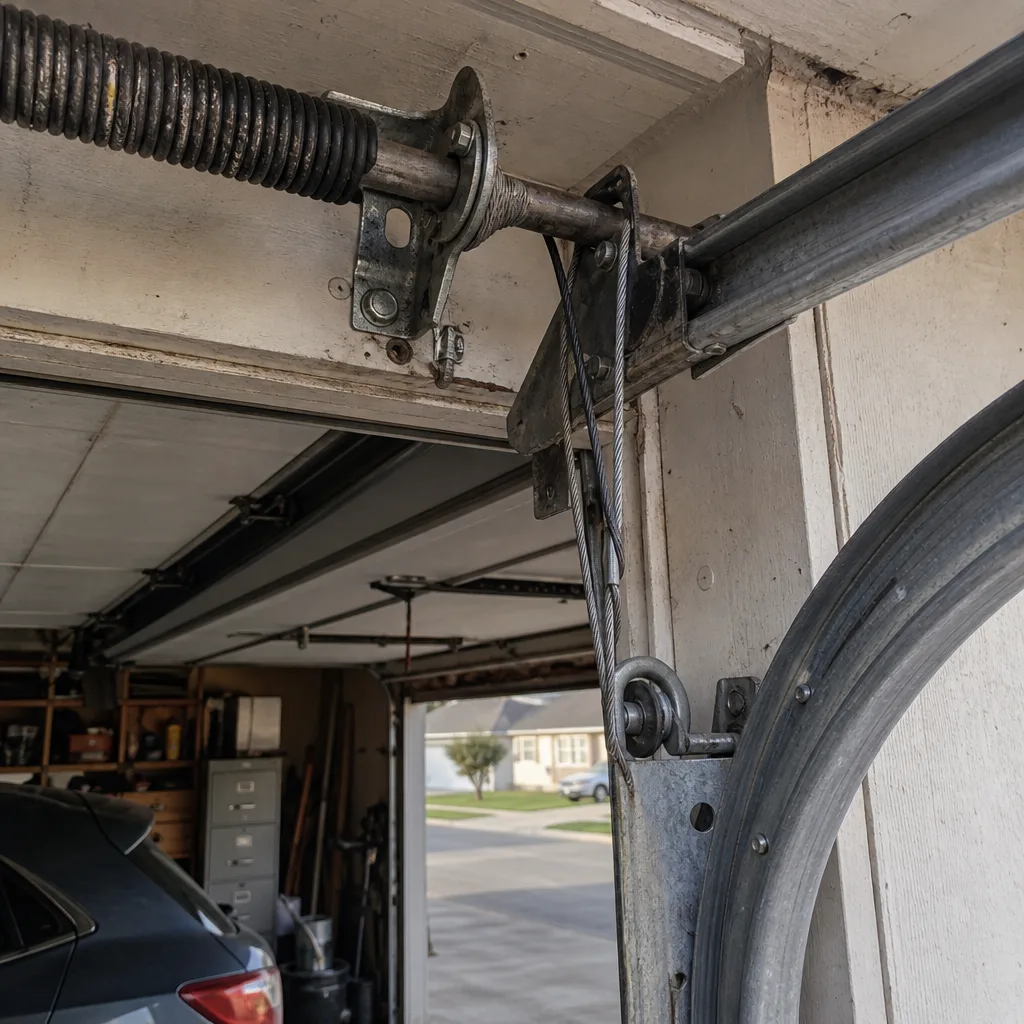 Before
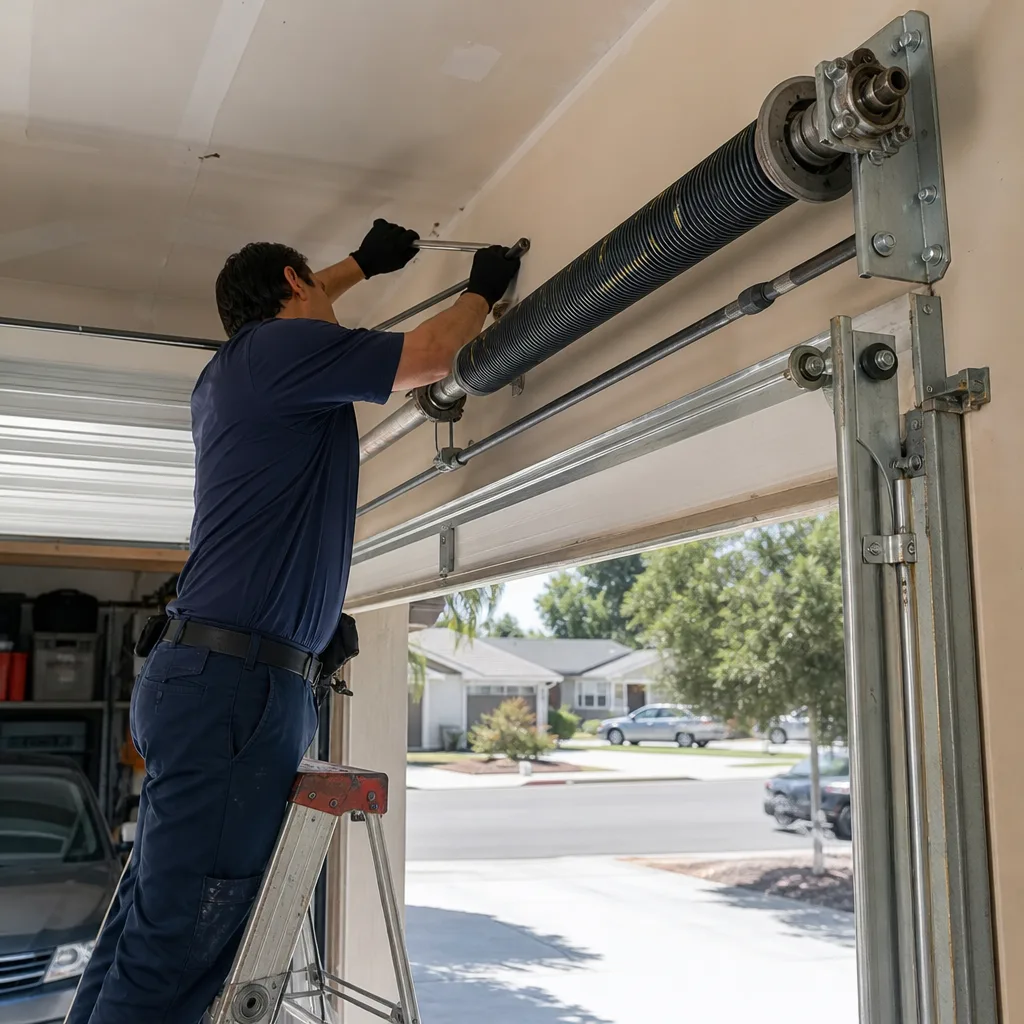 After
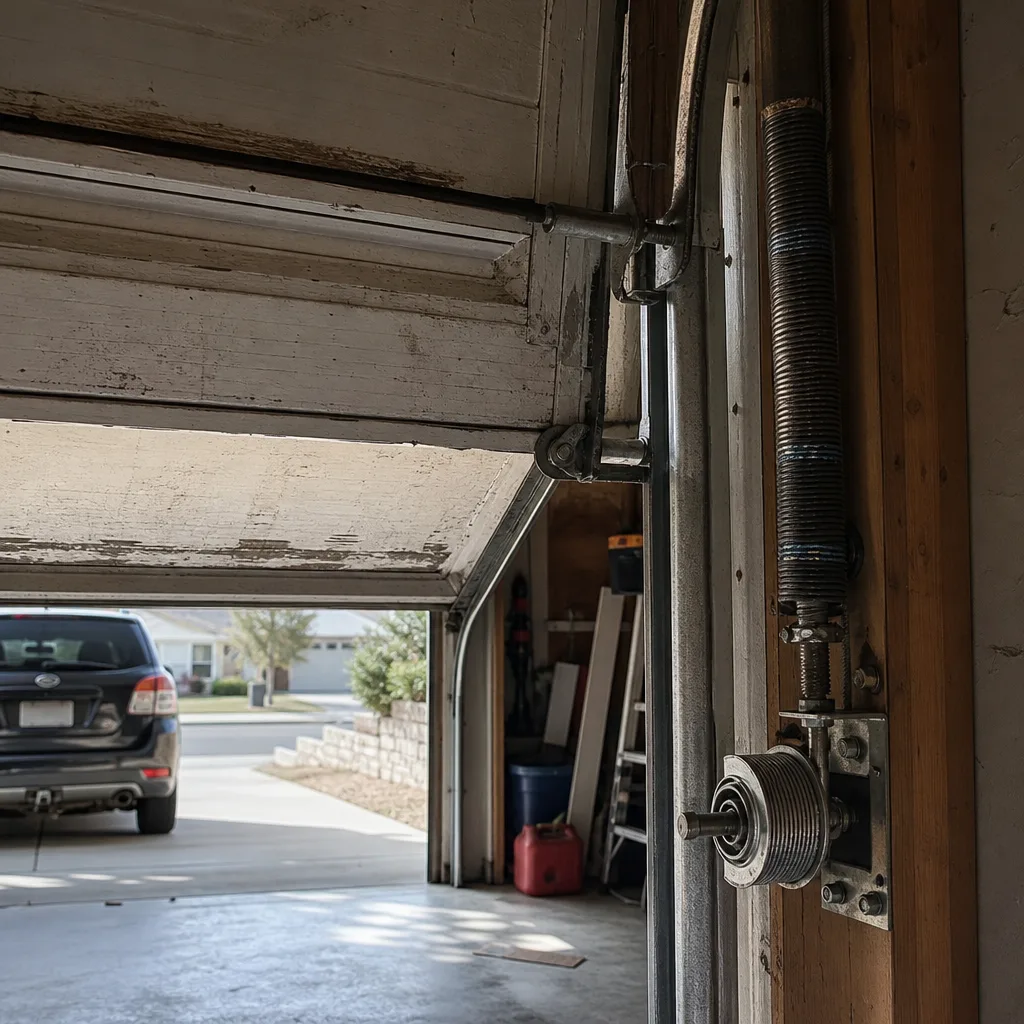 Before
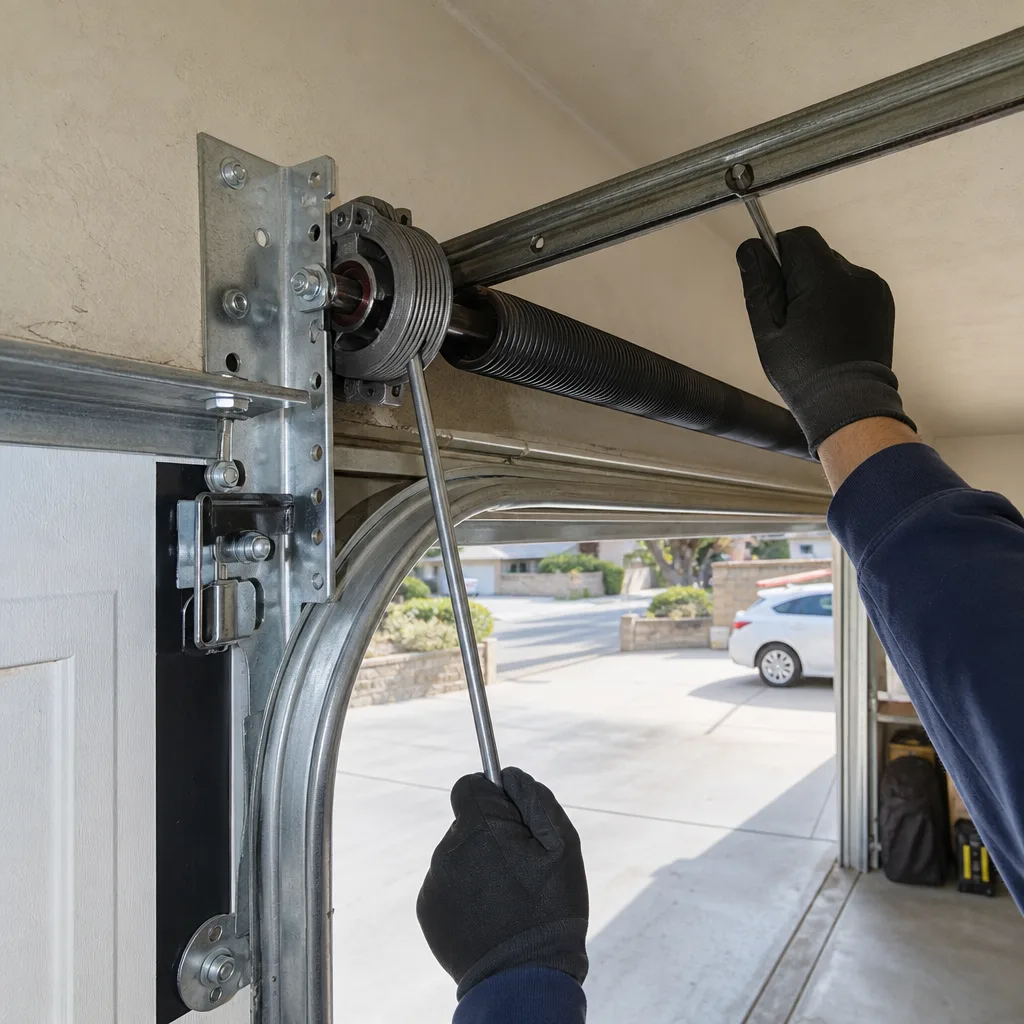 After
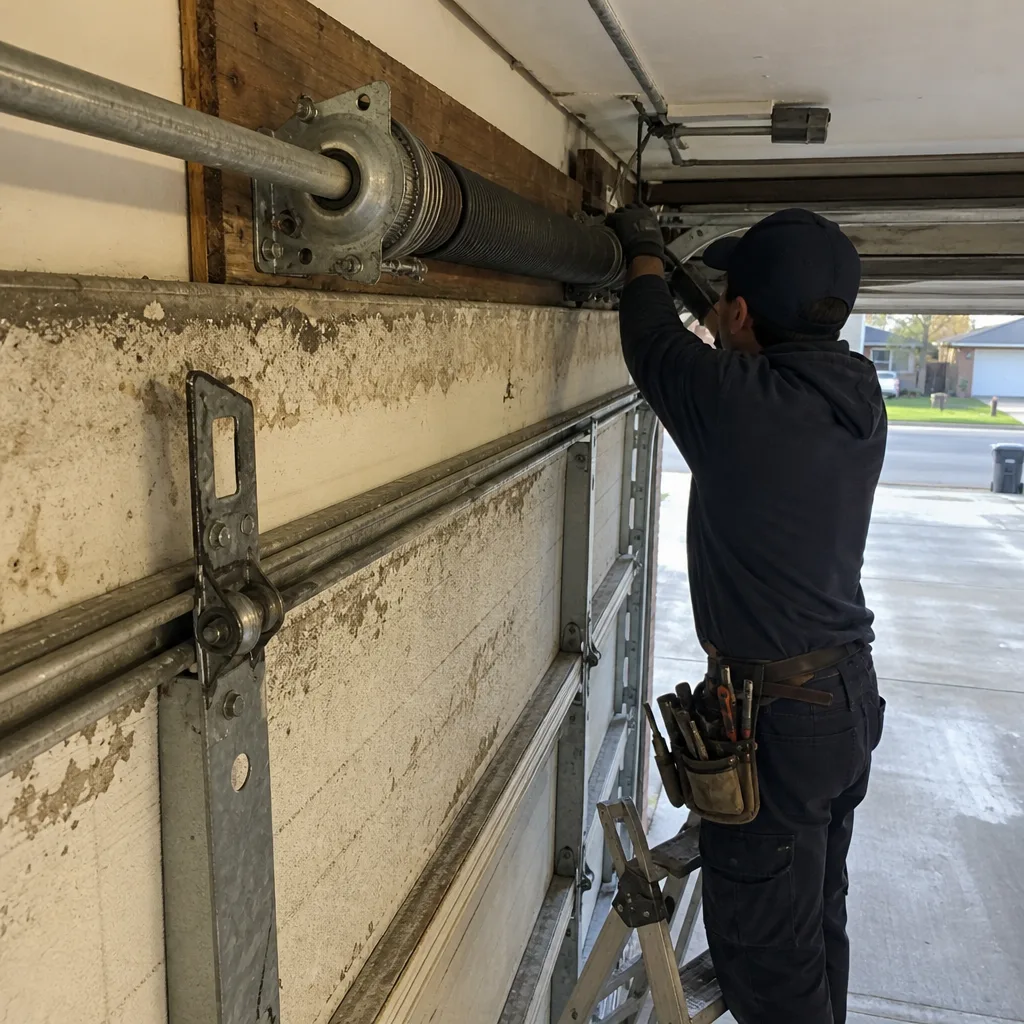 Before
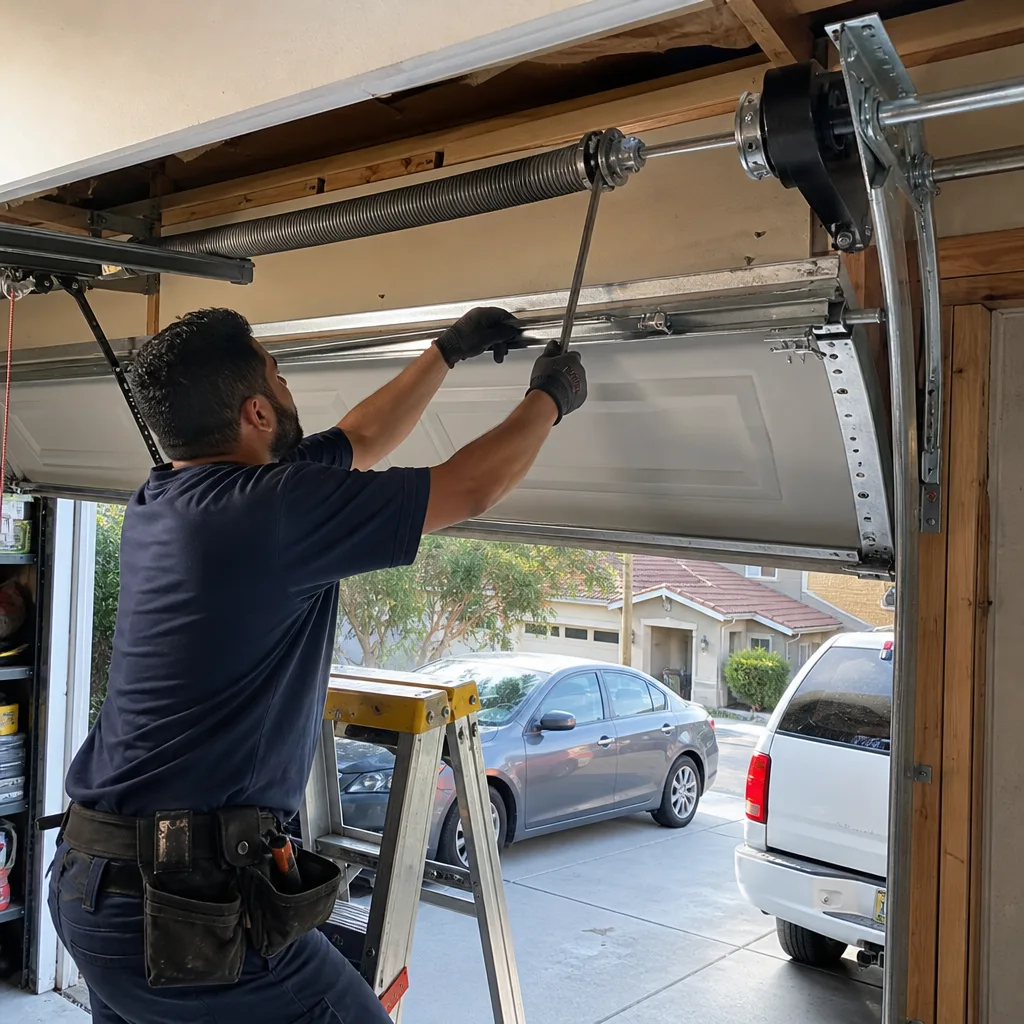 After